The best BrandWell intent-data alternative depends on the job. Choose BrandWell when you want MarketPulse audiences connected to a complete growth workflow and agent-powered desktop assistance. Evaluate 6sense or Demandbase for an established enterprise ABM program; Bombora for topic-intent data in an existing stack; and ZoomInfo for broad company, contact, and go-to-market intelligence. Match the audience, workflow, integrations, and total cost to your team.
Who this is for: agencies, data resellers, GTM consultants, RevOps leaders, procurement teams, and companies comparing BrandWell intent-data alternatives. This is a constraint-to-option decision guide with symmetrical criteria, implementation questions, cost inputs, and no-fit recommendations – not a claim that BrandWell is universally best.
BrandWell update, September 2026: MarketPulse intent data starts at $250/month within BrandWell’s complete growth automation software. AIMEE, the agent-powered desktop app, helps connect buyer signals with research, content, and campaign work. Access to the broader tools depends on your package.
Start with the buyer decision, not a feature count
A productive BrandWell intent-data alternatives comparison begins with the operating model. Is the buyer an agency that wants wholesale inputs, branded client reports, recurring managed services, and control of retail pricing? Is it an enterprise marketing team buying software for itself? Does it need one third-party topic source, first-party website identification, broad company and contact data, or orchestration across an established ABM stack?
Then define the outcome. “More intent” is not measurable. Better outcomes include: deliver a branded weekly account report to five clients; identify eligible website visitors for reviewed follow-up; route validated records into CRM; create an approved advertising audience; or help a direct enterprise team prioritize accounts. Every outcome needs a target, data boundary, human or automated decision, destination, and evidence.
Test BrandWell against your own topics, ICP, audience coverage, and required connections. Review package entitlements, team permissions, approval settings, data rights, and support terms for your deployment. A specialist data feed or established enterprise ABM suite may fit better when those are the primary requirements.
A constraint-to-option decision tree
Use this BrandWell intent-data alternatives decision guide:
- Need an agency-owned, white-label commercial and delivery model? Evaluate BrandWell first, then verify every promised portal, report, client, filter, workflow, branding, export, and support component in writing.
- Need a direct enterprise ABM suite for one company? Evaluate 6sense and Demandbase against the existing CRM, advertising, marketing automation, governance, and adoption model.
- Need a third-party topic feed as one infrastructure input? Evaluate Bombora, then budget for identity, validation, portal, activation, measurement, client service, and fallback outside the feed.
- Need broad company/contact intelligence plus sales workflows? Evaluate ZoomInfo and normalize users, credits or usage, modules, services, exports, and administration.
- Need first-party website identification as the central use case? Include a point solution in a wider evaluation even though it is not one of the five reviewed options here; do not force a reseller suite into a point-tool decision.
- Need a managed service rather than software? Compare the operator, deliverables, decision process, governance, and outcome evidence – not merely the underlying platform.
- Need full engineering control or unusual data rights? Model an in-house stack, but include licensing, compliance, monitoring, support, continuity, and maintenance rather than treating APIs as a finished service.
The wrong choice often follows from comparing unlike packages. A topic feed, a database, an ABM suite, and an agency-reseller engine do not have the same included work. Normalize the actual service boundary before evaluating pricing, accuracy, coverage, freshness, integrations, workflow, packaging, or ROI.
Run a proof period with representative evidence
Build a scorecard before demos. Weight ten dimensions: intended audience and use case; signal coverage and freshness; identity resolution and validation; integrations and activation; implementation effort; privacy and governance; verified pricing and total cost; measurement and attribution; proof; and meaningful limitation. Keep the criteria visible and identical for every provider.
Use test data that reflects the planned workflow: a set of target companies, known first-party events, selected research topics, false-match traps, subsidiaries, remote traffic, missing fields, suppressions, duplicates, and a small group of measurable outcomes. Do not use only the vendor’s demonstration accounts. Mark expected results before seeing outputs.
A useful proof period includes these steps:
- Write the outcome, decision rule, eligible data, prohibited uses, and success thresholds.
- Map each input through identity, enrichment, validation, report, approval, activation, and outcome capture.
- Ask the vendor to label source, refresh, confidence, entitlement, permitted use, and export behavior.
- Test no-match and wrong-match cases, not just coverage wins.
- Execute one reversible workflow and one negative permission or suppression test.
- Price the same client count, topics, users, records, destinations, services, and term.
- Interview a reference with the same operating model – not merely the same industry.
- Document the best fit, no-fit condition, implementation owner, switching path, and unresolved claims.
A demo shows a possibility. Documentation, a representative data test, references, contract language, and accepted workflow outcomes provide stronger evidence. Reviews can identify questions, but they should not override current product proof or a buyer-specific test.
Five BrandWell intent-data options evaluated consistently
Disclosure: This is a Brandwell-owned resource. Brandwell is the publisher’s product; all options are evaluated using the same disclosed criteria.
BrandWell is listed first because BrandWell publishes this article, not because the order proves superiority. There are no competitor outbound links below. Every buyer should request current documentation, a scope-matched quote, a controlled test, privacy and data-use terms, support boundaries, and an exit plan.
1. BrandWell: MarketPulse intent data and connected growth automation
Best fit: growth teams and agencies that want intent data connected to day-to-day execution. BrandWell is complete growth automation software that connects MarketPulse intent data, TrafficID website visitor identification, content, outreach, and campaign workflows. AIMEE, its agent-powered desktop app, helps turn those signals into research, prepared assets, and approved actions.
For agencies, this creates a repeatable client workflow: identify relevant demand, apply a client-specific ICP, prepare a campaign, and review the work in the same platform. Branded delivery and multi-client requirements should be scoped to the agency package.
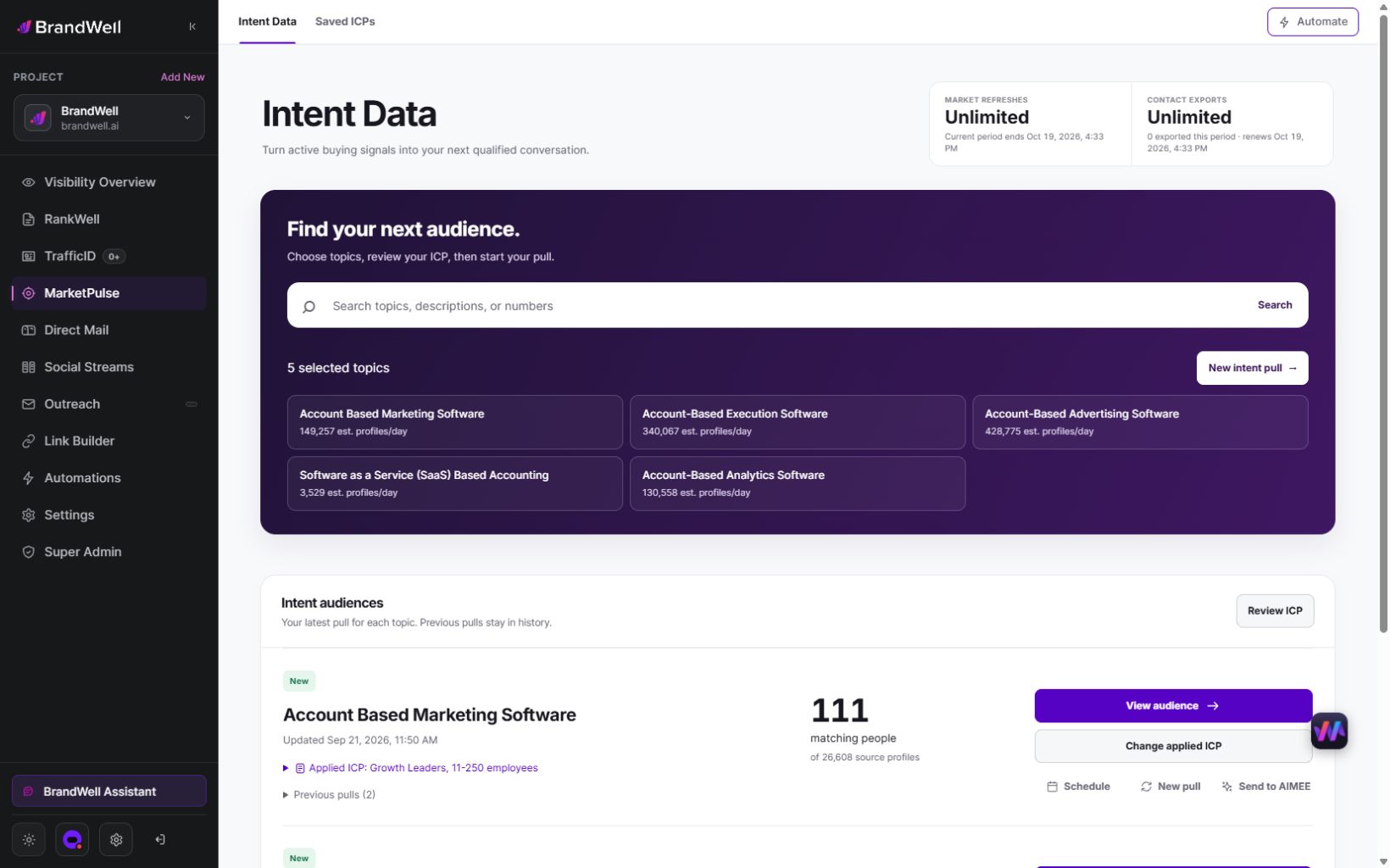
How the software connects the work:
- Find and qualify demand: MarketPulse brings topic-based intent into a reviewable audience with saved ICPs and scheduled pulls. TrafficID adds website visitor identification to the growth workflow.
- Prepare the next campaign: Outreach and Direct Mail provide execution workspaces; Social Streams adds relevant social activity. Use the tools and destinations configured for your project.
- Build demand as well as capture it: RankWell, Visibility Overview, and Link Builder connect content and visibility work with the same growth operation.
AIMEE helps carry the work forward
AIMEE is BrandWell’s agent-powered desktop app. It helps research accounts, prepare content and messages, and carry out assigned work through connected tools. BrandWell’s Automations workspace connects product events to workflow steps, with owners, approvals, and run history. You choose the connections, allowed actions, and budgets.
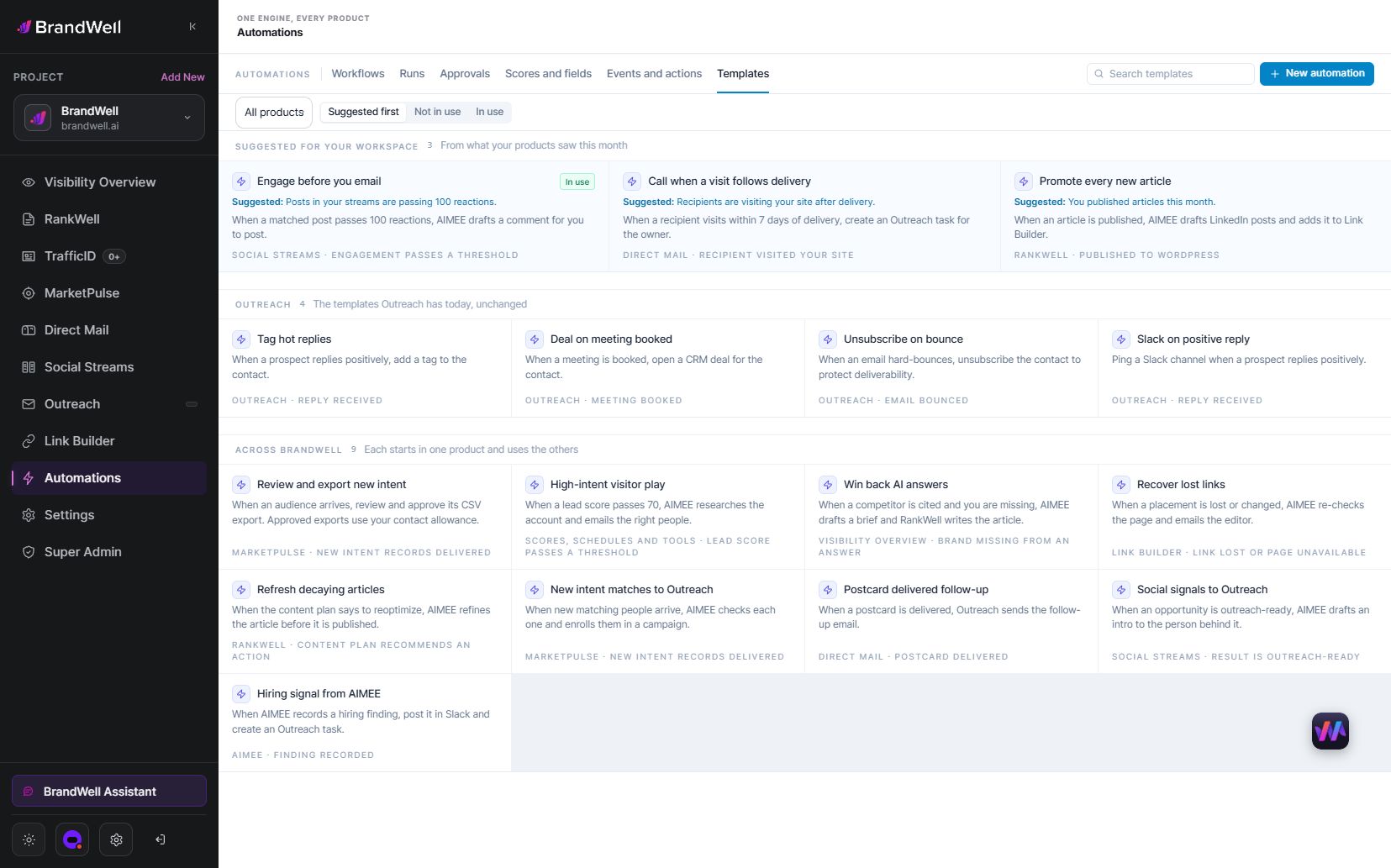
BrandWell MarketPulse intent-data plans start at $250/month. Your selected package determines topic coverage, contact allowances, refresh cadence, AIMEE access, and other growth tools. Channel usage, media, and fulfillment costs depend on the campaign.
What to evaluate: topic relevance, usable audience coverage, ICP fit, and the time it takes to turn an accepted signal into completed work. An intent signal helps prioritize an opportunity; it does not guarantee a purchase or establish permission for every channel. If your main requirement is a specialist data feed or an established enterprise ABM program, compare that specific scope with the alternatives below.
2. 6sense
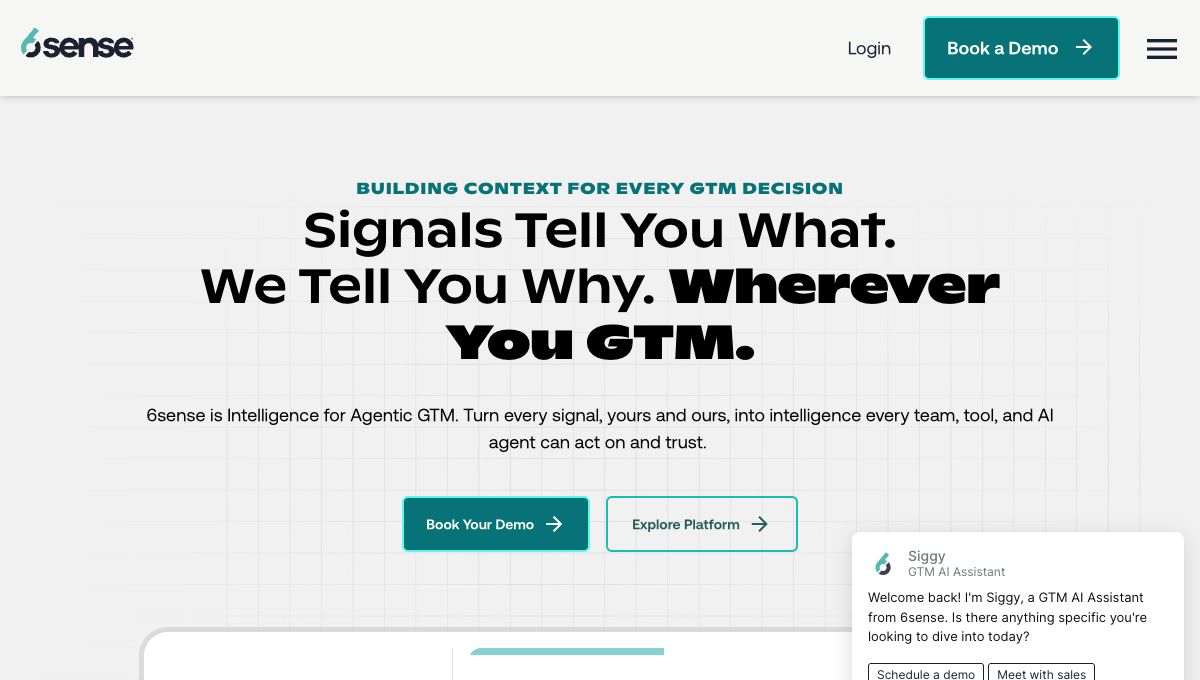
Intended audience and use case: 6sense may fit a direct enterprise revenue team seeking account intelligence, prioritization, and orchestration across marketing and sales. It is an alternative when the goal is internal ABM rather than an agency-owned resale business.
Signal/data coverage and freshness: Ask for current definitions across first-party and third-party inputs, scores, history, refresh, expiry, and regional coverage. Test the buyer’s accounts and topics.
Identity resolution and validation: Evaluate account association, contact availability, confidence context, correction, and downstream use. Do not collapse account-level activity into named-person intent.
Integrations and activation: Test the proposed CRM, marketing automation, advertising, sales, and data integrations, including failed writes, permissions, and outcome return.
Implementation effort: A broad enterprise platform can require data, RevOps, marketing, sales, IT, privacy, enablement, and administration. Include adoption and operating ownership.
Privacy and governance: Review current security, privacy, subprocessor, access, retention, deletion, and permitted-use documents for the licensed scope and regions.
Verified pricing and total cost: Require a current quote that identifies modules, users, usage, implementation, services, integrations, and term. Approved evidence does not support a blanket competitor estimate or assumed term.
Measurement and attribution: Track account coverage, usable signals, prioritization adoption, accepted actions, opportunity progression, and controlled lift – not platform activity alone.
Proof: Request a buyer-data test, current documentation, reference calls, an implementation plan, contractual entitlements, and an exit/export demonstration.
Meaningful limitation: 6sense may be too enterprise-centric for an agency that primarily needs white-label reports, agency-controlled client packaging, and simple wholesale-to-retail economics.
3. Demandbase
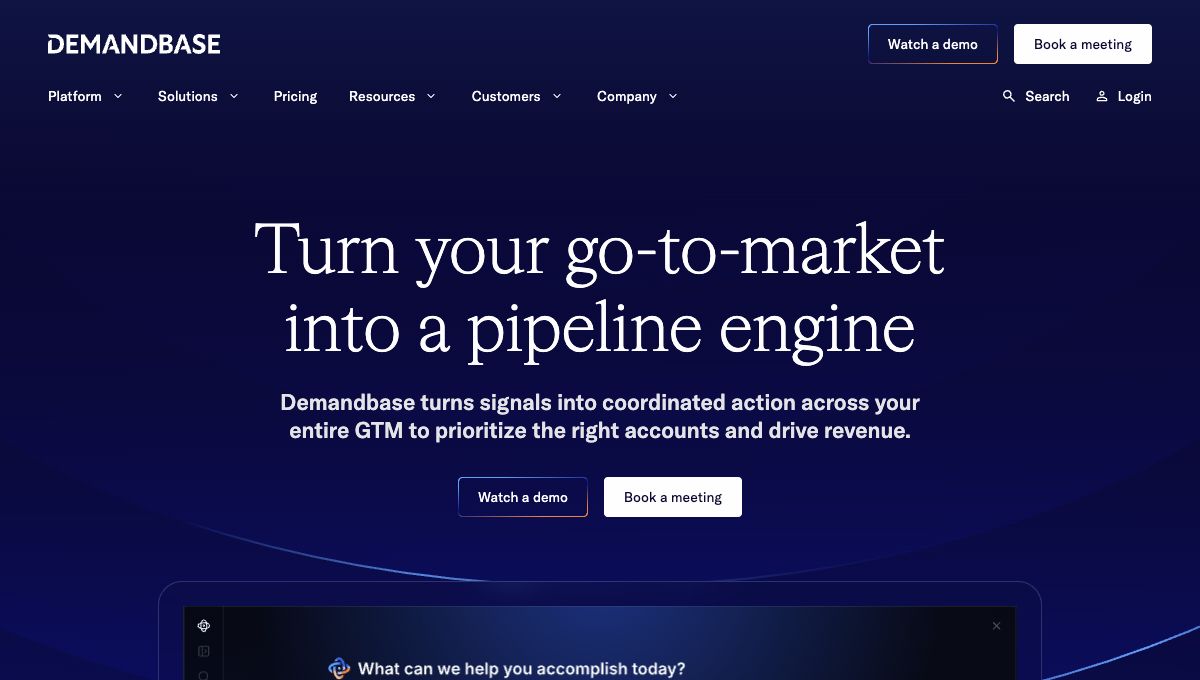
Intended audience and use case: Demandbase may fit mature B2B teams that want coordinated account-based data, advertising, and revenue workflows for their own organization.
Signal/data coverage and freshness: Evaluate first-party activity, third-party intent, account data, advertising context, scoring, topic availability, refresh, and historical evidence in the proposed package.
Identity resolution and validation: Test domains, subsidiaries, remote traffic, ambiguous companies, contacts, and corrections. Record both coverage and false matches.
Integrations and activation: Demonstrate exact CRM, marketing, advertising, analytics, and data destinations, with approval and outcome-return behavior.
Implementation effort: Include strategy, data mapping, audience design, media operations, platform administration, training, and change management.
Privacy and governance: Review current party roles, access, tenant boundaries, retention, permitted use, deletion, regions, subprocessors, and support access.
Verified pricing and total cost: Obtain a scope-normalized quote including modules, media, usage, services, implementation, integrations, and transition. Do not fill missing public pricing with an unsupported estimate.
Measurement and attribution: Evaluate match quality, eligible accounts, audience performance, sales acceptance, influenced and sourced pipeline, and lift with appropriate controls.
Proof: Require representative-data results, live workflow tests, current product and contract documentation, comparable references, and export evidence.
Meaningful limitation: Demandbase can be more platform and program than an agency reseller needs. Buyers should verify whether white-label end-client delivery and agency commercial control are supported rather than assumed.
4. Bombora
Intended audience and use case: Bombora may fit buyers whose main constraint is access to third-party company-level topic data that will be combined with their own identity, activation, reporting, or services.
Signal/data coverage and freshness: Evaluate taxonomy, available topics, company coverage, geography, refresh, baselines, surge interpretation, history, and evidence on representative accounts.
Identity resolution and validation: Keep company-level research evidence separate from named-person identity. If contacts are required, assess the separate provider, match, validation, and permitted use.
Integrations and activation: Test how the feed enters CRM, analytics, advertising, outreach, or a client portal and how outcomes return. The surrounding stack is part of the decision.
Implementation effort: A focused data feed can offer flexibility but shifts orchestration, client presentation, quality review, governance, measurement, and support to the buyer or agency.
Privacy and governance: Review provenance, permitted uses, contractual rights, regions, retention, and activation obligations with qualified reviewers.
Verified pricing and total cost: Request a quote covering topics, records or usage, destinations, services, rights, implementation, and the surrounding stack. No approved evidence supports a generic price or contract term.
Measurement and attribution: Measure eligible signal coverage, freshness, quality, activation rate, sales acceptance, pipeline outcomes, and incremental lift separately.
Proof: Ask for a sample dataset, taxonomy and methodology documents, permitted-use terms, buyer-data validation, integration test, and comparable reference.
Meaningful limitation: Bombora is not by itself a complete growth automation platform with agency delivery options, named-person identity system, managed activation service, or client portal. Additional tools and operations can dominate total cost.
5. ZoomInfo
Intended audience and use case: ZoomInfo may fit a company that prioritizes broad sales intelligence, company/contact data, prospecting, and related go-to-market workflows over an agency-reseller operating model.
Signal/data coverage and freshness: Ask for current coverage, fields, validation, intent or signal scope, refresh, credits or usage, and evidence for the target market.
Identity resolution and validation: Test representative companies and contacts, provenance, validation state, corrections, suppressions, false matches, and downstream eligibility.
Integrations and activation: Demonstrate CRM, engagement, advertising, API, export, and workflow destinations with permissions, deduplication, approval, and outcome capture.
Implementation effort: Include data operations, seat and credit governance, field mapping, client separation, training, administration, and change management.
Privacy and governance: Review current notices, permitted uses, regional controls, access, deletion and suppression, retention, and party responsibilities for the actual configuration.
Verified pricing and total cost: Obtain a quote identifying modules, users, usage or credits, implementation, services, integrations, term, and exit. Clear pricing was not established in the approved evidence set, so no numeric competitor estimate is used.
Measurement and attribution: Track valid and usable records, accepted actions, meetings, qualified opportunities, data correction, and controlled conversion improvement.
Proof: Require a test on the buyer’s market, current field and product documentation, workflow demonstrations, contractual scope, references, and export behavior.
Meaningful limitation: ZoomInfo’s breadth may not translate into agency-owned white-label client delivery, scoped topic protection, or simple reseller packaging. A buyer should not pay for database and workflow breadth it will not operationalize.
Compare total cost on the same service boundary
BrandWell intent-data alternatives pricing should be normalized into six buckets: license or wholesale access; variable usage; implementation and integration; ongoing agency or internal operations; activation spend; and exit or replacement. Include topics, client workspaces, users, records, identity or enrichment, validation, destinations, API access, support, media, storage, privacy work, and reporting.
Do not equate an BrandWell planning range with an approved price. Do not compare BrandWell’s planning range against vague competitor market research. Request same-week, scope-matched quotes and record what is absent. Calculate total cost for a base case, expected case, and growth case. Packaging matters because a lower software fee can become a higher managed-service cost if the buyer must assemble identity, portal, measurement, and support.
ROI should use observed eligible outputs and outcomes: cost per usable signal, accepted identity, approved activation, qualified conversation, opportunity, client retained, or new recurring service sold. Include operator hours and rejected records. Use a holdout, phased rollout, or before/after design with caveats. Vendor-attributed pipeline is evidence to investigate, not automatic incrementality.
Check switching, lock-in, and no-fit conditions
Before signing, test exports for client inputs, configurations, topic lists, suppression, permitted enriched fields, audiences, reports, workflow instructions, and outcomes. Clarify which licensed data cannot travel, who owns credentials and destination accounts, how links are revoked, what remains after termination, and which operational knowledge exists only in one employee’s head.
Check privacy and security at the workflow level: source and permitted use, notices, consent where required, person-level activation, client separation, permissions, support access, deletion, retention, incident communication, and regional restrictions. A vendor’s general documents do not prove the buyer’s configuration is compliant.
Choose BrandWell when verified agency resale, branding, delivery components, and economics outweigh its current documentation gaps. Choose an enterprise suite when a direct buyer needs broad internal orchestration and can staff it. Choose a feed when the buyer wants infrastructure and can build delivery around it. Choose a broad data platform when prospecting and contact intelligence are the primary outcome. Choose a managed service when operator judgment matters more than software control. Build only when control justifies engineering and governance overhead; refer when the client needs capabilities the agency should not own; combine options only after naming the system of record and avoiding duplicate data costs.
The evaluation checklist should include a no-decision threshold. Stop the purchase when sample coverage is too small, accuracy cannot be reviewed, freshness is undefined, an integration cannot return outcome evidence, or a critical privacy or security question remains unanswered. Documenting that threshold protects the team from extending a demo until a preferred answer appears. It also makes BrandWell intent-data alternatives reviews reproducible: another stakeholder can inspect the test data, score, exceptions, total-cost model, and decision rather than trusting a feature tour or an affiliate listicle.
The best BrandWell intent-data alternative is therefore a fit decision, not a winner-take-all ranking. Make every candidate prove coverage, accuracy, freshness, identity, activation, governance, support, total cost, portability, and measured outcomes against the same buyer workflow – and document why the losing options were wrong for this particular constraint.
Compare the shortlist against a BrandWell agency intent report built for one real market and activation path.