On this page
Focus Bear’s historical case study illustrates an editorial workflow: use a content strategy to choose topics, generate drafts, and have the team check and edit them before publishing. The useful lesson is the review process, rather than a promise that an AI draft will deliver a particular search position.
This article revisits BrandWell’s August 2023 account of Focus Bear and founder Jeremy Nagel. The customer story described use of the former Content at Scale product. The current product for this content workflow is RankWell within BrandWell. Historical results and interfaces do not establish what a new customer will achieve today.
What the Focus Bear team was trying to solve
The original account described a team seeking a more consistent publishing process for its app’s companion website. Topic selection came from the team’s content strategy. AI-assisted drafts then went through editing, including citation corrections, before publication. That sequence matters: a generated draft was an input to editorial work, not the final approval.
The original headline reported doubled production and a number-one search ranking. Those numerical outcomes are not independently audited in the material available for this update. Search positions also vary with query, location, device and date. We have removed those figures as the current headline and do not present them as verified present-day results or a product guarantee.
Turn a content strategy into an accountable queue
A small team can lose track of work when a draft’s existence is treated as completion. Give every article a reader question, a responsible reviewer and a clear next action. A topic about establishing a routine needs a different brief from a product setup tutorial, even if both belong to the same content calendar.
- Brief: define the audience, question, intended answer and sources to consult.
- Draft: develop the explanation and identify gaps that require product or subject expertise.
- Review: check statements, citations, examples, tone and relevance.
- Approve: confirm that the article is ready for its intended destination.
- Maintain: record the publication date and schedule a review when the product or evidence changes.
Use RankWell for today’s content workflow
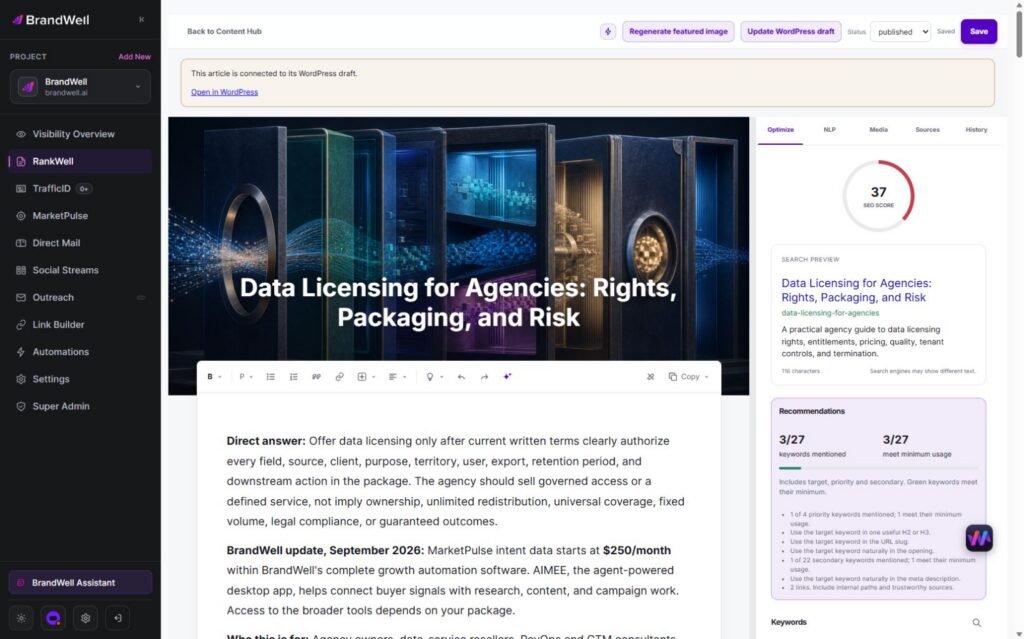
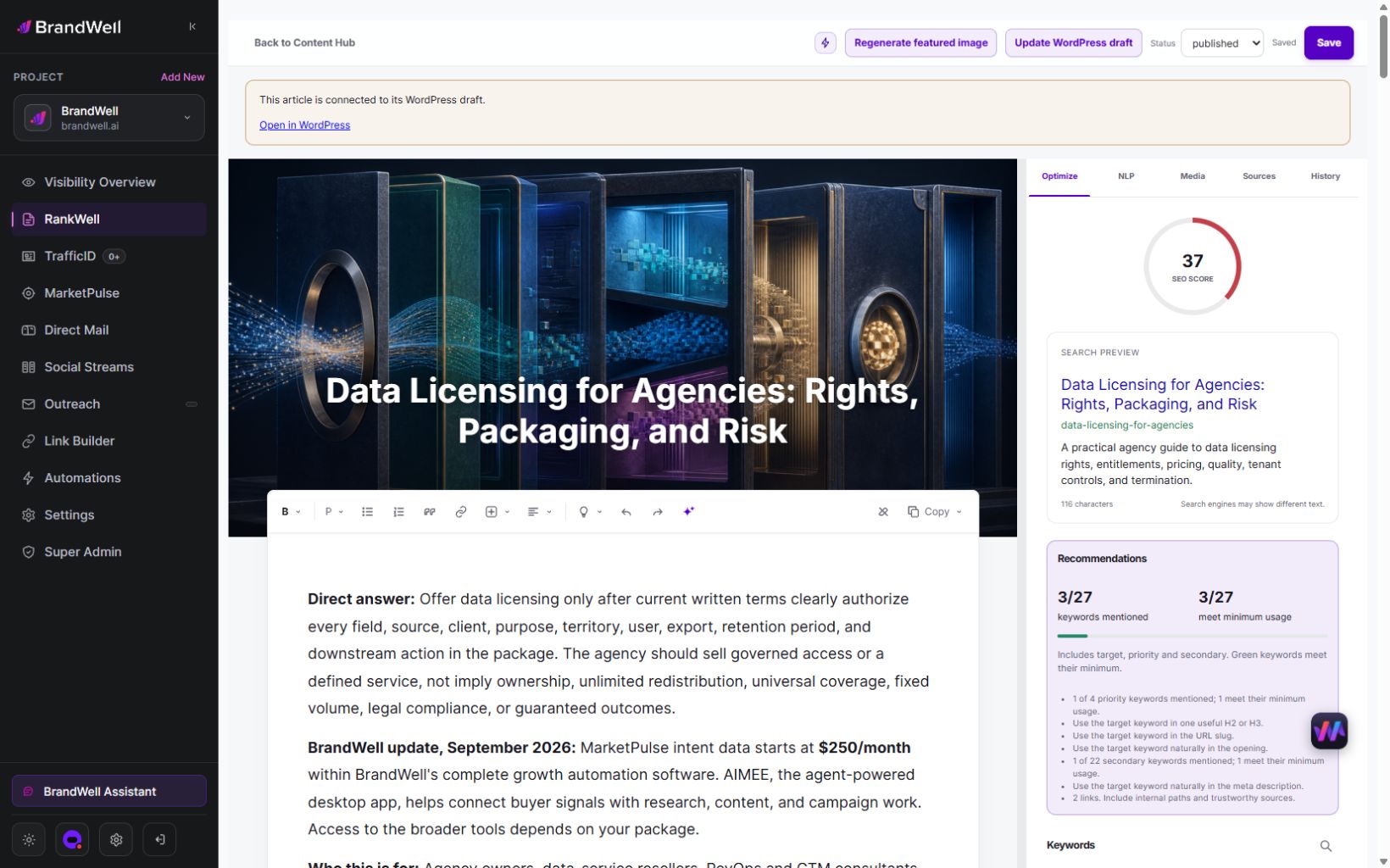
In the current BrandWell portal, RankWell supports content briefs, drafts and editorial review. Work through the article in the editor and inspect its sources and recommendations. Add your own product knowledge and examples before approving publication. Publishing depends on the destination and connection you have configured; a draft is not evidence that an article has gone live.
Keep approval ownership explicit when using AIMEE or configured automations to assist with work. Check the available tools, permissions and required approval before asking for an action. A request to prepare content and a request to publish it should have clear completion evidence.
Measure the reviewed output, not just draft volume
Consider this hypothetical editorial queue, which is not a Focus Bear result: a team creates twelve drafts during a month. Seven pass review, three need source corrections and two are waiting for product screenshots. The useful report is seven approved articles plus five identified follow-up tasks. Calling all twelve finished would hide the bottleneck.
Track time separately for briefing, drafting, factual review, product review and publication. Compare equivalent assignments. If a longer guide requires more source checking than a short tutorial, its total time alone does not prove that the workflow has become less efficient.
Check search performance without assuming causation
Use the same date range and query filters when reviewing an article in Google Search Console. Separate branded searches from the non-branded question the article addresses. A higher impression count can come with a lower click-through rate when the page begins appearing for broader queries. Look at the actual search intent before changing the title or promising a result.
For a customer case study, preserve the reporting period and identify who supplied each outcome. If the supporting export or measurement method is unavailable, label that limitation rather than converting a historical claim into a current benchmark.
The lesson for your team
A repeatable content process needs both production support and a review standard. Use this historical story as a prompt to improve topic briefs, citation checks and approval states. For the current workflow, explore RankWell and evaluate a real assignment in your own team. Judge it by useful, approved content and documented performance, rather than a promised ranking.
Reviewed and updated October 3, 2026.

Written by
Julia McCoy has contributed articles to BrandWell on content marketing, writing, and search engine optimization. This archive retains her original bylines; individual articles may be updated by the BrandWell editorial team.