On this page
- What the original interview supports
- Separate the content process from the outcome claim
- Build content around a real reader question
- Read, edit and verify before publication
- Maintain a reviewed content backlog
- Treat links and monetization as separate decisions
- Apply the editorial lesson in current BrandWell
- Common questions
This historical Rhino Rank case study is most useful as an account of editorial ownership, source review and content planning. It records an interview from the Content at Scale period; it is not a current product offer or an independently audited performance study.
The previous version combined content, domain and link activity with revenue claims that this review could not substantiate from the original interview. This update does not repeat those figures or attribute a business result to AI drafting alone.
What the original interview supports
In the original customer interview, the guests describe reading and editing content before publication, checking source currency and taking responsibility for what they publish. These are historical self-reports, not a controlled comparison of writing tools.
Later in the interview, they describe preparing a content backlog and checking scheduled material again before it goes live. The operational lesson is maintaining review ownership as production and publication become separate stages.
The original recording refers to Content at Scale and its features at that time. Current BrandWell content work is handled through RankWell; the old interface and offers should not be treated as instructions for the current app.
Separate the content process from the outcome claim
A case involving multiple changes cannot establish what a single drafting tool caused. Research, existing site history, editing, publication, distribution and monetization can all be part of the project. Inspect the actual evidence before attributing a result.
Useful questions include the dates of the work, which pages changed, what sources supported the content and how business outcomes were recorded. A traffic estimate is not an accounting record, and gross revenue is not profit.
- Process: what work did the team complete?
- Evidence: which original records support the reported outcome?
- Scope: what else changed during that period?
- Attribution: what can the evidence establish?
- Transfer: which lesson applies to your own project?
Build content around a real reader question
Investigate the questions your audience needs answered and the material already on your site. Use keyword information as one input to that investigation. Do not copy another site’s structure or treat a difficulty score as permission to publish an unsupported guide.
For an original hypothetical agency article about preparing a service brief, collect the actual required inputs and explain why they matter. Use a practical example the reviewer can defend. Avoid invented client results or promises that every reader will earn money.
Read, edit and verify before publication
The historical interview’s clearest editorial lesson is ownership of the finished text. Read the complete draft, open its sources, correct unsupported claims and ensure that examples fit the intended reader.
Check image captions, lists, internal destinations and FAQs as well as the main paragraphs. A generated citation can lead to a real page without supporting the specific statement. Confirm the units, period and context when a number is involved.
For a hypothetical draft saying a service is always the cheapest option, the reviewer should remove that statement unless a defined, current comparison supports it. General enthusiasm about a tool does not supply that evidence.
Maintain a reviewed content backlog
Use planning to separate draft preparation, editorial approval and publication. Record an owner and unresolved questions for each article. A scheduled date should not turn an unfinished draft into approved content.
Recheck time-sensitive material before publication. Product offers, instructions, sources and examples may need revision between drafting and release. Keep the approved version identifiable so the publishing step uses the reviewed material.
Original backlog example
A hypothetical agency has 12 planned articles: five are approved, four await source review and three await client input. The publication-ready backlog is five articles, not 12. This invented example illustrates editorial states; it does not reproduce Rhino Rank’s results or measured BrandWell performance.
Treat links and monetization as separate decisions
Do not turn a historical case into a universal link-ratio recipe or an instruction to buy links for ranking gains. Review the purpose, relationship and permitted use of any placement separately from the quality of the article.
Google’s reminder on commercial links asks publishers to qualify affiliate links with rel="sponsored" and to annotate sponsored or guest-post links appropriately. Commercial link handling is a separate requirement from generating content.
This case does not recommend a domain broker, affiliate program or paid-link vendor. An existing domain or link profile does not establish that a new publishing project will succeed.
Apply the editorial lesson in current BrandWell
Use Visibility for keyword investigation and RankWell for the content workflow. Define the reader and source requirements, then review the article alongside the search preview, recommendations, media and sources.
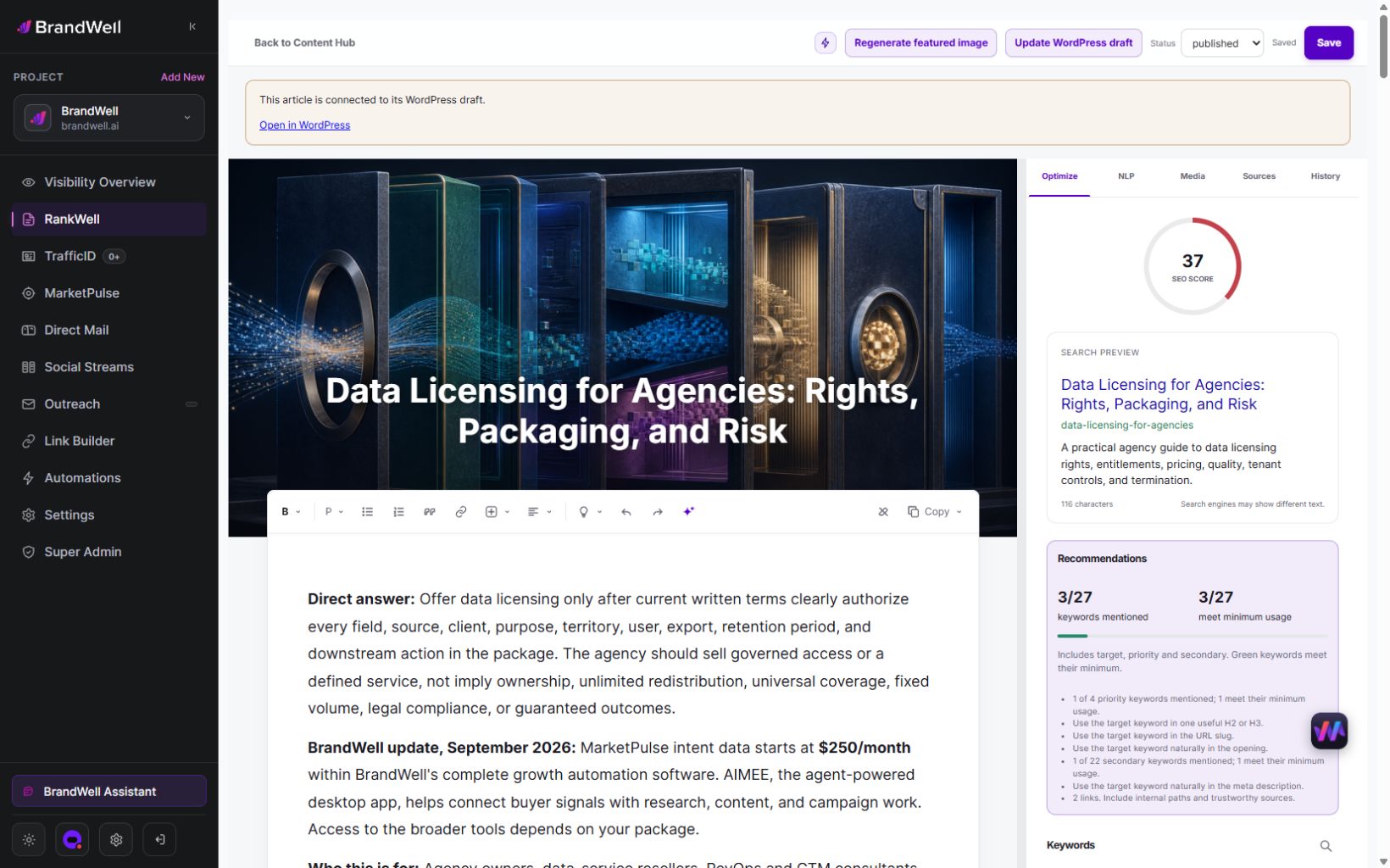
Check the final text and configured destination before approving publication. AIMEE can help carry approved work through configured tools and permissions. Keep review ownership explicit.
Review current product plans for the capabilities and usage you need. This historical case does not establish a current allowance, revenue forecast or guaranteed ranking outcome.
Common questions
Does the interview prove that AI drafting caused revenue?
No. The evidence reviewed here supports historical workflow descriptions, not isolated revenue attribution.
Should a prepared backlog publish without another check?
No. Recheck time-sensitive details and unresolved questions before release.
Is this a guide to the old Content at Scale interface?
No. Use the current RankWell workflow and current product details for BrandWell content work.
Reviewed and updated October 3, 2026.

Written by
Julia McCoy has contributed articles to BrandWell on content marketing, writing, and search engine optimization. This archive retains her original bylines; individual articles may be updated by the BrandWell editorial team.