On this page
This article began as a historical profile of Joe Crivello-Sorensen’s agency content operation, Top Click Joe. Its earlier headline combined revenue, sales and ranking figures from different periods. Those figures should not be treated as a current BrandWell offer, a typical customer result or proof that one software product caused the outcomes.
The revised guide focuses on the useful operational questions: how an agency chooses topics, reviews articles, coordinates publishing and measures client outcomes. It points to the current BrandWell products rather than repeating obsolete bundles, interface instructions or ranking promises.
Read historical case studies with their scope intact
The earlier profile linked an agency interview and a later discussion. These are historical source materials, not an independent audit of today’s results. This revision does not reproduce unverifiable revenue totals or attribute a client’s entire sales outcome to a single article.
When a case combines content, advertising, local listings, referrals and website changes, keep those channels separate in the interpretation. Revenue, booked work, leads and search rankings are different measures. A screenshot of a search result does not establish revenue attribution.
Start with a client-specific brief
An agency should know which business, service area and reader the article serves. Record the product or service scope, evidence, reviewer and intended next step. Do not reuse a generic brief across clients with materially different services.
- Reader’s question: what the prospect needs to understand.
- Client facts: services, prerequisites, limits and actual service area.
- Evidence: current product information or qualified subject review.
- Approval: who checks claims before publication.
- Outcome: the useful action the page should support.
For a hypothetical restoration company, an educational brief could explain what information to gather before contacting a professional. It should not invent safety advice, insurance coverage or guarantees about a property’s condition. Have the responsible subject specialist assess material claims.
Keep drafting and approval separate
Generating an article is one stage of delivery. The reviewer still needs to read it, check sources and confirm that examples match the client’s actual work. Do not manufacture firsthand experience to make the article appear more credible.
Assign responsibility for editorial review, media and publishing. Use a queue or calendar to make the handoff visible. A publishing buffer can help organize work, but it does not justify releasing articles before the required review.
Use original, relevant media
Show a current interface or a genuine, permitted service photograph when it helps answer the question. Label illustrative imagery so readers do not mistake it for a documented customer event. Check captions, alternative text and the narrow-screen layout.
A long pillar article is not inherently more useful than a concise guide. Organize the material around the reader’s task and link to relevant supporting explanations. Remove repeated sections that add length without adding information.
Measure the full client engagement
Keep search evidence, inquiry qualification and commercial outcomes distinct. Record the period, attribution method and other campaigns running at the same time. Do not describe all revenue as coming from content when referrals or advertising also contributed.
In an original hypothetical example, an agency engagement costs $2,000 for the month and produces ten qualified inquiries across several channels. The aggregate cost is $200 per qualified inquiry. It is not the cost per organic inquiry unless the relevant spend and inquiries can be assigned to that channel. This example is not Top Click Joe’s pricing or measured results.
Also distinguish revenue from profit. Tool costs, editorial labor, media, advertising and account service can change the economics of delivery. Define the scope before comparing costs between projects.
Apply the process in current BrandWell
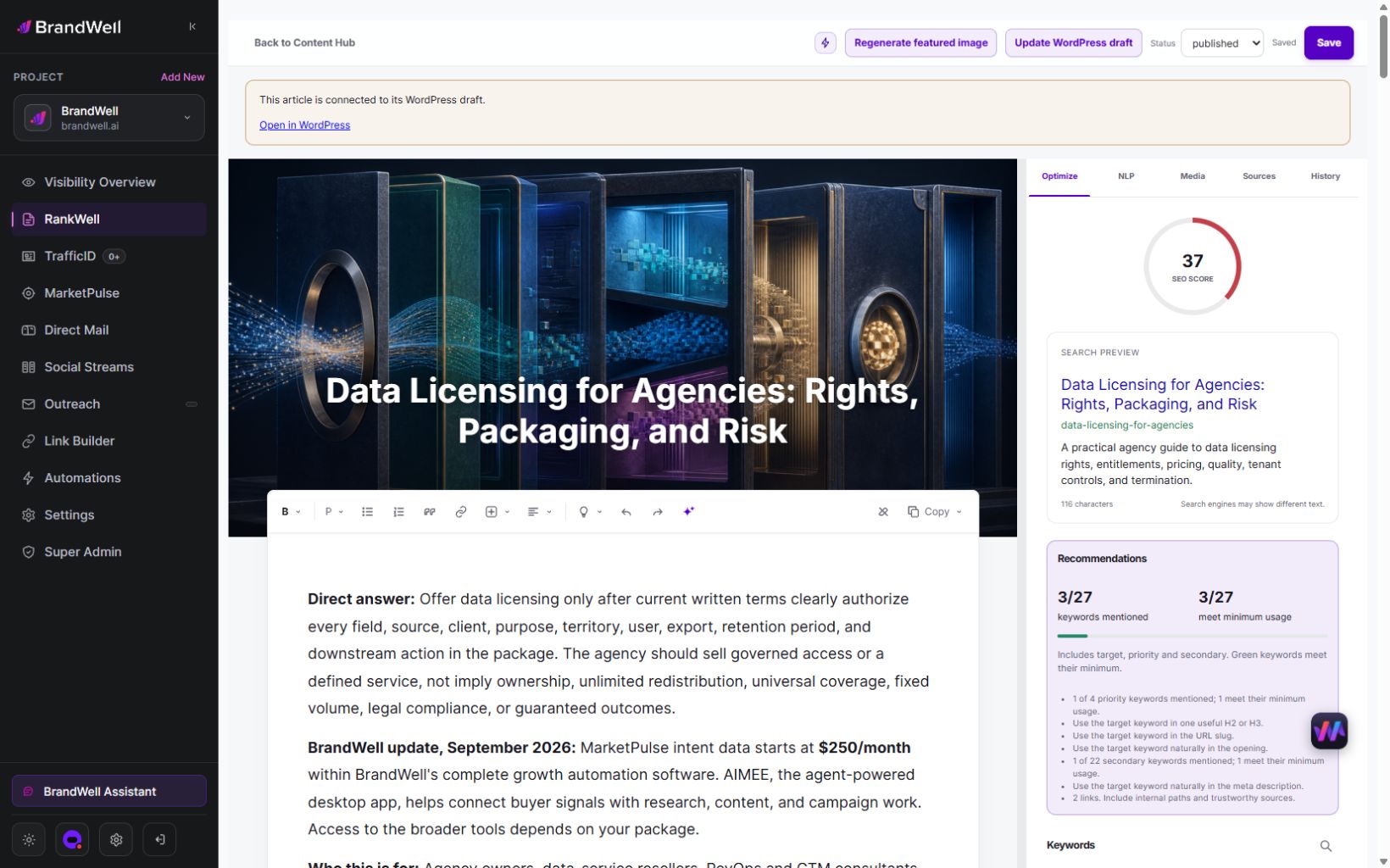
Use Visibility for keyword research and opportunity investigation. Use RankWell to develop a brief, draft and reviewed article. Check the content, sources, media and search preview before publishing through the configured workflow.
Where Automations supports the actual workflow, configure the trigger, destination, owner and approval requirements. Do not assume a draft automatically approves an article or launches a campaign.
What the case can help a team evaluate
A historical profile can suggest useful questions about staffing, briefs and review. It cannot promise a first-page ranking, a revenue multiple or a fixed time to results. Evaluate the work and outcomes in the client’s own context.
Explore RankWell for the current content product and the current pricing page for available plans. Use the historical interviews as context, not current product specifications.
Reviewed and updated October 3, 2026.

Written by
Julia McCoy has contributed articles to BrandWell on content marketing, writing, and search engine optimization. This archive retains her original bylines; individual articles may be updated by the BrandWell editorial team.