Current product context — September 2026: BrandWell now combines content, buyer intent, website audiences, and execution in complete growth automation software. RankWell supports the content workflow, and AIMEE is the agent-powered desktop app that helps complete work through connected tools. MarketPulse intent data starts at $250/month; other capabilities and usage depend on the selected package. Explore the current content workflow or see a demand scan and demo.
Did you know that 79% of marketing leads never convert into sales? One of the biggest culprits is poor lead prioritization.
That’s where lead scoring comes in. By assigning value to leads based on their potential to convert, businesses can zero in on high-quality opportunities and avoid wasting time on leads that go nowhere.
But here’s the catch: traditional lead scoring often relies on incomplete data, leaving sales teams guessing about who their best prospects really are. What if you could eliminate the guesswork and access a goldmine of actionable insights about your website visitors?
Enter TrafficID — a game-changing tool that reveals exactly who is visiting your website, what they’re interested in, and how likely they are to take the next step.
With insightful TrafficID data, you can create accurate lead scoring models that drive efficiency and results.
In this post, we’ll dive into the fundamentals of lead scoring, the limitations of traditional approaches, and how TrafficID can help you revolutionize your strategy to prioritize prospects and maximize conversions.
If you’re ready to transform your lead scoring process and improve your bottom line, let’s get started!
Table Of Contents:
- What is Lead Scoring and Why is It Important?
- How TrafficID Enhances Lead Scoring
- Benefits of Using TrafficID for Lead Scoring
- How to Implement Lead Scoring with TrafficID
- Building a Lead Scoring Model with TrafficID
- Combining Traditional Lead Scoring with TrafficID Data
- Using TrafficID in your growth workflow
What is Lead Scoring and Why is It Important?
Let’s start with the basics: what exactly is lead scoring?
Think of it as a way to rank your potential customers — kind of like giving each lead a “hotness” score based on how likely they are to convert into paying customers.
The higher the score, the more attention that lead deserves from your sales team.
Lead scoring is a game-changer for businesses dealing with large volumes of leads. Without it, your sales team might waste hours chasing cold leads while hot prospects slip through the cracks.
And the numbers don’t lie: companies with an effective lead scoring system see a 77% boost in lead generation ROI compared to those without one.
But why does lead scoring matter so much? Here are three key reasons:
1. It saves time.
Instead of your sales team scrambling to contact every lead, they can focus on the ones most likely to convert. This means faster follow-ups and less wasted effort.
2. It boosts alignment between marketing and sales.
Lead scoring creates a common language between your teams. Marketing can pass on only the best-qualified leads, and sales can trust that they’re getting the cream of the crop.
3. It improves conversion rates.
When you target the right people at the right time, you’re more likely to close deals. It’s as simple as that.
Now, here’s the catch: traditional lead scoring relies heavily on manual input and limited data, which can lead to inconsistencies and missed opportunities. A website visitor identification tool like TrafficID takes lead scoring to a whole new level by using real-time data and advanced visitor insights.
Ready to see how this works in action? Let’s explore how TrafficID can help you build a smarter lead scoring strategy.
How TrafficID Enhances Lead Scoring
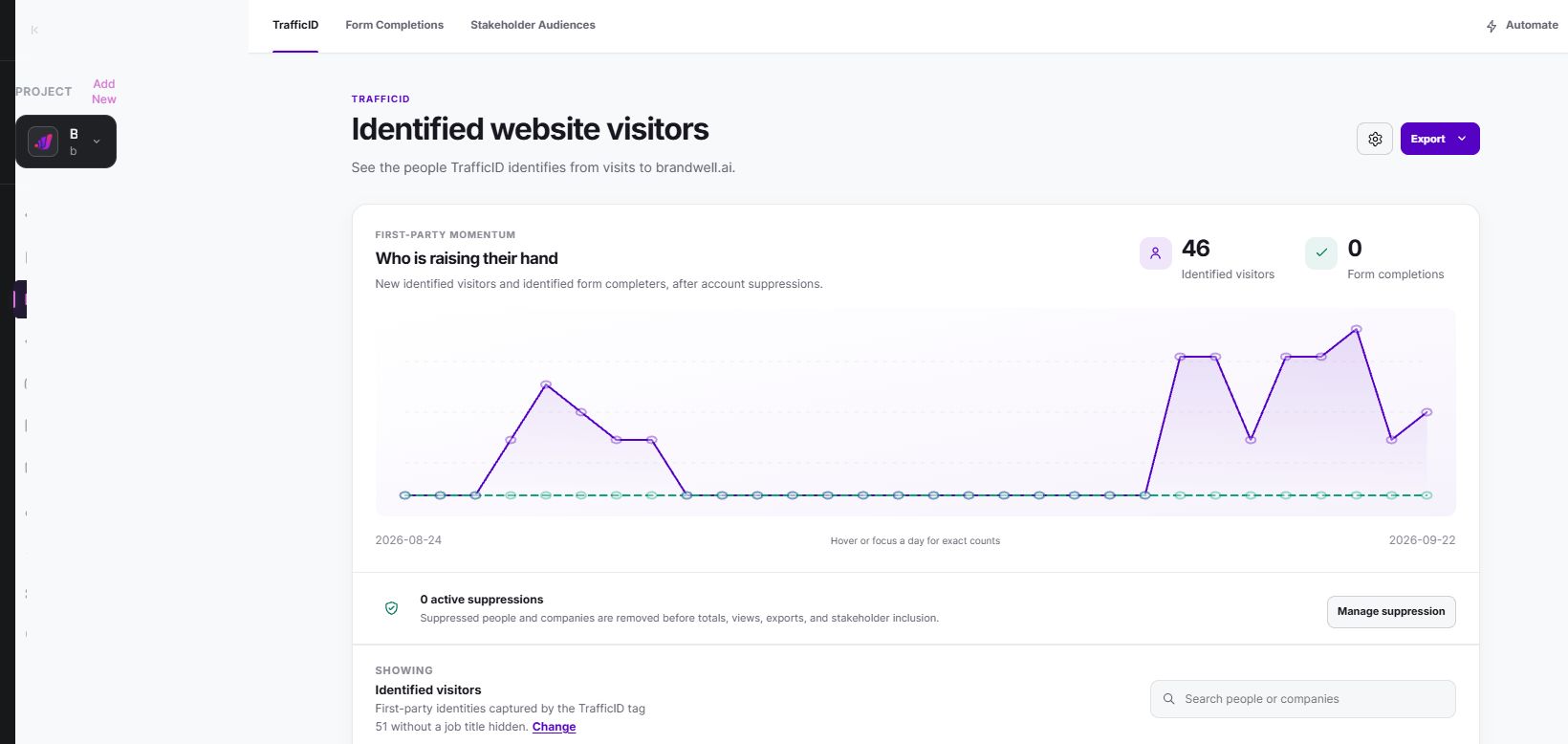
TrafficID is BrandWell’s website visitor identification workflow. It shows identified visitors and available person, role, company, audience-source, and activity fields. Coverage varies; an unidentified visitor, a missing field, or an identified visit is not a guaranteed sales opportunity.
For lead scoring, combine the fields actually present with your ideal customer criteria and relevant activity. Keep fit and engagement separate, record the evidence behind each score, and route qualified records through your configured workflow. Do not assume TrafficID automatically applies a particular scoring model or supplies every behavioral event.
- Select the right project and open TrafficID.
- Open TrafficID settings to review the website tag and installation status. Install the project’s tag on the intended pages and check your exclusions.
- Review the Identified visitors view, filters, and suppression controls. Form Completions and Stakeholder Audiences are separate views.
- For follow-up, use Automate or the relevant configured campaign workflow and review eligibility before enrollment.
Benefits of Using TrafficID for Lead Scoring
Visitor identification can add context to a qualification decision and help your team focus its research. Measure whether that context improves accepted-lead quality and useful conversations. Missing fields and ambiguous matches should remain visible instead of becoming invented scoring inputs.
How to Implement Lead Scoring with TrafficID
Choose the qualification criteria first. Review the available TrafficID records, apply suppression, and bring eligible records into your configured scoring or CRM process. Assign an owner to uncertain matches and inspect a sample before expanding the workflow.
Building a Lead Scoring Model with TrafficID
Build a scoring worksheet with separate columns for company fit, role fit, observed activity, and confidence in the evidence. Agree on the weights with sales and test them against outcomes. For example, a relevant company and decision-making role can raise fit, while a missing role stays unknown. These are rules you define, not a claim that TrafficID calculates them automatically.
Combining Traditional Lead Scoring with TrafficID Data
Combine identified-visitor evidence with the relationship and outcome data in your CRM. Keep the source and date attached to each observation, resolve duplicates, and review conflicts. Treat a visit as one signal alongside fit, responses, and existing account history.
Using TrafficID in your growth workflow
Connect qualified visitor evidence to a specific next step: research the account, prepare relevant content, or propose a follow-up through a configured campaign. AIMEE can help carry approved work into connected tools. Review eligibility and the result at the destination, then measure responses and outcomes to refine the process.