On this page
- What each part contributes
- A practical workflow from article to social campaign
- Example: turn a payroll guide into three useful posts
- Use the current BrandWell workflow
- Measure the journey without mixing metrics
- Handle customer content and endorsements carefully
- Questions about coordinating content and social media
Content marketing develops useful material for an audience; social media marketing distributes and discusses material through social channels. Connect them by choosing one customer question, preparing an evidence-led article and adapting its useful points into posts with a clear next action.
For an agency, the practical goal is a coordinated client workflow. Agree on the audience, approved claims, distribution channels and reporting before creating a large volume of material. More posts alone do not establish business value.
What each part contributes
Content: the complete explanation
An article, guide or video can explain a decision in depth. Give readers the information they need to understand the problem, compare relevant options and take an appropriate next step. Include evidence, limitations and useful examples rather than stretching a short answer to reach a word count.
A maintained article also gives social posts a destination. The destination should fulfill the promise made in the post and work on a phone.
Social: distribution and conversation
A social post can introduce one idea, ask a question or highlight a useful demonstration. Adapt the message to the channel and format instead of copying an entire article into every feed. Check current account features and preview the post before scheduling it.
Replies can identify unanswered questions for future content. Assign someone to handle them; a publishing calendar alone does not create a customer conversation.
A practical workflow from article to social campaign
- Choose the question: use actual customer discussions and relevant search opportunities.
- Create an approved brief: define the reader, answer, evidence, product details and intended action.
- Develop the article: explain the answer, add a relevant example and verify the claims.
- Extract distinct ideas: choose points that make sense independently, rather than chopping paragraphs arbitrarily.
- Adapt each post: prepare the opening, visual, caption and destination for the channel.
- Review and distribute: inspect mobile previews, account access, links and approval status.
- Respond and measure: track questions, visits and meaningful actions, then update the article where needed.
Example: turn a payroll guide into three useful posts
This is an original hypothetical campaign. A payroll software company publishes a guide to preparing employee records for migration. The guide uses approved product details and a fictional sample dataset, with no private employee records.
- A checklist post: list the fields a team should review before migration and link to the complete guide.
- A short demonstration: show one verified step in the current interface, with readable captions.
- A discussion post: ask which migration task takes the team longest and use relevant replies to improve the guide.
The three posts answer different needs while using the same approved source material. None promises a fixed time saving or implies the product handles every payroll system.
Use the current BrandWell workflow
In RankWell, develop the brief and draft, then inspect the article, sources, media and search preview. Use Content Hub to organize article, strategy, queue and calendar work. Confirm the configured publishing destination after approval.
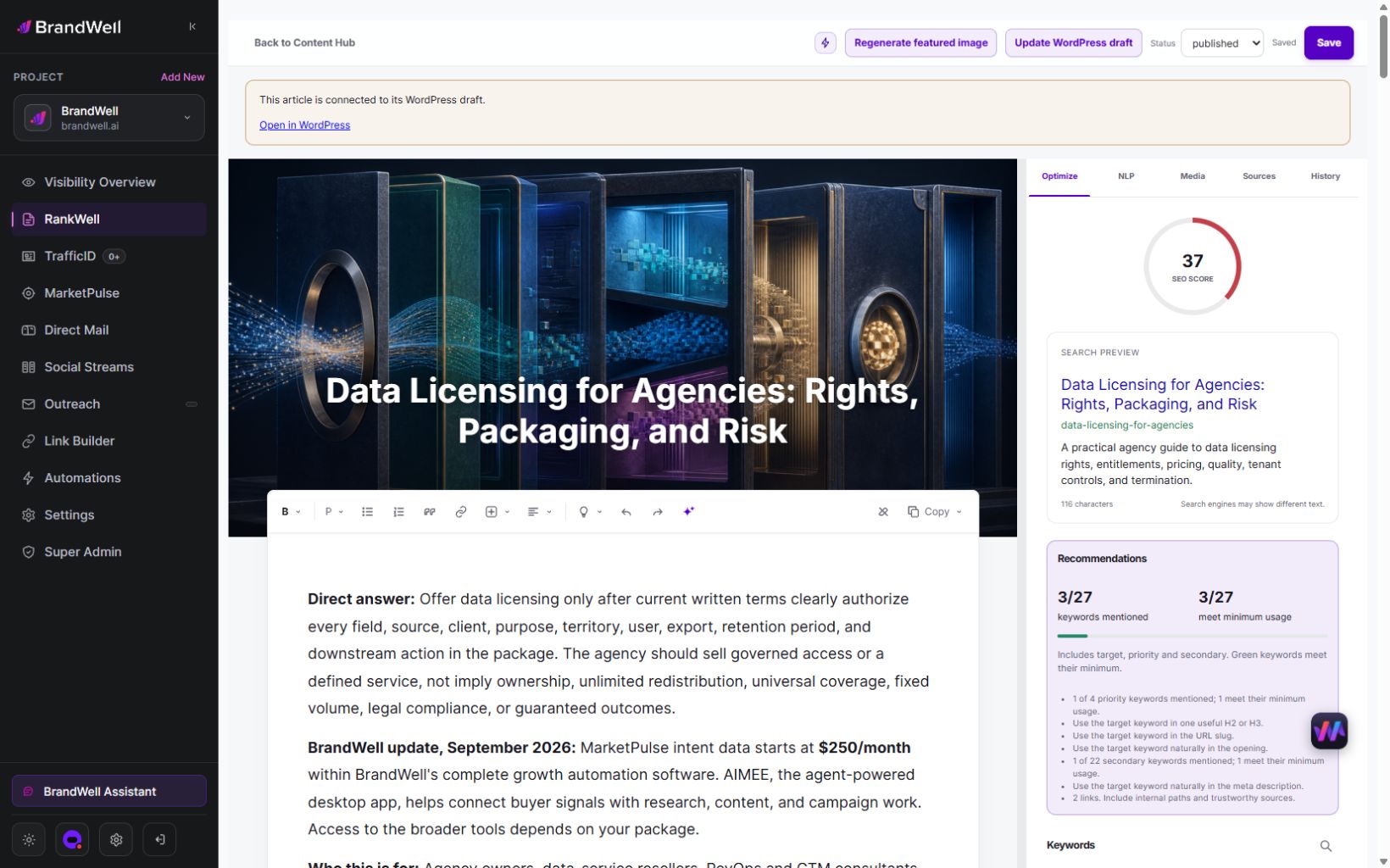
Use SocialStreams for the configured social workflow. Verify available accounts, channels, formats and permissions rather than assuming every network or post type is supported. An adapted draft still needs review for context, tone and the specific destination.
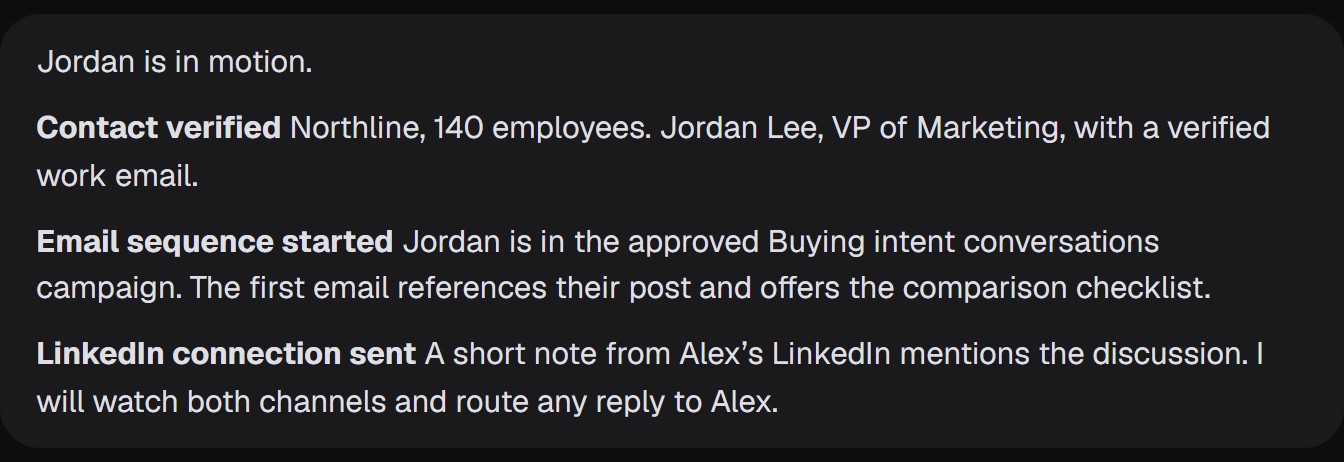
If Automations or AIMEE assists with a handoff, define the trigger, connected tools, owner and approval requirements. Verify what actually completed. A configured workflow does not guarantee reach, engagement or conversions.
Measure the journey without mixing metrics
Choose separate measures for distribution and business outcomes:
- Distribution: channel impressions or reach, using that platform’s definitions.
- Interaction: relevant replies, saves or other actions reported by the channel.
- Website visits: visits attributed to the campaign under your analytics setup.
- Business outcomes: qualified inquiries, purchases or another defined action.
Google Analytics documents how UTM parameters identify referring campaigns. Use consistent source, medium and campaign values on external distribution links, and content values to distinguish creative variants. Read Google’s campaign URL guidance.
For an original hypothetical report, 1,000 tracked visits and 20 submitted inquiries give a 2% inquiry rate for that recorded group. If six inquiries meet your qualification criteria, report six qualified inquiries separately. This example is not a benchmark or proof that social caused every purchase.
Keep paid and organic results distinguishable. Record the measurement period, tracking limits and costs. A platform’s clicks and website sessions can differ; explain the definitions instead of forcing the totals to match.
Handle customer content and endorsements carefully
Obtain permission for customer photos, quotes and other material you reuse. Preserve the speaker’s context and do not turn an individual experience into a universal product promise.
For a paid or otherwise connected endorsement, the FTC recommends an understandable disclosure placed with the endorsement where viewers can notice it. Read the FTC’s social disclosure guide.
For complaints, acknowledge the issue and move private account details into the appropriate support channel. Do not publish an apology claiming an investigation, refund or repair that your team has not approved or completed.
Questions about coordinating content and social media
Should every article become a post on every channel?
No. Choose channels where the audience and format fit. Adapt useful material and leave out content that does not serve a clear purpose there.
Does repurposing guarantee better conversion?
No. Evaluate the actual destination, audience and outcomes. Unsupported universal lift statistics do not establish what your campaign will achieve.
Where should an agency begin?
Start with one client question, one approved article and a manageable set of social adaptations. Build your growth bot and SocialStreams, then confirm the workflow and access available to your team.
Reviewed and updated October 3, 2026.

Written by
Julia McCoy has contributed articles to BrandWell on content marketing, writing, and search engine optimization. This archive retains her original bylines; individual articles may be updated by the BrandWell editorial team.

 Justin McGill