On this page
- Define the service before increasing volume
- Give publishers a reason to reference the work
- Evaluate relevance before a publisher metric
- Build a reviewable outreach queue
- Estimate capacity using the whole process
- Assign internal and external responsibilities clearly
- Use the current BrandWell research and content workflow
- Report the funnel without overstating attribution
- Frequently asked questions
Scale agency link-building work by defining the client objective, researching relevant publishers, creating something worth referencing and controlling the review process. Increase capacity only when your team can maintain those checks. A placement count alone does not establish useful traffic, qualified inquiries or improved search performance.
Separate the work you control, such as research and content quality, from decisions a publisher controls, such as whether to reply, publish or link.
Define the service before increasing volume
Document what the client receives and how you will report it. A research service, content-development project and outreach campaign have different deliverables.
- Objective: the audience and business outcome the work should support.
- Scope: research, assets, outreach, review and reporting included.
- Approval: who authorizes the content and external messages.
- Evidence: how publishers and opportunities will be evaluated.
- Limits: outcomes you cannot promise or control.
Do not sell a guaranteed ranking change or imply that a research tool delivers guaranteed backlinks. Explain how your process creates and evaluates opportunities.
Give publishers a reason to reference the work
Start with an asset that serves a real reader need: a documented process, an original calculation, a carefully sourced explanation or a useful template. Review its facts and permissions before approaching anyone.
Original hypothetical example: a payroll software company creates a migration checklist with field-mapping examples, reconciliation steps and an approval record. The agency looks for resources where that checklist genuinely helps readers prepare a migration. It does not send the same request to every site mentioning payroll.
Keep a short asset brief:
- Who needs it and when?
- What does it explain that the current resource does not?
- Which sources and original examples support it?
- Who reviewed the technical details?
- What must stay current after publication?
Evaluate relevance before a publisher metric
Read the actual page and publication. Check its intended audience, topic fit, current content and editorial expectations. A third-party score is not a substitute for this review.
Record the relevant URL, why the asset fits and whether a contact route is appropriate. Reject opportunities whose only justification is a metric or a promise of ranking credit.
Google’s link-spam policy addresses links created primarily to manipulate rankings, including paid ranking links and automated link creation. Review the policy when defining your service and its deliverables.
Keep editorial outreach separate from advertising arrangements. Disclose the nature of the relationship and check applicable linking and publication requirements.
Build a reviewable outreach queue
Use a record for each opportunity instead of treating a contact list as a completed campaign.
- Researched: a person has checked the page and fit.
- Drafted: the proposed message explains the relevant asset.
- Approved: the responsible owner has checked the message and permissions.
- Sent: record the date and actual recipient.
- Replied: record the publisher’s response and next action.
- Published or declined: verify the outcome.
Keep contact preferences and prior correspondence visible to the team. Do not repeatedly pursue people who have declined. A workflow should support thoughtful communication, not conceal repeated automated messages.
Estimate capacity using the whole process
Count research, writing, approvals, correspondence, checks and reporting. The time required to send a message is only a small part of the work.
Original hypothetical planning example: an agency has 30 hours available this month. It reserves six for client approvals and reporting, leaving 24. If each thoroughly researched and reviewed opportunity requires 45 minutes, the plan has room for 32 opportunities. That is a capacity estimate, not a prediction of 32 placements.
After a pilot, compare estimated and actual time. If revisions or follow-up take longer than expected, adjust the plan before adding clients.
Assign internal and external responsibilities clearly
An internal team may know the client’s subject and approval process well. An external specialist may add capacity or relevant expertise. Neither arrangement automatically guarantees quality, savings or compliant methods.
For work performed externally, specify:
- The methods and deliverables you will approve.
- The evidence required for publisher selection.
- How client information may be accessed and used.
- Who handles replies and corrections.
- How publication is checked and reported.
- What happens when a proposed opportunity fails review.
Keep ownership of client expectations and final reporting. Delegating a task does not make an unverifiable claim suitable for a client report.
Use the current BrandWell research and content workflow
Use the Link Builder workflow available to Growth and Scale accounts to research relevant opportunities and review the source evidence. Check the workflow available to your account and keep publisher decisions separate from research results.
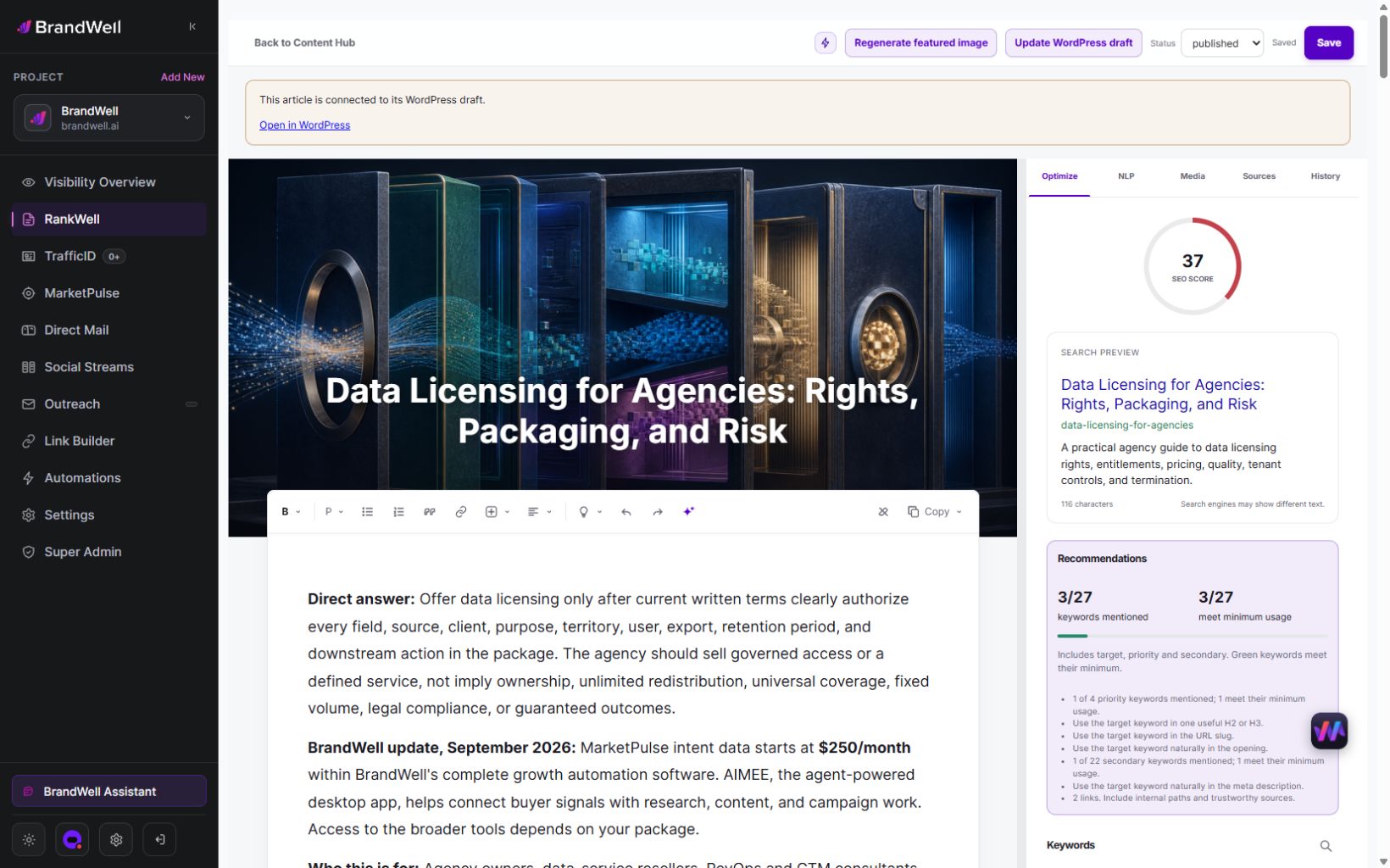
Use RankWell to develop and review the asset. Bring the client brief, reliable sources and original examples into the content process. Review the finished draft, media and search preview before publication.
For configured recurring tasks, Automations can support the workflow. Define the trigger, responsible owner, review requirement and tools involved. Verify permissions and approved actions before external communication.
Report the funnel without overstating attribution
Distinguish opportunities researched, messages approved, messages sent, replies and verified publications. Then examine referral visits and useful actions where measurement is available.
Original hypothetical result: 20 messages produce four replies and one verified publication. The reply rate is 20%; the publication rate among those messages is 5%. Neither number proves an SEO gain or a sale.
Record the dates and assets involved. Compare search performance in context, including other site changes and demand. Do not attribute every later ranking movement to a link campaign.
Frequently asked questions
Should an agency charge only by the number of links?
Describe the service and outcomes carefully. Counting placements alone can hide differences in relevance, work quality and reader value.
Can a workflow guarantee publishers will link?
No. The publisher decides whether the resource fits and whether to reference it.
How should an agency increase capacity?
Measure the full workload, improve recurring steps and preserve review standards. Expand after the pilot shows what the team can maintain.
What belongs in the client report?
Verified work, its dates, the evidence supporting each outcome and measured activity. Separate completed deliverables from estimates and unproven business impact.
Reviewed and updated October 3, 2026.

Written by