On this page
- Copywriting examples: make the benefit concrete
- Research four things before drafting
- Use AIDA and PAS for different jobs
- A worked example for a service business
- Match voice, structure and visuals to the task
- Prepare and review copy in RankWell
- A compact copywriting checklist
- Test qualified outcomes as well as clicks
- Frequently asked questions
Copywriting in marketing helps a specific reader understand an offer and take a useful next step. Good copy connects a real need to a clear benefit, credible evidence and an accurate call to action.
Begin with what the product actually does. Persuasive language cannot repair an unsupported promise or an offer that does not fit the reader.
Copywriting examples: make the benefit concrete
| Vague version | More useful version | What changed |
|---|---|---|
| Advanced analytics for your business | See which support queues need attention before the backlog grows | Connects a capability to a recognizable task |
| A comprehensive content solution | Research a topic, review existing coverage and prepare a content brief | Explains an observable workflow |
| Get started today | Review the setup checklist | States what happens after clicking |
Swipe the table to see all columns.
These are illustrative rewrites. Use them only when the described capability and next step exist. They are not measured conversion winners.
Research four things before drafting
- Reader: who needs the offer and what decision are they making?
- Problem: what actual task or obstacle does the offer address?
- Evidence: what supports the capability, benefit or result?
- Action: what will happen when the reader responds?
Use permitted customer conversations, approved product documentation and relevant research. Do not substitute a broad age-group stereotype for understanding the specific audience.
The FTC’s advertising guidance requires evidence for advertising claims.
Use AIDA and PAS for different jobs
AIDA organizes attention, interest, desire and action. It can help introduce an unfamiliar offer: identify the situation, explain why it matters, show a supported benefit and offer an appropriate next step.
PAS organizes a problem, its consequences and a solution. Keep the consequence factual. The framework is not permission to exaggerate fear or imply a problem the reader does not have.
Neither framework guarantees a sale. Choose the structure that helps the reader understand the offer with the least unnecessary effort.
A worked example for a service business
Imagine a payroll implementation service that genuinely reviews migration records before a setup call. Its approved facts are a checklist, a named review owner and a process for flagging missing information.
Example copy: Preparing to move payroll systems? Gather the employee records and payroll schedule on our setup checklist. Your implementation contact will review them before the call and flag missing information. Review the checklist to prepare your records.
This version states a task, a supported service and a specific action. It avoids an invented time-saving percentage or a promise that migration errors will disappear.
Match voice, structure and visuals to the task
Use familiar words, direct sentences and headings that help the reader find the answer. Explain necessary technical terms. Keep the brand voice consistent while adjusting the tone to the situation.
Use a screenshot when it demonstrates a real step, a diagram when it explains a relationship or a photograph when it supplies relevant context. Check captions, permissions and mobile readability. Decorative media should not imply a customer result.
Make conditions easy to find. If an offer has a deadline, limitation or recurring commitment, explain it accurately. Use urgency only when the underlying constraint is real.
Prepare and review copy in RankWell
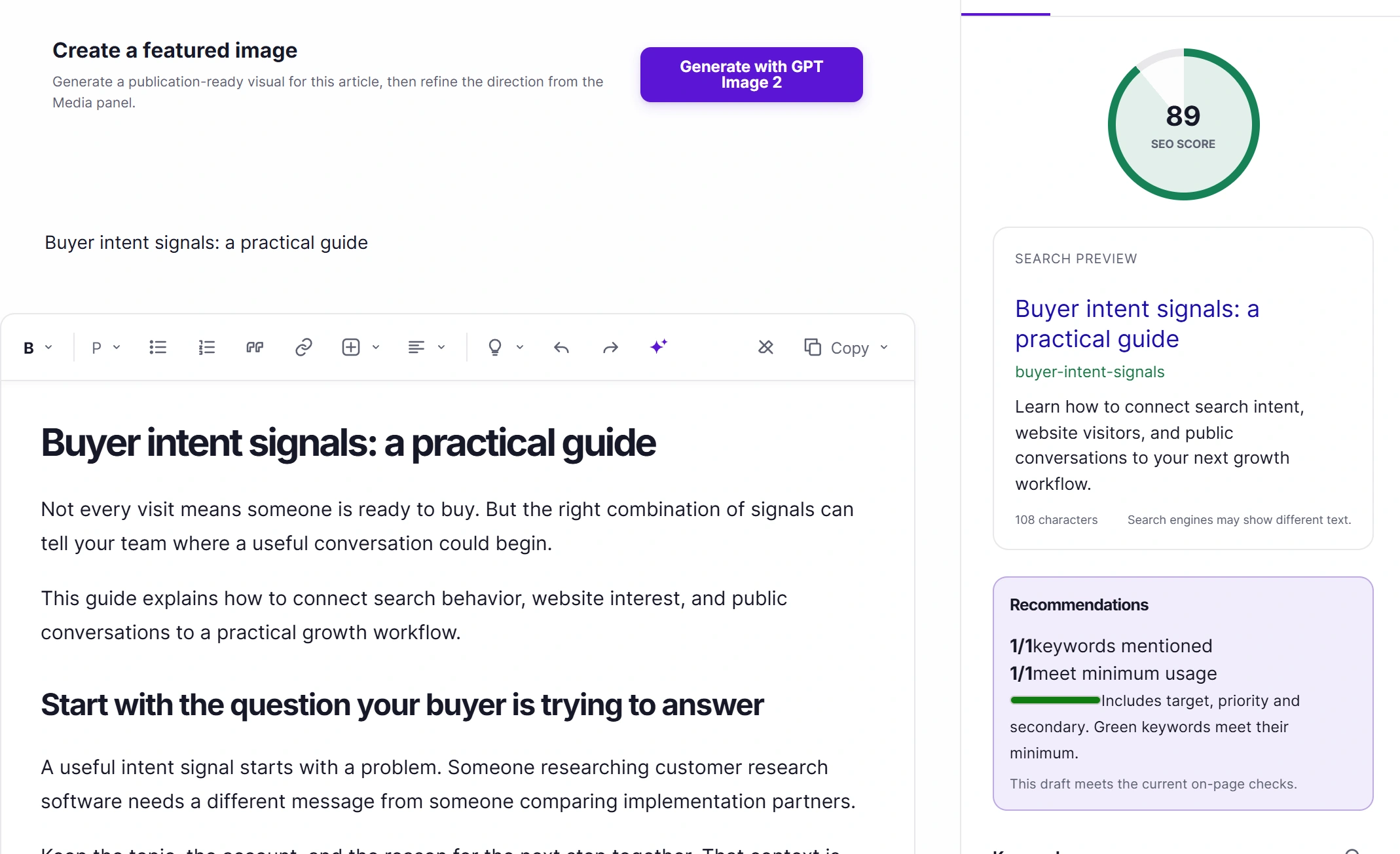
For content work, RankWell supports planning and draft review with supplied sources, current product facts and brand voice. Inspect existing coverage before choosing to create, improve or merge.
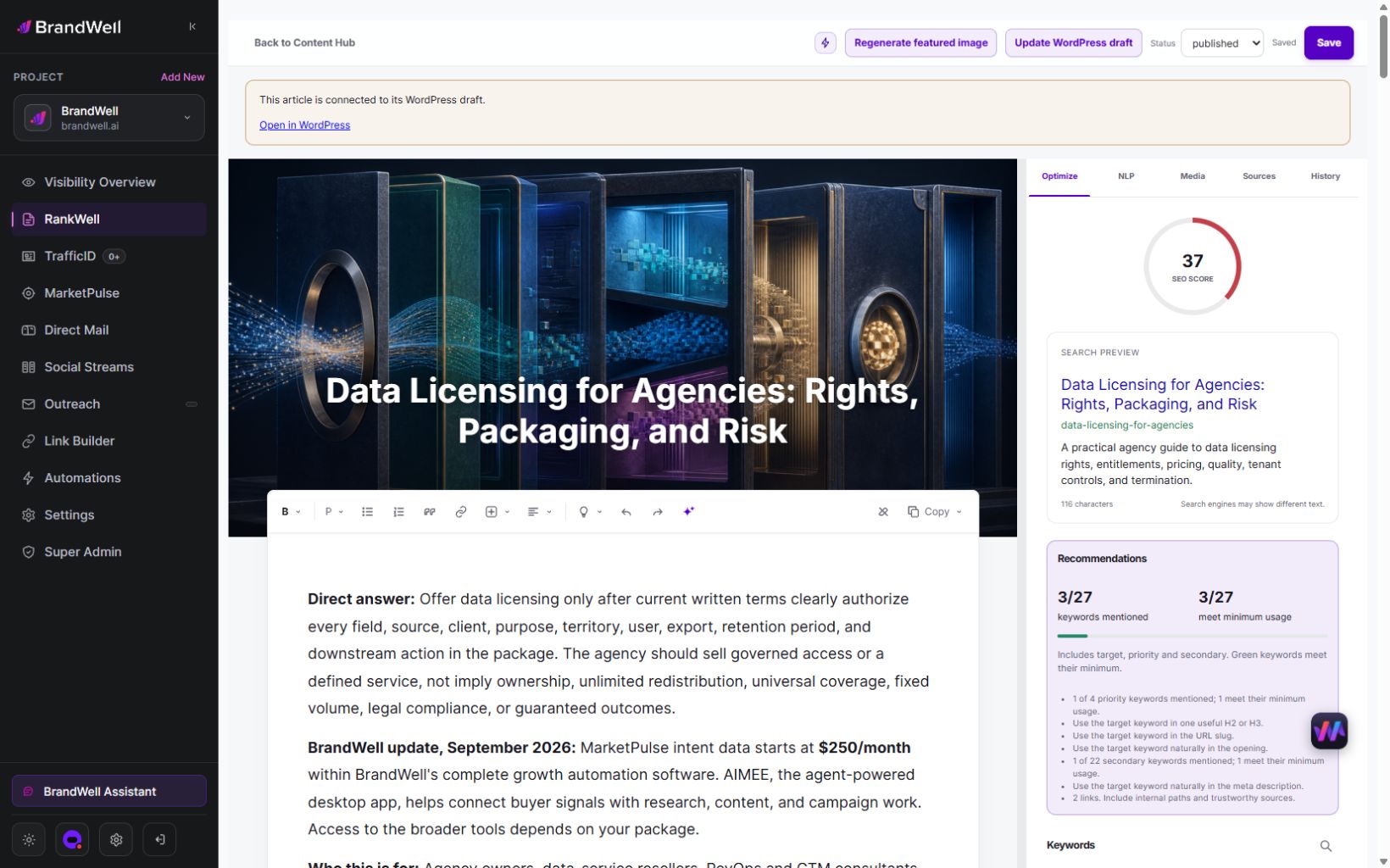
Check the opening, examples, source links, media and search preview. AIMEE actions depend on configured tools and access; do not assume an arbitrary publishing or campaign integration exists.
A compact copywriting checklist
- Can the reader identify who the offer is for?
- Does the benefit describe an actual capability or supported result?
- Are important conditions and evidence visible?
- Does the button accurately describe the next step?
- Do headings, links and forms work on mobile?
- Has someone checked the final version against current product facts?
Test qualified outcomes as well as clicks
In a fictional test, one version receives 100 clicks from 5,000 impressions and five qualified inquiries. Another receives 150 clicks from 5,000 impressions but only three qualified inquiries. CTR rises from 2% to 3%, while qualified inquiries per impression fall from 0.10% to 0.06%.
A more clickable promise can attract the wrong audience. Record the test conditions and use a suitable comparison before treating an observed difference as a causal result.
Frequently asked questions
Is copywriting different from content writing?
The purposes can overlap. Copy often emphasizes a specific action, while a guide may focus on explaining a task. Both need accuracy and a clear audience.
Should every CTA say “Sign up now”?
No. Describe the actual next step and match it to the reader’s readiness.
Is short copy always better?
Use enough detail for the decision. Remove repetition while preserving evidence, conditions and useful explanations.
Reviewed and updated October 7, 2026.

Written by
Julia McCoy has contributed articles to BrandWell on content marketing, writing, and search engine optimization. This archive retains her original bylines; individual articles may be updated by the BrandWell editorial team.

 Justin McGill