



On this page
There is no single most popular type of blog. Food, travel, finance and other subjects attract different audiences, and a category that performs well for one publisher may be a poor fit for another. To choose a useful niche, define the reader, check demand for specific questions and decide whether you can contribute credible experience.
This guide separates blog topics from post formats, explains how to compare opportunities and gives 12 categories to explore. They are examples, not a traffic or income ranking.
What does popular mean for a blog?
A blog can have strong search traffic, a loyal newsletter audience or useful business inquiries. Those are different outcomes. A broad topic with many searches does not necessarily give a new site an easy route to readers, and a smaller specialist blog can serve a valuable audience.
- Search demand: Are people looking for the specific questions you can answer?
- Audience fit: Are those readers the people you want to help?
- Original value: Can you offer examples, tested methods, photographs, interviews or other evidence?
- Business value: Does the content lead naturally to an appropriate next step?
A niche describes the subject and audience, such as bookkeeping for independent contractors. A format describes the presentation, such as a tutorial, comparison, checklist or interview. A listicle is a format, not an industry.
12 blog categories to consider
1. Lifestyle
Lifestyle writing can cover routines, relationships, hobbies and everyday decisions. Narrow the audience instead of combining unrelated advice. For example, a guide to planning meals around shift work has a clearer reader than a general collection of lifestyle tips.
2. Food and cooking
Recipes and cooking methods benefit from actual testing. Include measurements, preparation steps, substitutions you have tried and original photographs. A recipe that looks attractive but fails in a reader’s kitchen does not become useful because its headline targets a large keyword.
3. Fashion
Fashion articles can address fit, materials, care, styling and specific occasions. Explain the conditions behind a recommendation. Original comparisons and photographs help readers assess what you mean rather than relying on generic claims about a trend.
4. Travel
Travel writing needs dates and location-specific checks. Transport, entry requirements, opening hours and prices can change. Distinguish places you visited from research-based suggestions and link important practical information to the relevant official authority.
5. Health and fitness
Health content requires special care with evidence and expertise. Avoid presenting personal experience as medical advice or making unsubstantiated treatment claims. Identify the author and reviewer where relevant, and use appropriate research or public health sources.
6. DIY and crafts
Show materials, steps, likely difficulties and the finished result. Process photographs can be more useful than a polished stock image. For tasks involving tools, electricity or chemicals, explain the limits of a beginner tutorial and use authoritative safety guidance.
7. Parenting
Choose a particular question or stage of family life. Firsthand experience can add context, but it does not establish that one approach works for every family. Separate practical personal suggestions from developmental or health claims that require qualified evidence.
8. Business
Business blogs can explain processes, decisions and common customer problems. A service company might publish a troubleshooting guide, an implementation checklist or a worked example. Show the assumptions behind any calculation instead of promising universal savings or growth.
9. Personal finance
Budgeting, taxes and financial decisions depend on location and individual circumstances. Check dates and jurisdiction, use official sources for rules and explain examples clearly. Traffic potential is not a reason to offer investment or tax guidance beyond your expertise.
10. Photography
Explain the choices behind an image: lighting, composition, settings and editing. Original sample photographs and comparisons make a technique easier to understand. Credit other people’s work and check permission before reproducing it.
11. Interior design
Help readers make decisions about layout, lighting, materials or small spaces. Include dimensions, constraints and photographs where possible. A room plan for a particular budget and space is more actionable than a collection of loosely related inspiration images.
12. Gaming
Game guides, troubleshooting and reviews need a specific version or platform when behavior differs. State what you tested and update instructions when patches change them. Avoid describing a strategy as certain to work without the conditions needed to reproduce it.
How to compare niches using evidence
- Start with reader questions. Collect questions from customer conversations, support requests and your own expertise. Group them by the problem the reader wants to solve.
- Compare interest carefully. Google Trends can help compare relative interest within a selected place and period. Its scores are normalized, not absolute search volumes or counts of customers. A spike does not prove a sustainable business opportunity. Read Google’s explanation of Trends data.
- Inspect the search results. Look at what the results answer and what evidence they provide. Record a gap you can fill with useful original work, not just an extra heading.
- Use your site’s data. In Search Console, compare pages, queries, impressions, clicks, CTR and position over a consistent period. These describe your property’s search performance, not the global popularity of an entire niche. See the Search Console performance guidance.
- Publish a small pilot. Test a few related articles before committing to a large calendar. Track whether readers find the pages, engage with the answer and take the appropriate next step.
A practical example: an IT service business
Consider an illustrative business that supports small offices. Instead of starting a broad technology blog, it could answer three connected questions: how to prepare for an IT provider change, what to include in an onboarding checklist and how to document recurring support problems.
The original contribution could be an anonymized checklist based on the team’s actual process. The next step might be a consultation to review the reader’s requirements. This is a planning example, not a claim that these topics will deliver a particular traffic or conversion result.
Plan and review the content in BrandWell
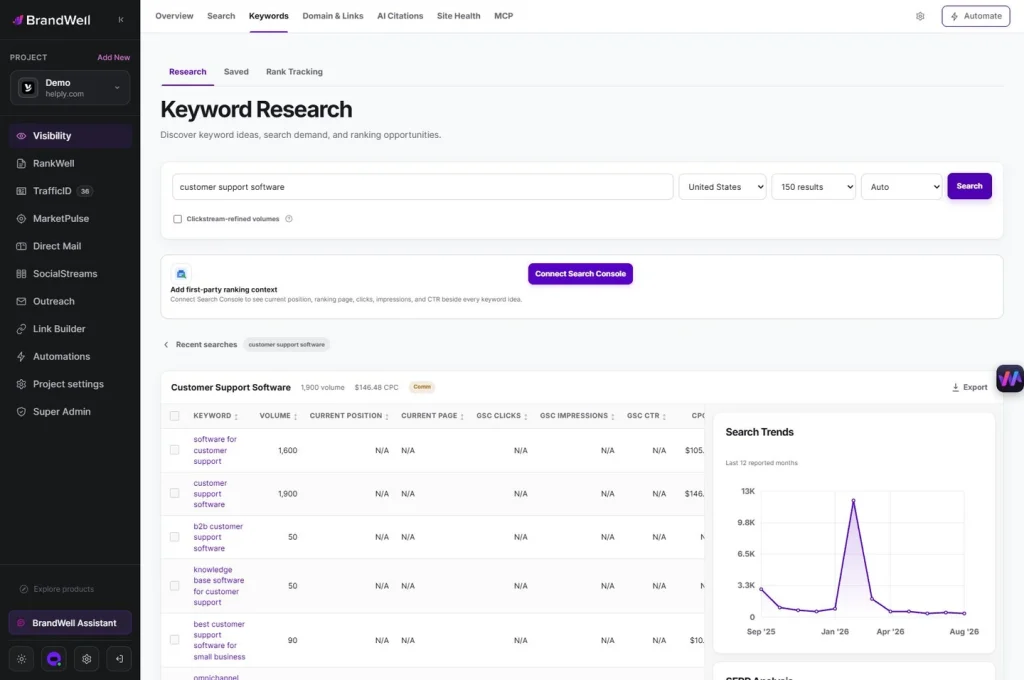
Use Keyword Research in BrandWell’s Visibility workspace to investigate candidate questions. Then use RankWell to develop a brief and draft that addresses the reader’s task. Add your own examples and verified sources, review the text and images, and use your configured publishing workflow when the article is ready.
AIMEE can support work through configured tools and approved tasks. Review its outputs rather than assuming a draft establishes a fact. Learn more about RankWell and the current BrandWell portal.
Quality and monetization checks
Google’s people-first content guidance emphasizes useful, reliable content. Make the answer easy to find, show the basis for factual claims and contribute something beyond a rewritten summary. A particular format or word count does not guarantee search visibility.
If you recommend products through a paid relationship or receive something of value, disclose the connection clearly near the recommendation. The FTC’s disclosure guidance explains why readers need to understand material brand relationships. Do not invent first-person experience with a product or place.
Common questions about popular blogs
Which blog niche gets the most traffic?
This guide does not establish a global traffic winner. Compare specific queries, geography, time periods and your ability to compete before selecting a niche. Traffic also depends on distribution and the usefulness of individual pages.
Which type of blog makes the most money?
There is no dependable universal answer. Revenue depends on audience, costs, offers, distribution and monetization. A category-level income claim needs a clear dataset and methodology; it should not be treated as a forecast for your site.
Should every post be a listicle?
No. Use a list when readers need options, a tutorial when they need a sequence and a comparison when they need decision criteria. Choose the format that makes the answer clearest.
Can AI choose a niche for me?
AI can help organize questions and propose angles. Validate demand, factual claims and your ability to produce credible work before deciding. The publisher remains responsible for the finished article.
Reviewed and updated October 2, 2026.

Written by
Julia McCoy has contributed articles to BrandWell on content marketing, writing, and search engine optimization. This archive retains her original bylines; individual articles may be updated by the BrandWell editorial team.

