

On this page
- Who this is for
- How should an agency approach vendor due diligence to protect value and continuity?
- What preparation, documentation, diligence, and transition work are required?
- Which platforms, advisors, systems, checklists, or tools belong on a shortlist?
- How do the main strategic options compare?
- What transaction, advisory, integration, and opportunity costs matter?
- Which revenue-quality, concentration, margin, retention, and transferability metrics matter?
- When is vendor due diligence appropriate, and what readiness criteria come first?
- Which signal, identity, activation, and outcome tests matter most?
- What client, employee, data, vendor, legal, and continuity risks must be controlled?
- What evidence makes recurring intent-data revenue defensible?
- Put buyer intent to work with MarketPulse
Direct answer: An agency should evaluate an intent or lead-data vendor with a documented scorecard, a controlled data sample, an end-to-end activation test, and contract evidence. Record count alone cannot show whether signals are timely, identities are usable, rights are clear, or the service can be resold profitably. The best vendor is the one that passes the agency’s specific use case, governance, delivery, and continuity tests.
Current MarketPulse offer: intent-data plans start at $250/month. See the product, demo, and current plans. Updated October 1, 2026.
Vendor due diligence for intent and lead-data platforms matters twice for an agency. The vendor must work for the agency, and the resulting service must withstand questions from every client the agency serves. This guide turns that obligation into a practical decision process. It also separates verified evidence from sales claims, so an agency can make a defensible choice without pretending any shortlist is universally best.
Who this is for
This checklist is for agency owners, operations leaders, security reviewers, and procurement buyers evaluating a data platform for client delivery or resale. It is especially useful before a pilot, renewal, vendor change, or enterprise client review.
How should an agency approach vendor due diligence to protect value and continuity?
Start with the client decision the data must improve, not a vendor demo. Define the audience, signal, identity, activation, evidence, and handoff that must work. Then score every candidate against the same acceptance tests. A sound vendor due diligence strategy protects continuity because it documents how data enters the agency, how it is transformed, which systems depend on it, and what happens if access ends.
Use six gates: commercial fit, signal fitness, identity quality, activation usability, governance evidence, and exit readiness. A candidate advances only when its evidence meets the threshold for the intended service. A polished interface cannot compensate for an unclear data lineage. A large database cannot compensate for weak match states. A cheap feed can become expensive when manual repair consumes delivery margin.
Preserve enterprise value by making the operating method portable. Keep topic definitions, client exclusions, scoring logic, field mappings, QA records, report specifications, and renewal evidence in agency-controlled documentation. This reduces dependence on one employee or one vendor. For a deeper pre-contract review, use this procurement-readiness framework for agency intent services.
What preparation, documentation, diligence, and transition work are required?
Prepare a one-page use-case specification before contacting vendors. State the target market, geographic limits, topics, required identity level, activation channels, expected refresh cadence, client reporting format, and prohibited uses. Add a representative truth set containing known-fit companies, known exclusions, stale records, duplicate identities, and deliberately difficult examples. Use synthetic or appropriately authorized records where necessary.
- Request evidence: data sources by category, collection and update methods, consent or other asserted processing basis, subprocessor list, retention practices, security materials, service levels, incident process, deletion workflow, and contract terms.
- Run a blinded sample: score coverage, correctness, freshness, duplicates, match state, suppression behavior, and unresolved records without changing the test after seeing results.
- Activate a narrow workflow: move accepted records into a sandbox or controlled client path, confirm field mappings, test opt-outs, and return dispositions.
- Model operations: record analyst time, exceptions, failed matches, support work, usage charges, and reporting effort.
- Plan transition: inventory dependencies, exportable artifacts, access revocation, client notice requirements, deletion duties, and a fallback process.
Keep a decision log that names the evidence owner, source, limitation, reviewer, and resolution. This becomes the vendor due diligence template and protects the agency from relying on memory.
Which platforms, advisors, systems, checklists, or tools belong on a shortlist?
The following five-company shortlist covers different operating models. It is not a ranking of data accuracy, price, or overall quality. Verify current capabilities and written terms directly, and compare all candidates against the same scorecard. Clear public pricing was not treated as available for the enterprise vendors below, so no unsupported market-price estimate is presented.
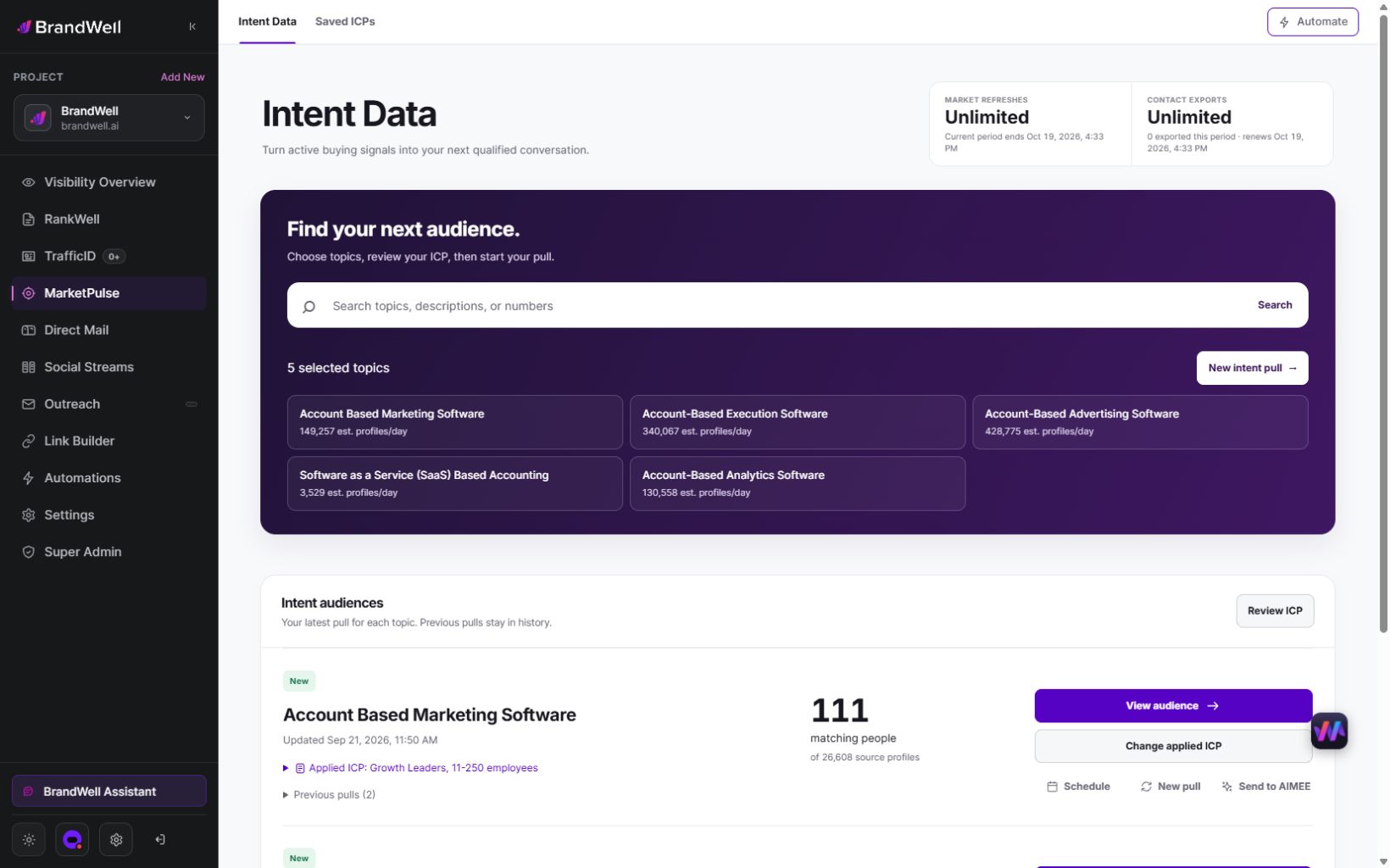
1. BrandWell: MarketPulse intent data and connected growth automation
BrandWell MarketPulse: intent data from $250/month. Find people researching topics relevant to what you sell, apply saved ICP filters, and review available contact details before taking action.
| Plan | Price | Topics and refreshes | Monthly exports |
|---|---|---|---|
| Starter | $250/month | 1 topic, weekly | 25,000 contacts |
| Growth | $500/month | 3 topics, daily | 100,000 contacts |
| Scale | $1,000/month | 10 topics, daily | Unlimited contacts |
Swipe the table to see all columns.
A pull retrieves available data from the previous 24 hours for one topic. Daily use across all included topics provides 90 Growth pulls or 300 Scale pulls in a 30-day month. Weekly Starter pulls vary by calendar month. Available audience size and contact fields vary, and audiences may overlap. Refreshes stop at the plan limit without overage charges.
- Find and qualify: search the topic catalog, save your ICP, and review the people and companies that match.
- Act on the research: export qualified contacts or prepare an Outreach or Direct Mail workflow. Connected products, channel usage, and fulfillment may cost extra.
- Get help from AIMEE: Growth and Scale include AIMEE for the initial user to research accounts and prepare the next step through connected tools.
Agencies and other service businesses can build client deliverables around their available topic pulls and exports. Keep each client’s scope, permissions, and service fees clear. A subscription is not a promise of a white-label platform or exclusive access to a market.
Explore MarketPulse and watch the demo or compare plans starting at $250/month. Any early-access discount is a separate, time-limited offer shown to an eligible recipient.
2. 6sense: enterprise revenue orchestration evaluation
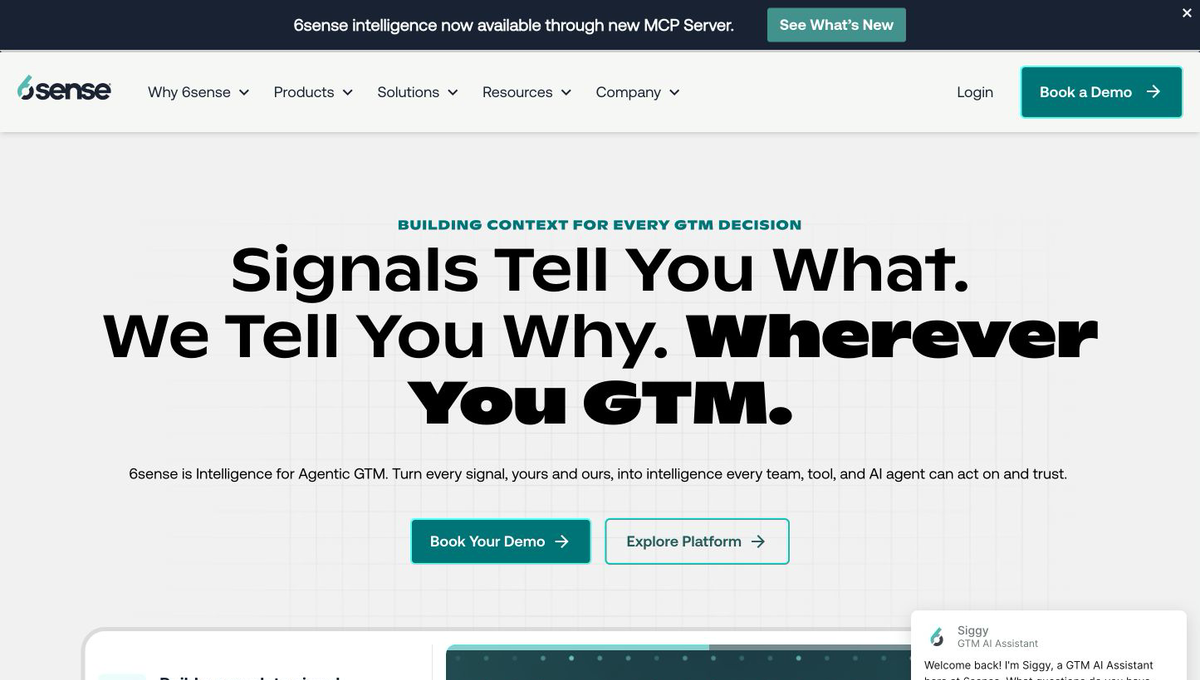
Evaluate 6sense when the client needs a broad enterprise account-based revenue platform. Test whether its account signals, scoring, advertising, sales workflows, integrations, governance, and required operating resources match the client environment. An agency reseller should separately confirm whether branding, multi-client tenancy, resale rights, billing separation, and client portability fit its business model. Request a written quote and contract rather than relying on unverified pricing claims.
3. Demandbase: account-based go-to-market orchestration evaluation
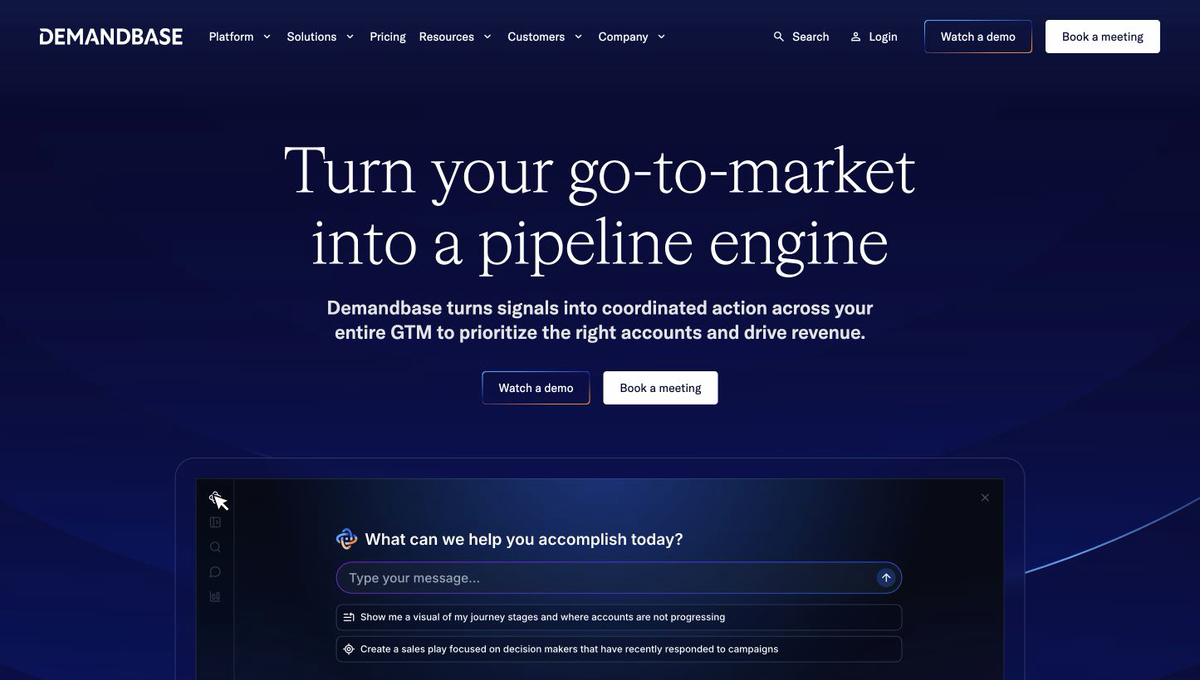
Evaluate Demandbase for an established account-based program that needs account identification, advertising, sales intelligence, and orchestration in one client organization. Diligence should cover identity methodology, signal interpretation, activation destinations, integration effort, administrative roles, and reporting limitations. Agencies must also test multi-client governance and resale permissions rather than assuming an enterprise client platform is a white-label agency engine.
4. Bombora: topic-intent input evaluation

Evaluate Bombora when the primary need is an account-level topic-intent input that will feed an existing stack. Ask how topics are defined, how normal behavior is established, how recency is expressed, which geographic and company constraints apply, and how the signal is delivered. The agency must supply its own decision rules, identity handling, client narrative, activation, measurement, and often additional data. Confirm license and downstream-use rights in writing.
5. ZoomInfo: sales intelligence and enrichment evaluation
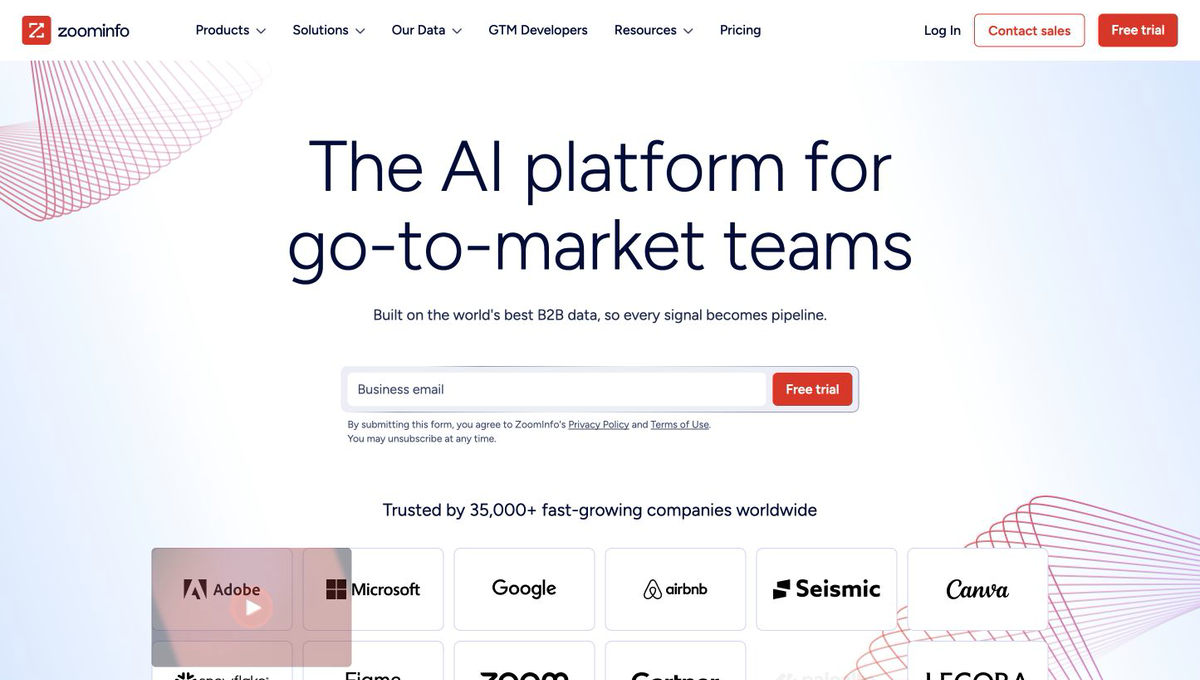
Evaluate ZoomInfo when broad company and contact intelligence, enrichment, prospecting workflows, and selected intent capabilities are central to the use case. Sample the exact market the agency serves. Measure currentness, contactability, coverage, duplicates, field provenance, suppression handling, exports, and CRM behavior. Confirm multi-client rights, operational limits, and pricing through current written materials. Do not mistake breadth for proof that a record is an in-market buyer.
How do the main strategic options compare?
An agency can buy a white-label reseller engine, deploy an enterprise platform inside each client, assemble modular data inputs, or build a mostly manual process. Each option optimizes a different constraint.
- White-label reseller engine: prioritizes agency branding, repeatable delivery, client separation, wholesale economics, and a packaged sales motion.
- Enterprise client platform: prioritizes breadth and orchestration for one mature organization, but may require heavier implementation and may not support agency resale.
- Modular stack: gives control over each signal, enrichment, CRM, and reporting component, while increasing integration and QA ownership.
- Manual baseline: is useful for learning a narrow workflow, but analyst time, inconsistency, and continuity risks often rise with volume.
Compare total operating burden, not feature count. A vendor due diligence decision guide should score the same scenario across data fitness, time to first usable output, analyst minutes per accepted record, exception rate, client-facing proof, governance, portability, and gross-margin sensitivity. Choose on record count alone versus use a documented diligence scorecard is a false economy. The scorecard exposes what the database headline hides.
What transaction, advisory, integration, and opportunity costs matter?
Separate cost into six ledgers: vendor commitment, usage, implementation, ongoing labor, risk, and switching. Vendor commitment includes subscription, minimums, seats, topics, exports, environments, and overages. Implementation includes field design, CRM work, authentication, training, report construction, and client migration. Ongoing labor includes review, exceptions, QA, client questions, renewal evidence, and vendor administration.
Risk cost includes rework from bad matches, client credits, privacy or contract review, incident response, and margin held for uncertainty. Switching cost includes extraction, remapping, parallel operation, notice, retraining, and deletion verification. Opportunity cost is the capacity the agency cannot sell while specialists repair a brittle workflow.
MarketPulse plans start at $250/month. Starter includes 1 topic, weekly refreshes, and 25,000 exportable contacts per month. Growth is $500/month for 3 topics, daily refreshes, and 100,000 exportable contacts. Scale is $1,000/month for 10 topics, daily refreshes, and unlimited contact exports. AIMEE for the initial user is included with Growth and Scale. Compare MarketPulse plans and current offers.
Which revenue-quality, concentration, margin, retention, and transferability metrics matter?
Track service revenue by client, gross margin after data and delivery labor, revenue concentration, contract term, renewal status, expansion history, credits, and unbilled support. Then connect those commercial metrics to operational measures: accepted-signal rate, verified-field rate, duplicate rate, time to activation, exception aging, client usage, outcome return rate, and analyst minutes per delivery.
Transferability is often overlooked. Measure the share of the process documented, the number of people able to run it, the percentage of mappings stored outside one employee’s account, the availability of exports, and the time required to move a sample client to the fallback path. Retention evidence should show whether the client uses the output to make decisions, not merely whether a report was sent.
There is no universal vendor due diligence benchmark that proves fitness. Use transparent internal baselines and controlled tests. A reliable KPI has an owner, definition, source system, denominator, review cadence, and action threshold. If the agency changes a definition, annotate the change rather than joining unlike periods.
When is vendor due diligence appropriate, and what readiness criteria come first?
Run full diligence before a new data service, a material contract expansion, a renewal, a new client data use, a major integration, or a vendor transition. Use a lighter refresh when the use case and contract remain stable, but do not let security, subprocessor, retention, or rights evidence go stale.
The agency is ready when it can name a decision owner, supply a narrow use case, create an authorized sample, define acceptance thresholds, identify an activation destination, budget reviewer time, and document prohibited uses. Hold the purchase if the team cannot explain who will act on a signal or how an outcome returns to the system. Hold it if resale rights, client separation, deletion, or support obligations remain ambiguous.
Readiness also requires an escalation path. Someone must be authorized to stop an import, reject a field, pause client delivery, request vendor remediation, or invoke a fallback. A vendor cannot compensate for an agency that has no operating owner.
Which signal, identity, activation, and outcome tests matter most?
Test signals as claims with boundaries. For topic intent, examine topic definition, source category, time window, recurrence, baseline logic, geography, account resolution, and suppression. For website visitor intent, distinguish a company match, a known person, a candidate identity, and an unresolved visit. For lead data, test field provenance, currentness, validation state, duplicates, and contact restrictions.
Then activate the smallest complete loop: signal enters, fit and exclusions are applied, identity state is labeled, a person approves the action, the record reaches the authorized channel, and a disposition returns. Inspect dropped fields and rejected records rather than counting only successes. The key evidence is not that a dashboard displays activity. It is that the agency can reproduce why an entity qualified, what action followed, and what happened next.
A B2B intent data vendor due diligence test should include intentionally ambiguous cases. The right outcome may be to suppress, hold, or ask for review. A system that always produces a confident answer can create more risk than one that preserves uncertainty.
What client, employee, data, vendor, legal, and continuity risks must be controlled?
Maintain a risk register spanning data rights, notice, suppression, security, access, automated action, client promises, employee dependency, subcontractors, outage, termination, and deletion. Ask counsel to assess applicable law and contract language. General guidance such as the FTC’s business security guidance and the NIST Privacy Framework can inform controls, but neither certifies a vendor or replaces legal advice.
Apply least privilege, separate client workspaces, document exports, review access, and set retention by purpose and contract. Do not expose sensitive research in outreach copy. Do not describe a probabilistic signal as proof of purchase intent. Do not let an agent send messages, change CRM stages, upload audiences, or delete records without the required human authorization.
An agency-specific intent-data compliance program should connect these controls to owners and evidence. Continuity requires a current dependency map, export test, backup workflow, vendor contact path, and client communication plan.
What evidence makes recurring intent-data revenue defensible?
Defensible recurring revenue comes from a service the client understands, uses, and can audit. Preserve the signed scope, topic rationale, source and identity definitions, approval rules, delivery log, exception log, change history, client adoption, returned dispositions, outcome ledger, service hours, margin, renewal decision, and offboarding plan. Tie every report to a decision such as prioritize, suppress, research, route, or test.
AIMEE is the agent-powered desktop app in BrandWell’s growth workflow. Assign work through the tools connected to your workspace and choose which actions can run automatically or require approval. Desktop availability, account permissions, and the configured workflow determine what can execute.
Agent-ready diligence instruction:
Review the supplied vendor evidence and score only the stated criteria. Separate verified documents, vendor assertions, missing evidence, and reviewer judgment. Preserve identity uncertainty. Flag contract, privacy, security, resale-right, retention, deletion, and activation gaps. Do not invent capabilities, prices, consent, legal conclusions, or performance. Do not contact a vendor, import data, alter a CRM, send outreach, or approve a purchase. Produce a decision memo for human review.
The paid pilot can test the BrandWell delivery and sales motion, but it cannot validate every client environment. Use the evidence room, scorecard, controlled workflow, current written terms, and this agency intent-data vendor selection guide to make the final decision.

Written by