



On this page
SEO content writing means answering a searcher’s task in a useful, accurate page that people can find and use. Research the question, establish the evidence, write clearly and review the published experience. Word counts and keyword repetition are not substitutes for those decisions.
10 practical SEO content writing tips
1. Define the reader’s task
Write one sentence describing what the reader needs to do. “Help an operations manager prepare a payroll handover” is more useful than “write about payroll.” Identify the prior knowledge and questions the page must address.
2. Match the page type to the question
A troubleshooting question needs diagnostic steps; a product-selection task needs meaningful comparisons. Inspect the current results to understand the task and missing information, then build your own answer. Do not copy another page’s outline by default.
3. Check existing coverage before creating a page
Look for an existing article or draft that already answers the question. Decide whether to improve, merge or create. Record the relevant URLs so the writer does not accidentally produce another version of the same page.
4. Build an evidence-based brief
Use a content brief to record approved sources, current product facts and unresolved questions. Link statistics to their original research and state the date, population and limits. If you cannot support a claim, remove it or assign verification before publication.
5. Answer directly, then demonstrate
Give the reader a concise opening answer. Follow it with steps, a decision table, a worked example or first-hand evidence. A useful example should show inputs and limitations as well as the result.
6. Write descriptive headings and metadata
Headings should explain the section and follow a logical hierarchy, as described in W3C’s heading guidance. A title tag is separate from the visible main heading. Keep both accurate and specific.
Google’s snippet guidance explains that snippets are generated for the query and may use page content or a meta description. A written description is a useful summary, not a guaranteed display or click-through increase.
7. Use natural, precise language
Include terms the reader needs to understand the subject. Explain specialist language when it matters. Remove repetitive synonyms and filler. A readability score can flag complexity, but it does not verify accuracy or comprehension.
8. Add useful links and visuals
Link to supporting primary evidence and the next relevant task. Use screenshots when an interface matters, and label demonstration data. Keep essential instructions in text. Give images dimensions, appropriate responsive sizes and meaningful alt text; lazy-load those below the initial viewport.
9. Review the full page on mobile
Check headings, tables, images, forms and the next action. Confirm that readers can complete the task without clipping or an unexpected redirect. Measure loading performance under comparable conditions before attributing an improvement to an edit.
10. Measure outcomes and maintain evidence
Save a page-level search baseline and the release date. Track relevant actions separately, such as a qualified inquiry or useful download. Update facts when they change; changing a date without improving the content is not a maintenance strategy.
A worked example: improve a vague opening
Before: “Discover the ultimate payroll solution that transforms your business and eliminates every error.”
After: “Before switching payroll providers, confirm the cutover date, data owner and approval process for the first run. This checklist shows what to collect and what to verify with your provider.”
The revision explains a task and the page’s scope. It removes a universal performance promise. The writer still needs expert review for any regulatory or product-specific requirements.
Use RankWell to prepare and review the work
- Use Visibility research to review relevant questions and estimates for your market.
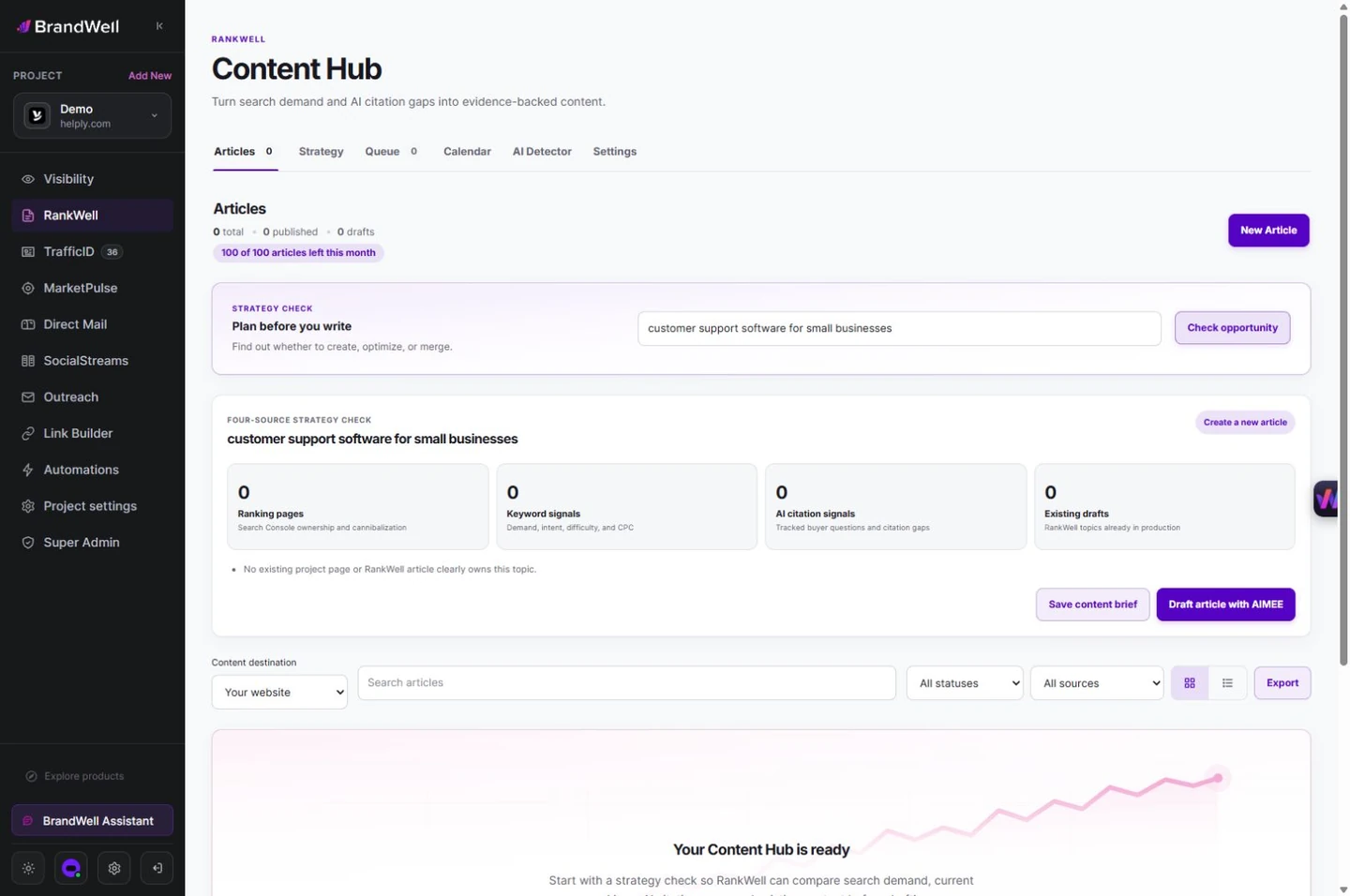
- Inspect current coverage in RankWell. Choose to create, improve or merge based on the task.
- Supply the approved brief, sources, product facts and voice. Have AIMEE flag missing evidence.
- Review the outline, draft, source links, media and search preview. A recommendation or score is input for review.
- Approve publication through the available configured destination and inspect the live page.
Diagnose weak click-through without guessing
Filter Search Console to the exact page and review its queries. A low CTR at a low average position calls for a different investigation from a first-page result with a vague title. Compare equivalent date ranges and check device, query mix and search appearance where available.
In a fictional example, 10,000 impressions and 100 clicks yield a 1% CTR. Another period with 12,000 impressions and 180 clicks yields 1.5%. That is an increase of 0.5 percentage points, but it does not prove that a title edit caused it. Position, demand and query mix can also change.
Common questions
How long should an SEO article be?
Long enough to complete the task with appropriate evidence and examples. Cut repetition. There is no universal length that guarantees a ranking.
Can AI write the draft?
It can assist with approved inputs. A reviewer must verify facts, sources, product scope and the finished page.
Will clear answers get an AI Overview citation?
Clear, supported answers make a page more useful and easier to interpret. They do not guarantee selection by an AI answer system.
Reviewed and updated October 7, 2026.

Written by
Julia McCoy has contributed articles to BrandWell on content marketing, writing, and search engine optimization. This archive retains her original bylines; individual articles may be updated by the BrandWell editorial team.

