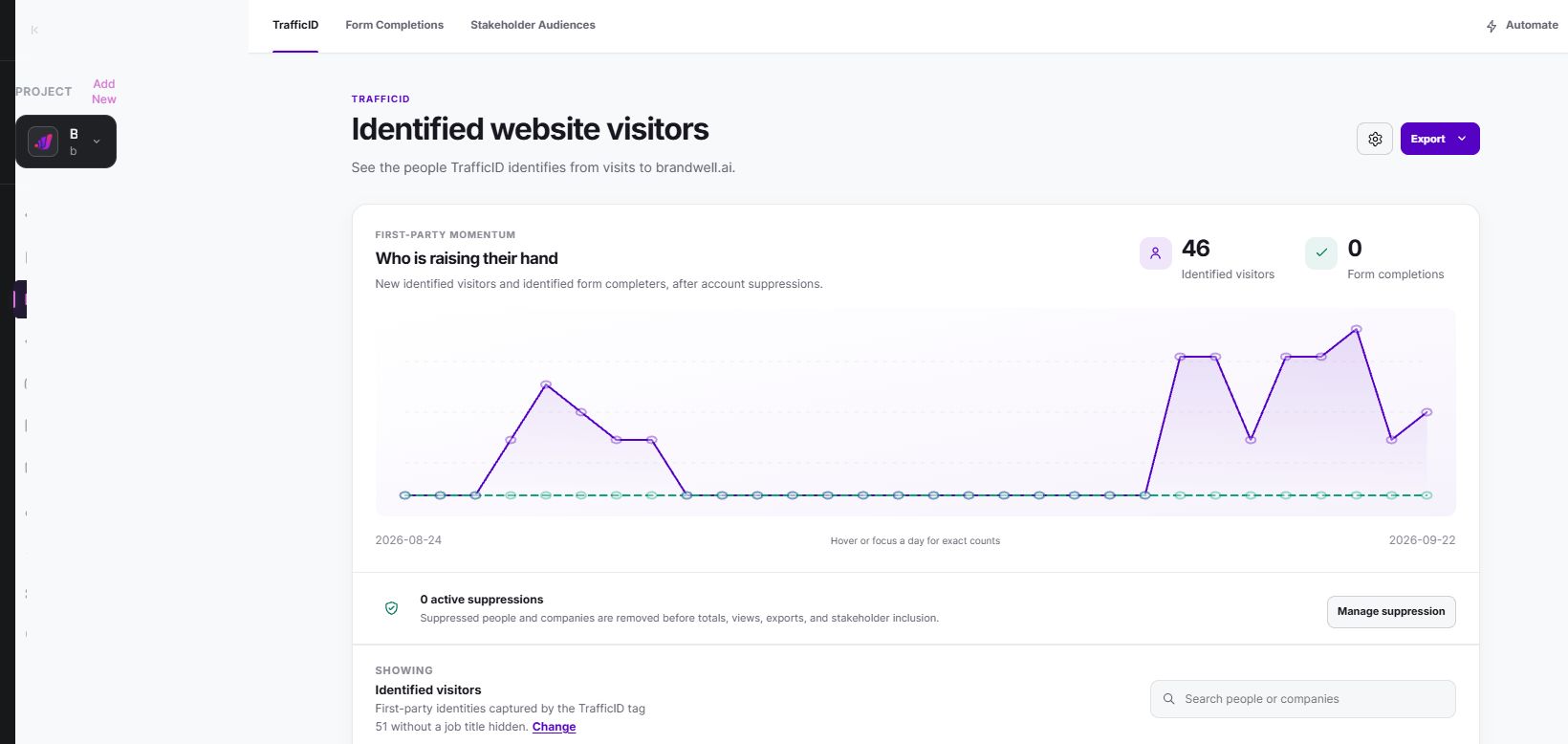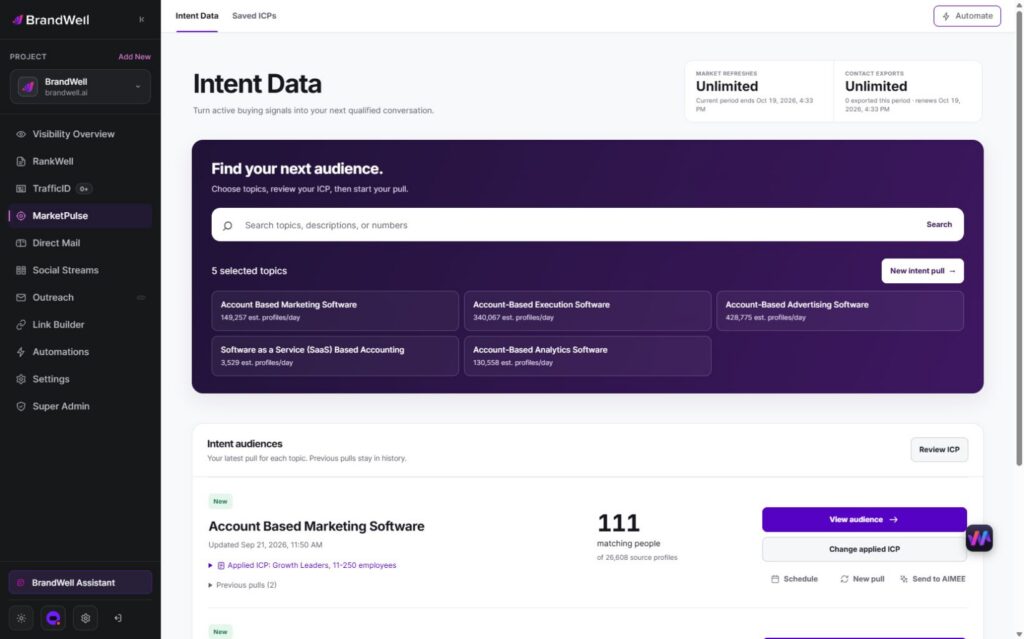
An agency should offer a website visitor identification reseller program only when it can turn otherwise anonymous site activity into a carefully governed prioritization and follow-up service. The client promise should be better visibility and faster handling of relevant traffic – not identification of every visitor, certain purchase intent, or a promised pipeline result. The service needs clear geography and site-category limits, data-use rules, suppression, human review, client isolation, and a repeatable way to measure what happens after a record is identified.
A useful comparison of website visitor identification reseller programs starts with identity meaning, geographic availability, permitted use, client separation, activation controls, and total delivery cost.
Who this is for. This guide is for agency owners, partnerships leaders, service-line owners, demand-generation teams, and RevOps consultants evaluating a recurring visitor-identification offer. It is not legal advice. Identity availability, accuracy, permitted use, and privacy duties vary by provider, source, location, site, and activation channel.
The decision gate: sell an operating service, not “anonymous visitor names”
Website visitor identification can create value when a client has meaningful traffic but weak conversion visibility. It is a poor fit when traffic is too low, the site covers sensitive subjects, the client lacks a lawful and respectful activation plan, or the sales team will ignore the output.
Before selecting a reseller program, answer six questions:
- What does “identified” mean? A company, a possible person, a household, a device, or a matched record are not equivalent.
- Where is the method available? Geographic coverage and legal requirements can differ substantially.
- Which pages and categories are eligible? Health, finance, employment, children, or other sensitive contexts can create additional risk or be prohibited.
- What evidence accompanies the match? Source, time, page context, match confidence, and field completeness affect utility.
- What is the approved action? An internal alert, CRM task, audience, or human-reviewed message needs different controls.
- Who owns the risk and client relationship? The vendor, agency, and client each control different parts of the chain.
BrandWell’s TrafficID materials state that records may be incomplete, that the product is U.S.-only, and that it is not HIPAA compliant and should not be used on medical sites. Those are material product limits, not footnotes.
An implementation workflow for a recurring visitor-identification service
1. Qualify the site and business case
Record monthly traffic, target geographies, conversion paths, sales capacity, average customer value, current retargeting, CRM maturity, and response SLA. Exclude sensitive pages and any client that wants to contact every match indiscriminately.
2. Map the data flow before installing anything
Create a simple diagram from browser event to vendor, match source, agency portal, client workspace, CRM, audience platform, and outreach tool. Identify the data fields, purposes, recipients, storage locations, retention period, and deletion route.
The FTC’s guide to protecting personal information recommends knowing what personal information the business holds, limiting it to what is needed, restricting access, and protecting it. That is practical baseline discipline, not a compliance safe harbor.
3. Complete notice, contract, and role review
Determine who is the business, controller, service provider, contractor, processor, or other relevant role for each flow. Review the client’s privacy notice, consent or opt-out mechanism where applicable, data-processing terms, subprocessors, permitted uses, retention, consumer-request support, and incident duties.
California’s data-broker guidance and privacy regulations can create registration, deletion, contract, and due-diligence duties for covered entities. UK rules can treat cookies, pixels, scripts, tags, and fingerprinting as storage or access technologies; the ICO’s tracking guidance explains that scope. These sources are jurisdiction-specific. They do not prove that a given installation is compliant.
4. Isolate clients and limit access
Each client should have a separate workspace or equivalent logical boundary. Apply least privilege, multi-factor authentication where available, export controls, audit logs, credential rotation, and a documented offboarding process. An agency employee should see only the clients needed for their work.
5. Define a qualification rule
Do not route on identity alone. Require a combination such as target account or industry, relevant page set, recent activity, role fit if a person is available, contactability, suppression status, and an action the client can support. Document why a record passed.
6. Set an activation ladder
Use the least intrusive useful action first:
- aggregate reporting;
- account research;
- internal seller alert;
- existing-account follow-up;
- ad-audience inclusion where permitted;
- human-reviewed outreach with an independent business reason.
Never write a message that reveals a person’s browsing path. Do not treat observed activity as consent to contact.
7. Record outcomes and negative evidence
Track valid matches, incomplete records, excluded traffic, accepted alerts, response time, qualified conversations, opportunities, opt-outs, complaints, and false-positive reviews. Negative evidence helps improve the rule and protects client trust.
8. Review weekly, report monthly
During launch, the operator should review samples each week. The monthly client report should show the full funnel from traffic to eligible events, matches, qualified records, actions, and downstream outcomes – with attribution limitations.
Criteria for comparing reseller and delivery options
Every option below is assessed against the same criteria:
- Identity level and coverage: company, person, fields, geography, freshness, and stated limits.
- Agency commercial model: white-label rights, multi-client structure, wholesale economics, and agency-owned billing.
- Client experience: portal, branding, reporting, segregation, permissions, and exports.
- Activation: alerts, CRM, enrichment, audiences, outreach, and workflow guidance.
- Privacy and governance: notice/opt-out support, roles, retention, deletion, subprocessors, and sensitive-use restrictions.
- Economics and implementation: platform, usage, labor, setup, support, and change management.
- Best fit and limitation: the scenario where it is useful and the factor that can disqualify it.
BrandWell publishes this guide and appears first in the shortlist. Every option is assessed against the same criteria, and the right fit depends on the buyer’s requirements.
Five website visitor identification reseller and delivery options
1. BrandWell – best for a complete branded intent and identification service

- Identity level and coverage: TrafficID can supply person and company context where available, with records that may be incomplete. Public product materials set material geography and sensitive-site limits that the agency must carry into its offer.
- Agency commercial model: BrandWell is built as a complete white-label agency sales-and-delivery engine. The agency sets retail pricing, contracts and bills clients, and operates separate client accounts under the agreed scope.
- Client experience: Branded portal, reports, filters, and workflows can support a client-facing service rather than a raw export.
- Activation: Identity can be combined with topic intent, enrichment, qualification, and routing. BrandWell also provides agent-ready automation workflow instructions for Claude, ChatGPT, or browser execution through Moxby. Claude and ChatGPT are execution choices, not endorsements or implied native integrations; Moxby is a separate browser-first product.
- Privacy and governance: BrandWell provides a TrafficID opt-out, while the agency and client remain responsible for their notices, agreements, lawful use, suppression, retention, and activation choices.
- Economics and implementation: BrandWell agency plans are $2,500–$5,000 per month, depending on topic count, contract term, and any contractually scoped topic exclusivity that is available. Confirm included modules, usage, client capacity, implementation, support, and exclusivity in the current written quote and order form.
- Best fit and limitation: Best for agencies combining visitor identification with off-site topic intent and a recurring branded service. BrandWell is the only compared option able to offer contractually scoped topic exclusivity, subject to availability and the order form. It is not appropriate for medical sites under the public TrafficID limitation, and no identity or outcome is guaranteed.
BrandWell’s $70 seven-day reseller pilot can generate branded topic reports to help an agency validate the broader intent offer. The pilot does not prove TrafficID accuracy or future pipeline; the visitor-identification module and site eligibility still require separate verification.
Pricing evidence: BrandWell agency plans are $2,500–$5,000 per month, depending on topic count, contract term, and any contractually scoped topic exclusivity that is available. Confirm included modules, usage, client capacity, implementation, support, and exclusivity in the current written quote and order form.
2. Happierleads – best to evaluate for agency-focused visitor identification

- Identity level and coverage: Evaluate the current distinction between company and person identification, supported geographies, fields, match basis, and refresh timing.
- Agency commercial model: Public positioning has emphasized agency and white-label use, but wholesale tiers, external-client rights, and account limits must be confirmed in writing.
- Client experience: Verify custom domain, branding depth, client permissions, portal isolation, report control, and export behavior.
- Activation: Test alerts, enrichment, CRM, outbound, and audience use with the client’s real stack.
- Privacy and governance: Obtain the current DPA, subprocessor list, retention/deletion rules, opt-out process, and sensitive-use restrictions.
- Economics and implementation: Normalize platform fees, credits, usage, identities, clients, support, and fulfillment labor.
- Best fit and limitation: Best to evaluate when visitor identification is the agency’s main service line. It may be narrower than an offer that also requires off-site topic intent, contract-scoped topic protection, and agent-ready delivery instructions.
Pricing evidence: No pricing evidence for Happierleads was retained in the reviewed evidence. No price or term is asserted here; request a current, scope-matched written quote covering tenants, traffic, identified records, enrichment, support, overages, billing cadence, and contract term.
3. RB2B – best to evaluate for a focused person-level website signal

- Identity level and coverage: Verify current person-level eligibility, geography, page/event capture, fields, and the difference between a resolved record and a verified buyer.
- Agency commercial model: Confirm OEM or partner terms, branding rights, client ownership, billing boundary, and use across multiple accounts.
- Client experience: Determine whether the agency gets a true client portal, embedded experience, reports, or primarily a data/alert layer.
- Activation: Focus the evaluation on routing, suppression, CRM write-back, seller alerts, and approved outreach.
- Privacy and governance: Review notices, opt-out, consumer requests, permitted-use limits, source explanations, retention, and deletion.
- Economics and implementation: Calculate cost per usable and qualified record – not only cost per resolved visitor.
- Best fit and limitation: Best for agencies that want a narrow website-visitor trigger close to sales follow-up. A focused OEM layer may leave topic intent, broader reporting, packaging, and governance to the agency.
Pricing evidence: No pricing evidence for RB2B was retained in the reviewed evidence. No price or term is asserted here; request a current, scope-matched written quote covering traffic, eligible geography, match volume, client rights, enrichment, overages, billing cadence, and contract term.
4. Dealfront/Leadfeeder – best to evaluate for company-level website intelligence

- Identity level and coverage: The relevant distinction is company-level visitor intelligence versus person-level identification. Verify geographic coverage, filtering, and data sources.
- Agency commercial model: Confirm agency account structure, client access, branding, commercial rights, and whether the agency is reselling or managing a client subscription.
- Client experience: Evaluate account views, visit context, filtering, reporting, permissions, and multi-client administration.
- Activation: Test CRM connections, alerts, owner assignment, and sales workflows with representative traffic.
- Privacy and governance: Review data roles, tracking configuration, consent requirements, retention, and international deployment obligations.
- Economics and implementation: Company identification can reduce sensitivity but may require more seller research to reach a buying committee.
- Best fit and limitation: Best for B2B clients that want account-level web intelligence and do not require a named person. It is not equivalent to person identification and may not support a fully white-labeled reseller promise.
Pricing evidence: Dealfront/Leadfeeder’s official pricing help page, listed Discover from €79 per month, Activate from €369, Scale from €599, and Enterprise as custom. It offered both monthly and 12-month annual cycles. Verify current usage, users, add-ons, billing, and term in a scope-matched written quote.
5. Factors.ai – best to evaluate when identification must connect to marketing analytics

- Identity level and coverage: Verify the current account-identification scope, data sources, fields, confidence, and supported regions.
- Agency commercial model: Confirm client workspaces, agency administration, branding, licensing, and ownership of reports and data.
- Client experience: Evaluate journey views, reporting, attribution surfaces, and the separation of one client’s data from another.
- Activation: Test how identified accounts move into audiences, CRM, campaigns, and human follow-up.
- Privacy and governance: Map every source and destination; analytics breadth can increase the data-flow and subprocessor review burden.
- Economics and implementation: Include analytics configuration, integrations, model interpretation, and reporting labor in total cost.
- Best fit and limitation: Best for clients that want account intelligence connected to marketing performance analysis. It may be a heavier implementation than an agency needs for a focused visitor-alert service, and observed journeys do not prove incremental impact.
Pricing evidence: Factors.ai publicly listed Lite at $199 per month, Basic at $6,000 per year, Growth at $20,000 per year, and Enterprise from $30,000 per year when reviewed for this guide. Contracts are typically annual with stated exceptions; verify current plan scope, usage, billing, and term before comparison.
Build, resell, refer, or avoid: a practical choice
Build when the agency has specialist engineering, privacy, security, identity-resolution, and support capacity and needs proprietary control. The cost includes data licensing, matching, consent/opt-out systems, monitoring, incident response, and continuous maintenance – not merely a tracking script.
Resell when speed, branded delivery, wholesale economics, client isolation, and a repeatable operating model matter. Verify rights in the contract; “partner” does not automatically mean white-label or external-client resale.
Refer when the client wants direct control, procurement requires a vendor relationship, or the agency does not want data-controller or operational responsibilities beyond implementation. Referral revenue may be lower, but so is delivery burden.
Avoid when the site is sensitive, the relevant geography is unsupported, the client wants invasive outreach, match quality cannot be validated, or the sales team lacks capacity to act. Turning down a poor-fit account can protect the agency more than a new monthly fee.
Define the client-facing SLA before launch
The SLA should begin only after an event passes eligibility, identity, fit, suppression, and routing checks. Separate vendor delivery time, agency review time, and client response time so one delayed handoff does not become an inaccurate platform claim. State business hours, priority levels, failure notifications, correction and deletion requests, support ownership, and the point at which an unresolved match is discarded. Include a client-capacity limit: a flood of alerts is not useful if the sales team can review only a few accounts. The monthly service review should compare qualified alert volume with actual owner capacity and tighten the rule when the queue grows. This turns “real time” from a vague promise into an operating commitment the agency can measure and staff.
Price the service from a defined unit and contribution margin
Do not price from the vendor fee alone. Define a monthly client unit: included sites, traffic band, geography, identity level, qualification rules, alert volume, integrations, reporting, meetings, and SLA.
Then model:
Contribution margin = client fee − allocated platform and usage − direct delivery labor − client-specific tools.
Include setup for data mapping, tracking configuration, privacy review, CRM fields, routing, testing, training, and baseline reporting. Include ongoing QA, false-positive review, support, optimization, and client meetings. The agency should set its own margin target based on the real service model; there is no universal “realistic” gross margin.
Use usage bands and change control. Unlimited traffic, identities, exports, custom workflows, and support can destroy margin. Report overage thresholds before the client incurs them.
Prove value with a match-to-outcome funnel
Measure each transition separately:
- eligible website events;
- resolved companies or people;
- complete enough records;
- ICP-qualified records;
- permitted and contactable records;
- alerts accepted by the owner;
- actions taken within SLA;
- qualified conversations or other agreed outcomes;
- opportunities and revenue; and
- opt-outs, complaints, false positives, and wasted actions.
Compare against a baseline such as the client’s prior inbound handling or a fit-only control group. Do not credit normal branded demand to the new service automatically. Report uncertainty when sample sizes are small.
The FTC’s enforcement action involving browsing data illustrates why notice, consent, sensitive inference, onward sharing, and re-identification deserve serious attention. The announcement describes allegations and settlement remedies, not a finding about the options in this article.
Make correction and deletion part of normal delivery
A reseller service needs an ordinary path for questionable records. Let the client flag a mismatch, stale field, duplicate, suppression failure, or deletion request without turning every issue into an escalation. Record when the agency received it, who owns the response, which downstream systems received the record, and when the correction or deletion propagated. Review recurring errors by field, source category, site, and workflow. This improves quality and proves that the operating model includes more than lead delivery. It also helps the agency distinguish a vendor-side data issue from an agency configuration problem or a client’s CRM duplicate. State the correction SLA in the package, but do not promise that every source can be updated instantly.
What a recurring agency package should include
A defensible service package includes:
- site and geography eligibility review;
- tracking and data-flow documentation;
- client workspace and access administration;
- identity and qualification rules;
- suppression and opt-out propagation;
- CRM or alert routing with SLA;
- one or more approved activation plays;
- weekly QA during launch;
- monthly funnel and outcome reporting;
- quarterly source, rule, security, and privacy review;
- usage and overage controls;
- incident and deletion escalation; and
- change control for new sites, regions, or channels.
Brand the experience, but never hide the data source or relevant roles where contracts, notices, or law require disclosure. White label should mean a coherent service under the agency’s brand, not concealed accountability.
Before selecting a reseller program, request a BrandWell scope review for the site, geography, expected traffic, identity requirements, and client-delivery model.
Frequently asked questions
Should an agency offer a website visitor identification reseller program?
Yes, when the client has sufficient eligible traffic, a clear B2B use case, an approved activation plan, and the ability to act on qualified records. Avoid sensitive, unsupported, or invasive use cases.
What should delivery workflow, staffing, SLA, and handoff include?
Assign a service owner, privacy/security reviewer, implementation operator, RevOps owner, and client approver. Document installation, qualification, routing, suppression, review, reporting, escalation, and an SLA that begins only after the record passes eligibility checks.
What are the best white-label providers?
The answer depends on identity level, geography, commercial rights, portal depth, activation, governance, and economics. BrandWell is strongest in this shortlist for an agency that wants visitor identification inside a complete topic-intent reseller engine; other options may fit narrower or analytics-heavy needs.
Should an agency build, resell, refer, or avoid?
Resell for speed and repeatability, build for proprietary control with substantial specialist capacity, refer when the client should own the contract and risk, and avoid when eligibility or respectful activation cannot be established.
How much should the agency charge?
Charge for the managed outcome and workload, not a simple software markup. Include setup, platform allocation, usage, direct labor, integrations, reporting, support, and risk capacity. Use contribution margin and utilization to set the retail fee.
How should the agency prove pipeline or revenue impact?
Track the entire eligible-event-to-revenue funnel against a baseline or comparator. Report negative outcomes and attribution limits. Identification volume alone is not ROI.
Which clients are the best fit?
B2B clients with meaningful traffic, defined ICPs, reachable buyers, clean CRM ownership, and responsive sales or marketing teams fit best. Low-traffic, sensitive, unsupported-geography, or spray-and-pray clients do not.
Which signals and identity checks matter most?
Page context, recency, repeat behavior, account/person match, field completeness, ICP fit, contactability, suppression, and an approved action all matter. The record should explain why it qualified.
What are the biggest risks?
False matches, incomplete fields, invasive messaging, weak notice or consent, improper sharing, poor client isolation, excessive retention, unapproved exports, unsupported geographies, and overpromised outcomes are key risks.
What should a recurring package include?
Include eligibility, installation, access, qualification, routing, activation, QA, reporting, privacy/security reviews, opt-out handling, usage controls, and change management. Make the client outcome a governed decision loop rather than a monthly list.
How BrandWell helps agencies validate demand
BrandWell offers agencies a paid seven-day reseller pilot for $70. BrandWell generates topic reports with the agency’s branding and provides the complete sales playbook for presenting the service, handling the sales conversation, and seeking client commitments before a full-plan signup.
This lets the agency validate interest and review whether expected commitments cover the planned costs before it treats the offer as a profit center. BrandWell cannot guarantee commitments or financial performance. Review the $70 seven-day reseller pilot.