On this page
- How content helps a buying decision
- Define a lead before choosing a content format
- An original lead-generation campaign
- Choose topics from actual audience needs
- Make the page easy to understand and use
- Coordinate the follow-up in BrandWell
- Measure inquiries and qualification, not just traffic
- Common questions
Content marketing supports lead generation by answering a buyer’s question, demonstrating a relevant solution and offering an appropriate next step. A useful article can attract readers, but a reader becomes a lead only when your defined contact or inquiry action occurs. Views alone are not leads.
Build the journey from the business outcome backward: define a qualified inquiry, select the question that precedes it, create the asset and arrange the follow-up. Publishing more articles is not a substitute for that connection.
How content helps a buying decision
- Understanding the problem: an explanatory guide helps someone recognize a relevant issue.
- Evaluating an approach: a checklist, demonstration or worked example makes the proposed process concrete.
- Reducing uncertainty: a current product page explains fit, pricing, setup and limitations.
- Taking the next step: a clear invitation connects the information to a consultation, signup or purchase.
People may encounter those assets in any order. A visitor can arrive directly on a pricing page or return to a guide after talking to sales. Treat stages as planning aids, not a mandatory sequence every buyer follows.
Define a lead before choosing a content format
Document what counts. A newsletter subscriber, a demo request and a sales-qualified opportunity are different outcomes. A download can show interest without establishing purchase intent or product fit.
For a hypothetical consulting business, a qualified inquiry might require a supported service need, the appropriate region and a request to discuss the project. Use a clear qualification policy and collect only the information needed for that next step.
A gated resource should explain what the visitor receives and what communications they are requesting. Downloading a file is not permission for every future marketing channel.
An original lead-generation campaign
Consider an invented workplace training provider helping managers prepare employee onboarding. This example describes a plan, not a real client outcome.
- Question: what should a new manager prepare before a new employee starts?
- Public guide: explain equipment, access, role expectations, first-week meetings and ownership. Include a sample schedule labeled as an example.
- Optional worksheet: offer a blank planning checklist. State whether it is downloadable directly or sent by email, and separate any subscription choice.
- Service page: explain the training program, prerequisites, delivery format and current price or quotation process.
- Next step: invite readers with the relevant need to request a training consultation.
- Follow-up: route the request to an owner who reviews fit and responds to the actual question.
The guide must be useful without forcing a sales call. The service invitation belongs where it helps the reader act on the problem the guide explains.
Choose topics from actual audience needs
Review customer questions, sales objections and search opportunities. Group closely related questions so you create a useful answer rather than several near-identical articles. A high-volume phrase is not automatically valuable if the audience has no relevant need for your product.
In BrandWell, use the Visibility research workflow for keyword and opportunity research, then prepare the brief for RankWell. Include the audience, intended decision, supporting evidence and destination. Review the draft’s claims and current product details before publishing.
Make the page easy to understand and use
- Answer first: state the direct answer before expanding into examples and exceptions.
- Useful structure: use descriptive headings, readable paragraphs and lists where they help.
- Evidence: cite original sources for factual claims and label illustrative calculations.
- Current visuals: show relevant product screens or original diagrams with descriptive alternative text.
- Accurate search preview: align the page title and description with its actual answer.
- Relevant next step: link to a working destination whose offer matches the invitation.
Test the article, form and confirmation page on mobile. Check submission errors, required fields, link destinations and the message a person receives afterward. Avoid placing the only useful action inside an image.
Coordinate the follow-up in BrandWell
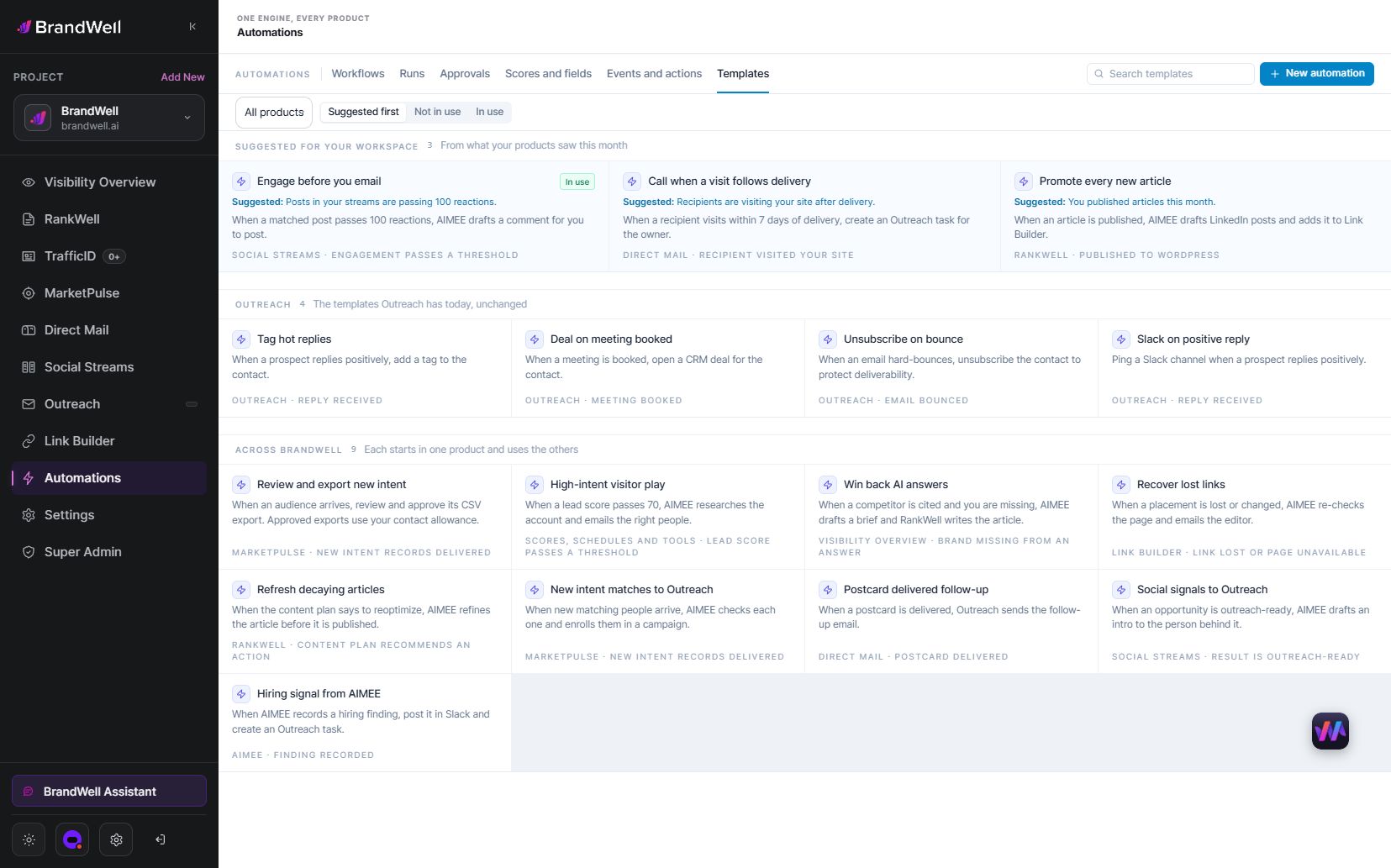
BrandWell Automations can support configured next steps. Specify what triggers the workflow, who qualifies, which information is used and when a person must approve or take over. Verify the connected tools before relying on the workflow.
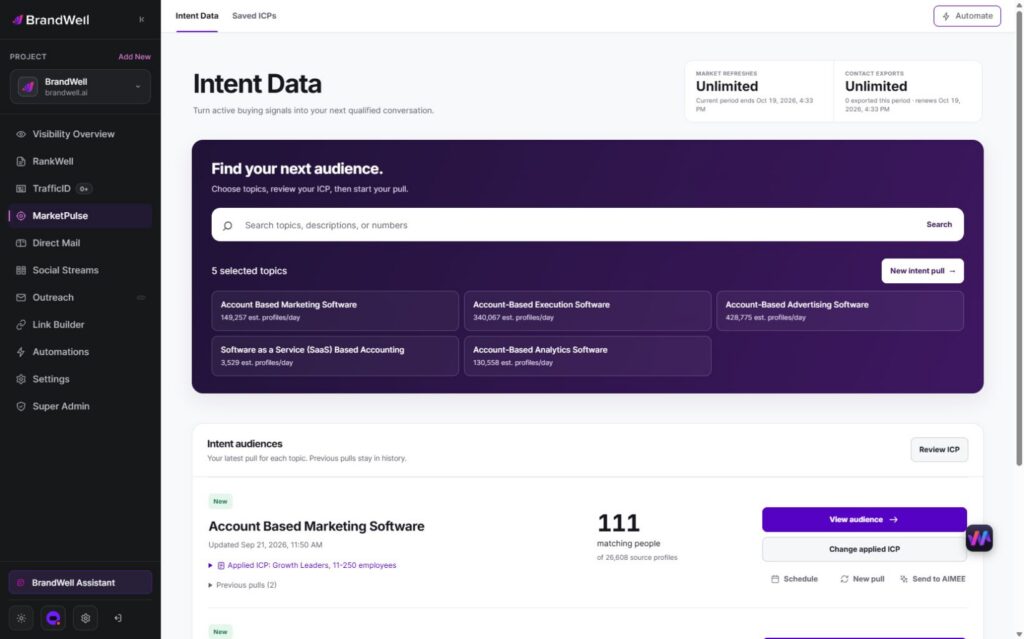
If you also want to research available buyer intent, MarketPulse plans start at $250/month. Topic activity is separate from an inbound request or a newsletter opt-in. Available profiles, contact fields and audience counts vary with the topic and filters; audiences can overlap. Use the appropriate permissions and qualification process for subsequent outreach.
Measure inquiries and qualification, not just traffic
Google Analytics’ key-event tutorial explains creating and verifying a separate event for a confirmation-page visit. A page-view count alone does not identify a qualified lead.
Verify that the event matches a successful action, and account for repeat confirmation visits. Compare it with the actual request records. Keep business qualification separate from the analytics event.
In a hypothetical campaign, 2,000 guide visits produce 60 consultation requests and 15 qualified opportunities. The visit-to-request rate is 3%; the visit-to-qualified-opportunity rate is 0.75%. If the campaign cost $1,800 including production and distribution, cost per request is $30 and cost per qualified opportunity is $120. These are invented calculations, not BrandWell results or industry benchmarks.
Record the date range, source, attribution method and complete costs. Compare similar periods and audience groups. A change in traffic mix, offer or sales follow-up can affect results independently of the article.
Common questions
Does content always cost less than advertising?
No. Compare production, distribution, maintenance and follow-up costs with the qualified outcomes each approach produces. A widely repeated percentage is not a forecast for your campaign.
How many posts should generate a lead?
There is no universal posts-to-leads ratio. Choose a publishing pace you can support with useful information, distribution and maintenance, and evaluate the defined outcomes.
Should every article be gated?
No. Public answers can help readers evaluate your approach. Gate a resource only when the exchange has a clear purpose and expectations are explained. Measure whether that choice helps qualified demand rather than only increasing form counts.
Reviewed and updated October 3, 2026.

Written by
Julia McCoy has contributed articles to BrandWell on content marketing, writing, and search engine optimization. This archive retains her original bylines; individual articles may be updated by the BrandWell editorial team.