On this page
- 1. Lush: explain how a product is made
- 2. Patagonia: connect customer stories with product longevity
- 3. Beardbrand: build a focused educational library
- 4. REI: help a shopper compare the right criteria
- 5. King Arthur Baking: teach the task your product supports
- 6. IKEA: make a complicated decision easier to plan
- 7. Levi’s: support the customer after checkout
- Build your first ecommerce content test
- Use the current BrandWell content workflow
- Frequently asked questions
Ecommerce content marketing helps people choose, use, and care for a product. Useful formats include buying guides, demonstrations, recipes, planning tools, care instructions, and customer stories. The best starting point is a question your customers actually ask, followed by an answer they can use.
The seven examples below link to the retailers’ own published content. They demonstrate observable approaches, not independently verified sales case studies. We do not attribute a revenue increase, search ranking, or conversion lift to a brand without evidence. The takeaways and test ideas are our editorial analysis.
1. Lush: explain how a product is made
Lush’s bath-bomb making article describes the product-making process. It gives someone interested in the product a concrete subject to explore beyond a promotional description.
Adapt the approach: Show the actual materials and process behind your product, with original photographs or a short demonstration. Answer practical questions about what goes into it and why. Ask the team responsible for production to check the explanation; avoid adding sourcing, safety, or sustainability claims you cannot support.
Measure: Track engaged visits to the process guide and clicks to the relevant product page. Review whether shoppers ask fewer unresolved production questions. These are proposed measurements, not reported Lush results.
2. Patagonia: connect customer stories with product longevity
Patagonia publishes Worn Wear stories about clothing and the experiences attached to it. Its separate repair resource connects that theme with practical care and repair guidance.
Adapt the approach: Tell a customer’s real story with permission and pair it with useful care information. Distinguish the customer’s experience from a claim that every purchaser will get the same result. If you run a repair program, explain eligibility, cost, and what to do next.
Measure: Record visits to care resources, repair inquiries, and the reasons customers contact support. A story can support an existing customer’s experience even when it does not produce an immediate sale.
3. Beardbrand: build a focused educational library
Beardbrand’s Urban Beardsman library publishes grooming and lifestyle content. The observable lesson is topic focus: a retailer can help readers understand a recurring problem related to the products it sells.
Adapt the approach: Organize your guides around customer tasks. For a hypothetical gardening store, those tasks might be choosing a pot, watering a particular plant, and identifying drainage problems. Link each article to the next useful guide and to a relevant product only when the connection helps the reader.
Measure: Compare search queries, product-page visits, and repeat visits for each guide. Do not claim that publishing a topic library by itself guarantees authority or rankings.
4. REI: help a shopper compare the right criteria
REI’s hiking-footwear guide explains selection criteria rather than presenting every item as the right choice for everyone.
Adapt the approach: Build a buying guide that describes the tradeoffs customers need to understand. Cover fit, use conditions, maintenance, and limitations that matter in your category. For a desk retailer, an original guide could compare usable workspace, adjustment range, and assembly requirements using verified product specifications.
Measure: Track guide-to-category clicks, questions asked before purchase, and reasons for returns. Keep purchases and returns in the same analysis; more orders with more avoidable returns may not be a better outcome.
5. King Arthur Baking: teach the task your product supports
King Arthur Baking offers baking guides and a recipe library. The content centers on doing something with ingredients and equipment, rather than merely describing the catalog.
Adapt the approach: Publish a genuinely tested tutorial using the products you know. Include quantities, steps, expected observations, and common errors where appropriate. Use your own demonstration images; do not generate a finished result and present it as proof that the tutorial was tested.
Measure: Track tutorial engagement and relevant product clicks. Collect the questions people ask when attempting the task, then update the instructions to resolve those gaps.
6. IKEA: make a complicated decision easier to plan
IKEA’s planning tools page offers planning routes for kitchens, offices, storage, and other spaces. This is an example of interactive help alongside conventional editorial content.
Adapt the approach: Start with the smallest useful planning aid. You may need only a measurement checklist, compatibility worksheet, or clear diagram rather than a complex configurator. Explain what the tool can and cannot determine, especially when a final measurement or professional installation review is needed.
Measure: Record starts, completed plans, requests for assistance, and progression to a relevant product or appointment. Inspect where people abandon the process before building more features.
7. Levi’s: support the customer after checkout
Levi’s publishes a denim cleaning and care guide. Post-purchase instructions are part of content marketing too: a purchaser still needs help using and maintaining what they bought.
Adapt the approach: Create a care guide specific to the materials and products you sell. Have the appropriate product expert review it. Make it easy to find from the order follow-up and product page, and separate care advice from warranty terms.
Measure: Watch for changes in repeated care questions and avoidable support requests. Do not assume that every care-guide visit indicates intent to buy another item.
Build your first ecommerce content test
- Choose one unanswered question. Use support conversations, internal search, product reviews, or Search Console queries.
- Choose the format. A comparison may need a table; assembly may need photographs; a complicated choice may need a worksheet.
- Collect evidence. Gather product specifications, original demonstrations, and approved customer quotations.
- Write a useful answer. Explain limits and alternatives inside your own range without turning every paragraph into a sales pitch.
- Add the next step. Point to the relevant product, care resource, or support route.
- Review the result. Record dates, traffic source, clicks, purchases, returns, and support feedback. Avoid attributing every later sale to a single article.
Use the current BrandWell content workflow
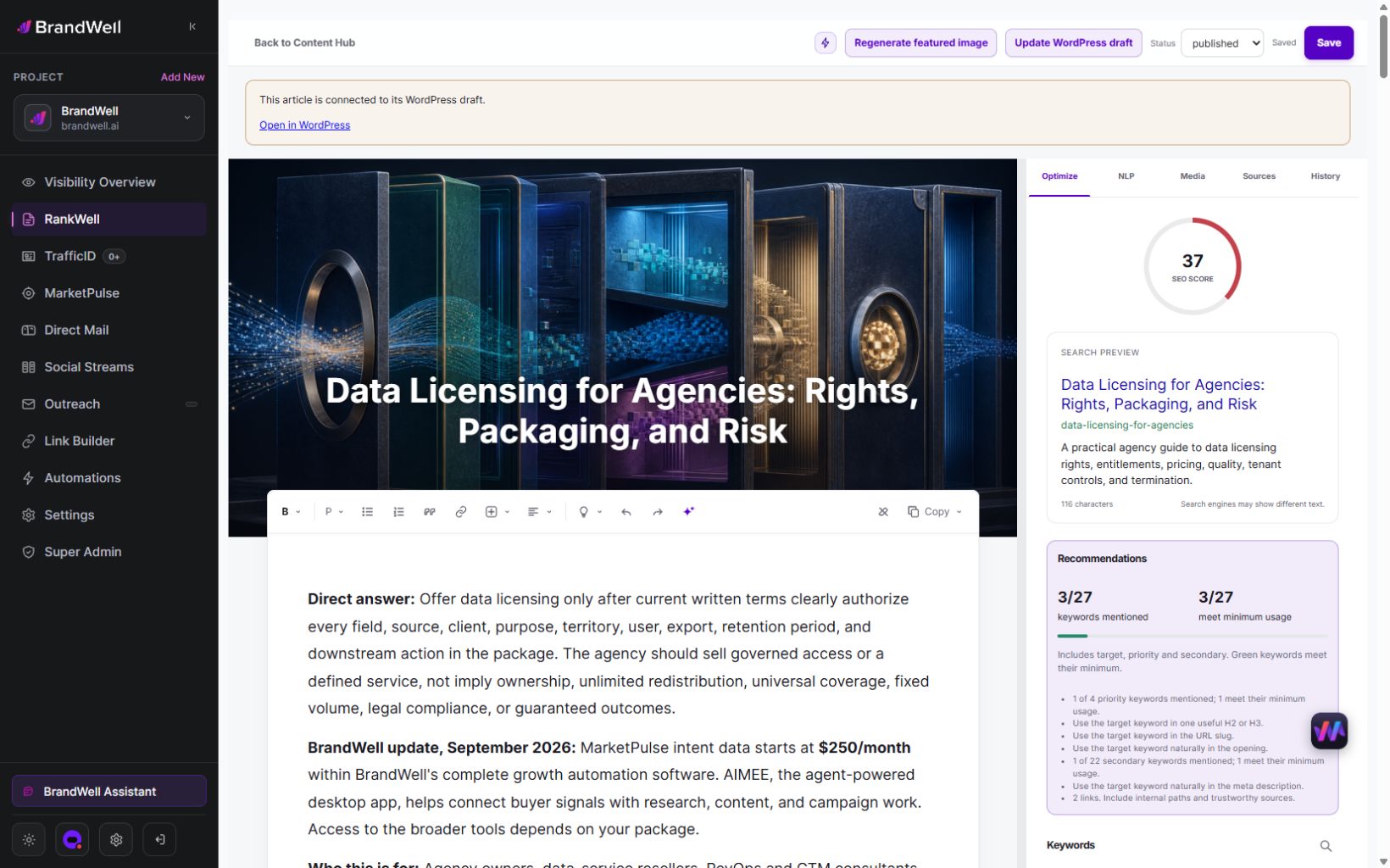
In RankWell, prepare the brief and draft around the customer’s question. Add verified product facts and sources, edit the wording, and have a person review the finished article before publishing. Use genuine product photographs or current screenshots for demonstrations.
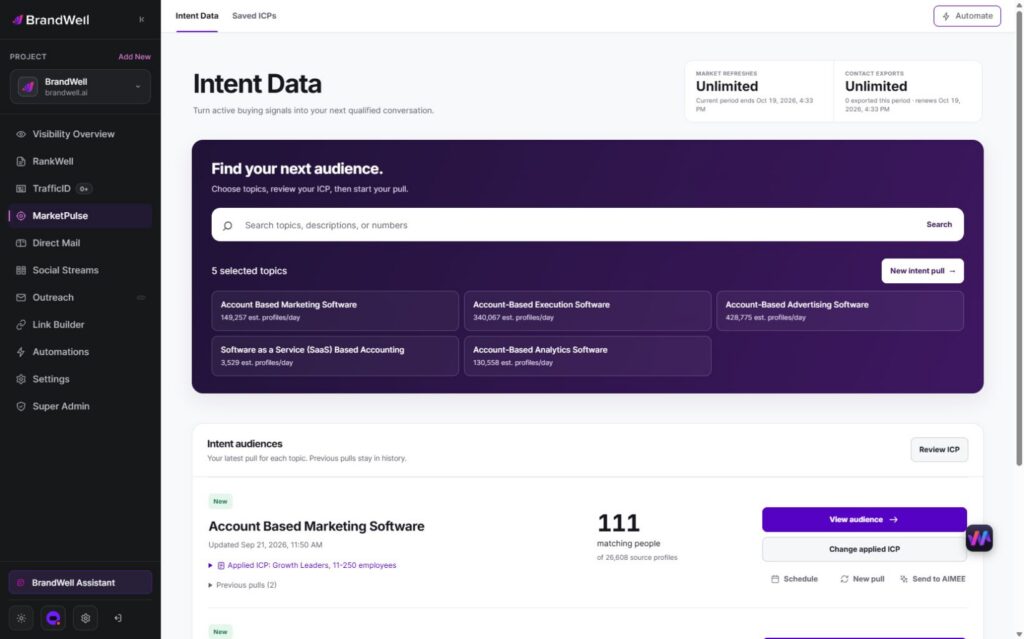
BrandWell’s separate MarketPulse product is starting at $500/mo for intent-data topic research. Available signals can help investigate a market; they are not a substitute for a retailer’s own conversion measurement or proof of a particular individual’s buying intention.
Frequently asked questions
What makes a content marketing case study credible?
It identifies the action, timeframe, measurement method, baseline, and outcome, with a source that supports those details. A published example without those measurements can still be useful, but it should not be called proof of a revenue lift.
Should an ecommerce article always promote a product?
It should help the reader complete the task. Add a relevant product link where it assists that task, and let care, comparison, and troubleshooting content answer the question fully.
Reviewed and updated October 2, 2026.

Written by
Julia McCoy has contributed articles to BrandWell on content marketing, writing, and search engine optimization. This archive retains her original bylines; individual articles may be updated by the BrandWell editorial team.