On this page
Evaluate an AI advancement by checking what was demonstrated, what is actually available and whether it improves a task you need to complete. A headline about a new model or device does not establish a benefit for your marketing workflow.
Use the following review before turning an announcement into a purchasing decision, a customer claim or a change to your process.
Identify the kind of evidence
Keep a research result, demonstration, limited preview and available product separate in your notes. Record the date and source for the specific claim rather than relying on a general impression of progress.
- Research: what task, dataset and conditions were tested?
- Demonstration: what was shown, and what was omitted?
- Availability: which account, package, region or connection is required?
- Operational result: what happened in your own workflow?
A working demonstration can be informative without establishing how a tool performs across all your tasks. Preserve the limits when explaining the result to another person.
Define a business task before testing a feature
“Use more AI” is too broad to evaluate. “Prepare a sourced first draft of a product guide for editorial review” identifies an input, output and reviewer.
Fictional example: a small software company wants to update an onboarding article. The task requires current product instructions, approved screenshots, verified links and a clear explanation. A draft that invents a menu path fails even if its writing sounds polished.
Set the acceptance criteria first
List the facts and conditions the output must satisfy. Give important failures their own decision rule rather than hiding them in an average score.
| Check | Evidence needed | Action if unresolved |
|---|---|---|
| Product steps | Verified current workflow | Hold for product review |
| Factual claims | Supporting source | Correct or remove |
| Media | Current, permitted and readable | Replace or revise |
| Destination | Correct live page or configured tool | Resolve before execution |
Swipe the table to see all columns.
NIST’s AI RMF Playbook offers voluntary suggestions for governing, mapping, measuring and managing AI risks. Use relevant guidance for your situation; citing it does not certify a product.
Count failures and missing results
Fictional pilot: a team tests 20 article updates. Fifteen meet the criteria, three fail and two are not completed. Acceptance is 75% of all planned tasks, or 83.3% of the 18 completed tasks. Report both the failures and the missing results.
If one accepted-looking draft contains a critical product error, apply the defined hold rule. Do not erase that issue because the average result looks favorable.
Record total time, corrections, reviewer effort and dependencies. A lower generation time does not establish a lower delivery cost.
Apply the test in current BrandWell
For content work, use RankWell to inspect existing coverage, choose to create, improve or merge, supply approved sources and review the resulting draft. Check the media and preview before publishing through a configured destination.
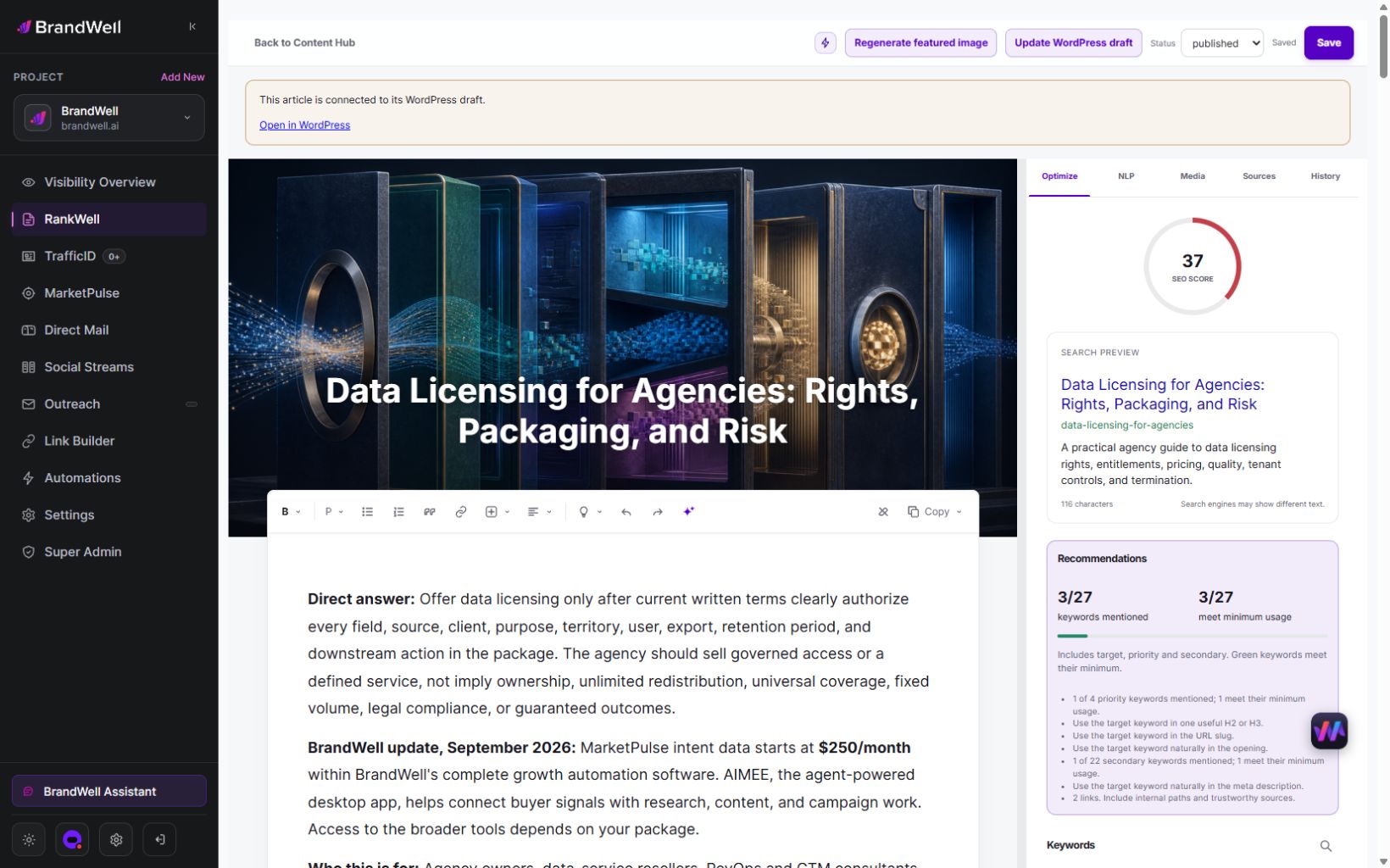
For work involving AIMEE, confirm the configured tools and authorized actions. Define what needs review and what confirms a successful result in the destination. Keep unavailable connections visible as dependencies.
Do not assume a newly announced capability exists in your account. Verify the current workflow before describing it in a customer article or sales conversation.
Review the decision after the pilot
Document which tasks improved, which did not and what additional review was required. Decide whether to expand, revise or stop based on those observations.
Assign an owner to review changing product details and source claims. Preserve the tested configuration and date so a later result is comparable. Revisit the decision when the task or tool changes.
Frequently asked questions
Does a new benchmark prove a better marketing result?
No. Check what the benchmark measures and test the relevant workflow under your own acceptance criteria.
What should we keep from an announcement?
Keep the source, date, availability conditions and claim limits. Verify the specific capability before relying on it.
What makes a pilot useful?
A defined task, comparable baseline, qualified review and a record of successes, failures, missing results and total effort.
Reviewed and updated October 6, 2026.

Written by
Julia McCoy has contributed articles to BrandWell on content marketing, writing, and search engine optimization. This archive retains her original bylines; individual articles may be updated by the BrandWell editorial team.