On this page
- 1. Confirm the release facts
- 2. Choose one primary audience and action
- 3. Write a clear headline and opening
- 4. Explain the benefit without inventing results
- 5. Make the commercial details easy to find
- Original example: a MarketPulse announcement
- Prepare the supporting content in BrandWell
- Review distribution and outcomes
A new product announcement should explain what is available, who it helps, what it does and how to take the next step. Verify the product facts first, lead with a useful description and make pricing, availability and important conditions clear. An announcement can promote a product while remaining accurate and informative.
1. Confirm the release facts
Work with the responsible product team to verify the release status, included capabilities and intended audience. Distinguish a live feature from a preview, pilot or planned item. Record the approved source of truth rather than relying on an old draft.
- Product name and the problem it addresses.
- What is available now and what depends on configuration.
- Who can access it and through which destination.
- Current price, billing context and included allowance.
- Important limitations or eligibility conditions.
- Support or setup information the reader may need.
2. Choose one primary audience and action
Decide whether you are addressing new prospects, existing customers or a specific group with access to the release. Their next step may differ. An existing customer may need setup instructions, while a prospect needs an explanation and the appropriate product page.
Use research and actual questions to decide what information matters. A persona can organize that work, but does not establish every reader’s intentions.
3. Write a clear headline and opening
Name the product or capability and describe the actual change. Use plain language and give the main information early. Avoid a mystery headline when the reader needs to understand availability.
GOV.UK’s structure guidance supports descriptive headings and an information hierarchy. A short headline still needs to represent the content accurately; an action verb is not a guaranteed engagement technique.
4. Explain the benefit without inventing results
Connect the capability to a practical use case. Describe what the reader can do rather than claiming every customer will achieve a particular sales, ranking or time-saving result.
The FTC’s advertising guidance explains the need for truthful, supported claims. A product announcement is not exempt from those expectations merely because it also contains news.
5. Make the commercial details easy to find
State the current starting price and explain which product or plan it applies to. Do not attach one product’s price to the entire platform. Link the page where the reader can confirm current allowances and conditions.
If a release is limited to a pilot or access window, describe the actual eligibility and timing. Do not announce general availability when a recipient must first be invited or approved.
Original example: a MarketPulse announcement
The following is an original example using the current public product context. It is sample copy, not a new release notice or a customer result.
Explore topic-based buyer research with MarketPulse.
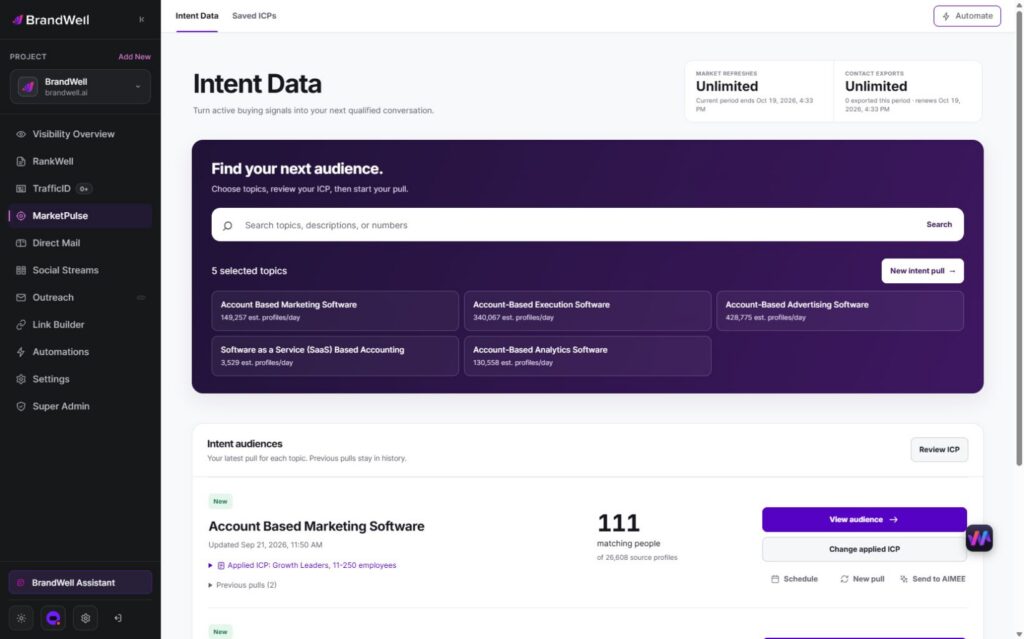
BrandWell’s MarketPulse helps teams investigate available intent data around relevant research topics. Public plans are starting at $500/mo. Review the topic coverage, plan allowance and your ideal customer criteria before choosing the next step.
See the current MarketPulse product page for pricing and included capabilities.
The example links a capability to a use case without equating research activity with a confirmed purchase or permission to contact someone. Confirm the offer that applies before adapting it for a particular campaign.
Prepare the supporting content in BrandWell
Use RankWell to prepare and review a supporting article with approved product facts, source links and relevant screenshots. Check that the article, email and landing page describe the same availability and offer.
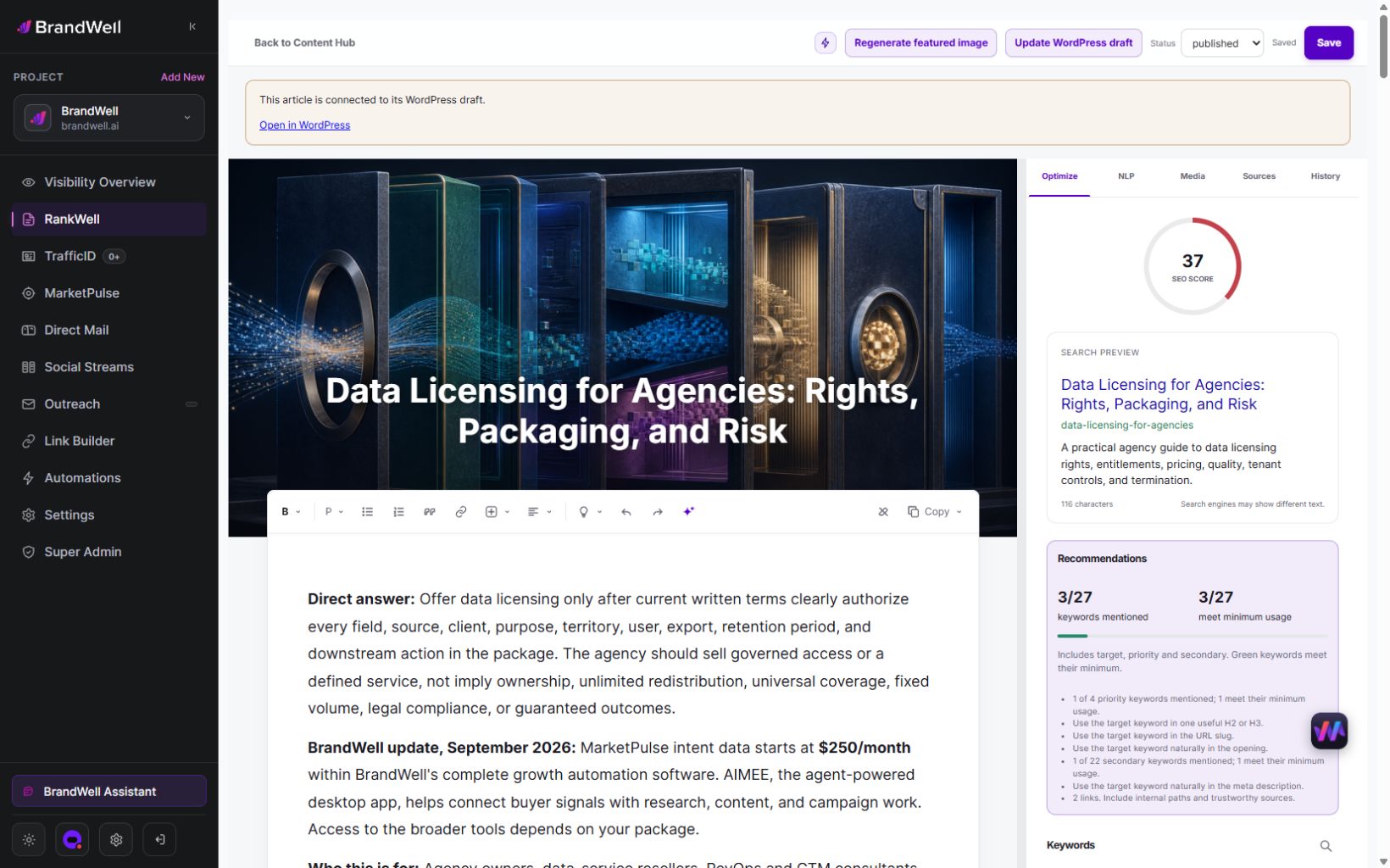
AIMEE can help prepare approved tasks through configured tools. Review the message and destination before sending or publishing. Do not assume a generated draft has verified the product facts.
The example’s price refers to MarketPulse. Review current plans rather than treating it as the starting price for every BrandWell capability.
Review distribution and outcomes
For commercial email, review the FTC’s CAN-SPAM guidance and maintain the appropriate sender identification and opt-out handling. Check links, images and mobile readability in the actual message.
Track eligible recipients, delivered messages, meaningful replies and the intended next action. Keep views and purchases distinct. Feedback can identify a missing explanation, but does not automatically provide a reliable market-size estimate.
Reviewed and updated October 2, 2026.

Written by
Julia McCoy has contributed articles to BrandWell on content marketing, writing, and search engine optimization. This archive retains her original bylines; individual articles may be updated by the BrandWell editorial team.