On this page
- A seven-step lead generation process
- Define an ideal customer without inventing intent
- Create content and an offer that fit the task
- Use MarketPulse for topic-based buyer research
- Use TrafficID to review identified website visitors
- Follow up with relevant information and suppression
- Original example: track an IT consultation funnel
- Measure each transition with a clear denominator
The lead generation process attracts relevant people, captures or researches available information, evaluates fit, and supports an appropriate next conversation. Define what qualifies as a lead before measuring performance. A visit, an identified profile, a form submission and a sales opportunity are different records.
A useful process connects the marketing promise with the actual offer and the follow-up. It also records source, eligibility and outcomes so the team can learn which activities help rather than merely counting more contacts.
A seven-step lead generation process
- Define fit: identify the customer problem, relevant market and exclusions.
- Attract attention: use useful content, appropriate campaigns or referrals.
- Present a clear offer: explain the resource, demo or next step.
- Capture information: request the fields needed and explain how they will be used.
- Qualify: review relevance, available evidence and delivery eligibility.
- Follow up: answer the person’s question and offer an appropriate action.
- Measure outcomes: track accepted opportunities and purchases separately from activity.
People may skip steps, return later or decline the offer. The funnel is a planning model, not proof that every person follows the same sequence.
Define an ideal customer without inventing intent
Record practical criteria such as industry, service area, company size, relevant problem and buying constraints. Compare these with actual customer and sales feedback. Treat an inferred industry or persona as a hypothesis until it is supported.
Do not assume a pricing-page visit means someone is ready to buy. Visitors can include existing customers, students, partners or people researching unrelated tasks. A behavior signal helps prioritize review; it does not establish a person’s motivation.
Create content and an offer that fit the task
Educational visitors may need a useful explanation or checklist. People evaluating options may need current pricing, scope and examples. Someone seeking support should receive a support path rather than an acquisition pitch.
Use RankWell to plan, develop and review business content from a source brief. Include your own relevant evidence and an honest call to action. A draft or recommendation score does not guarantee traffic or leads.
Keep the form focused. Make the offered resource available as promised, preserve campaign details where appropriate and distinguish a resource request from permission for a separate messaging program.
Use MarketPulse for topic-based buyer research
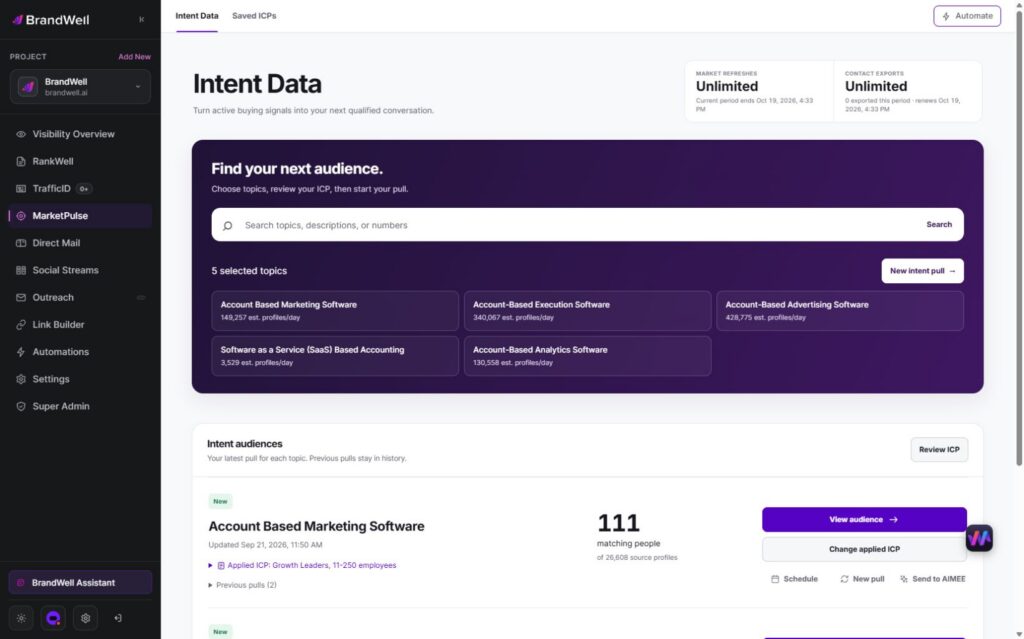
MarketPulse provides intent data for relevant research topics, with plans starting at $500/mo. Choose topics and filters that fit the market you serve, then assess available records before deciding on a next action.
An Intent Scan covers available data from the preceding 24 hours. Counts vary with topics and filters, and audiences can overlap. A matched record is not a guaranteed qualified lead, purchase or permission to contact someone through every channel.
This is a different source from a person submitting your form or visiting your own website. Retain the source distinction in reporting.
Use TrafficID to review identified website visitors
TrafficID shows identified visitors and available profile and activity information. In the selected project, review tag installation, exclusions, identified visitors and suppression controls. Coverage and field availability vary.
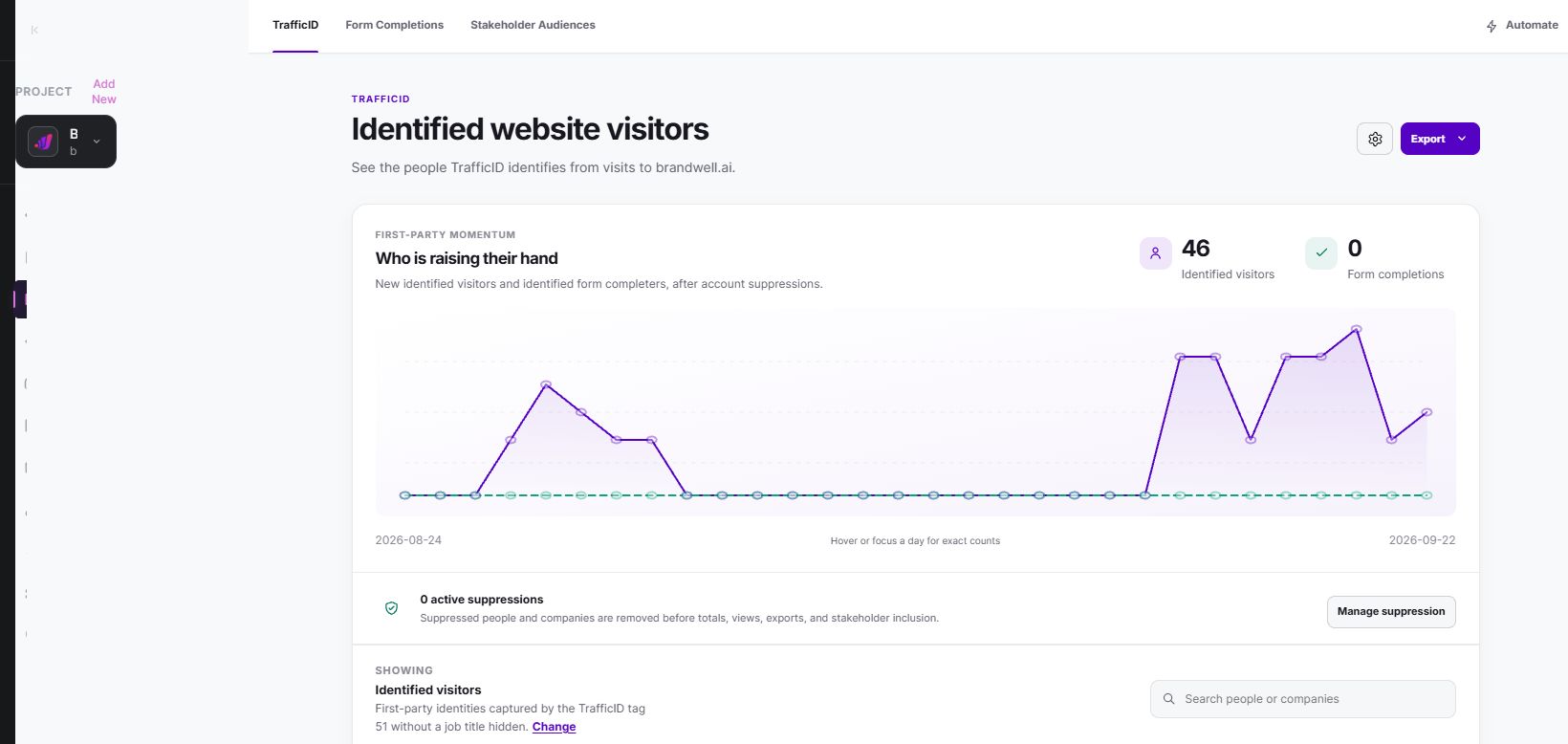
Keep form completions, identified visits and topic-research records separate. Review fit and the permitted next action before using a configured campaign or automation. Identification does not replace an opt-in where one is required.
Follow up with relevant information and suppression
Respond to the actual request first. Reference verified company context without claiming to know a private intention. Keep opt-outs and exclusions effective across the workflow, including when another tool handles delivery.
The FTC’s commercial email guidance covers accurate sender information, nondeceptive subjects, required sender details and opt-out handling; B2B email is not exempt. Different channels and jurisdictions have different requirements. Do not treat available contact data as blanket delivery permission.
AIMEE can help prepare and execute approved work through configured tools and access. Verify the audience, message, destination and eligibility before enrolling records. Automation should preserve the review rules.
Original example: track an IT consultation funnel
Consider a hypothetical team publishing a restore-test guide. Its offer is a consultation about planning a test, not a promise of a particular recovery result.
- Visit: the guide was opened.
- Request: a person submitted the consultation form.
- Qualified: a team member confirmed service area, relevant need and fit.
- Opportunity: the request progressed to an accepted sales discussion.
- Purchase: a verified transaction occurred.
If 20 people request a consultation and eight meet the team’s stated fit criteria, that is eight qualified requests in this fictional example. It does not mean all 20 are customers or that a pageview-to-request improvement proves more revenue.
Measure each transition with a clear denominator
Use Search Console for organic search visibility and your configured analytics for on-site activity. Define the events and reporting period, remove duplicate records where appropriate and inspect source and landing page together.
In GA4’s traffic acquisition report, review session source and medium with the relevant landing page. Keep downstream qualified opportunities and purchase records in the analysis. Attribution credit describes the configured reporting model; it does not prove that one message caused the sale.
Improve the stage with a verified problem: a broken mobile form, unclear offer or irrelevant follow-up. Test the change and compare equivalent periods before claiming an effect.
Reviewed and updated October 2, 2026.

Written by