On this page
Local SEO link building means earning relevant links to your business from organizations, publications and useful resources connected to the places you serve. Start with accurate business information and a page worth recommending, then qualify opportunities and verify what actually gets published.
A local mention, a directory listing and a clickable backlink are different records. Track them separately rather than calling every appearance a new link or promising a ranking improvement.
Start with a useful destination
Choose a page that helps a local reader make a decision. It could explain a real service, answer a recurring local question or provide an original resource. Check that the business details, service area, evidence and next step are accurate.
For example, a fictional plumbing business could publish a homeowner checklist for preparing outdoor fixtures for cold weather. A local housing organization might find that more useful than a generic sales page. Have a qualified person check any technical advice before publication.
Avoid creating near-identical pages for every neighboring city. A location page needs a real reason to exist, such as actual availability, relevant work or details that help someone in that place.
Build a local opportunity list
| Opportunity | Reason to consider it | Check before outreach |
|---|---|---|
| Local publication | Original reporting or a useful expert contribution | Audience, editorial fit and who owns the relevant section |
| Chamber or professional association | An accurate member profile | Eligibility, membership terms and whether a live link is included |
| Community resource | A genuinely helpful guide or reference | Whether your page answers the resource’s purpose |
| Existing business mention | A reader may benefit from a direct source | Correct entity, current page and editorial willingness |
| Real partnership or event | Accurate information about an actual relationship | Commercial terms, attribution and appropriate link treatment |
| Relevant directory | Customers use it to find eligible businesses | Accuracy, audience and maintenance rather than sheer listing volume |
Swipe the table to see all columns.
Research a manageable list. A domain score alone does not establish editorial quality, local relevance or the likelihood of an inquiry. Read the actual page, identify its audience and record why your resource belongs there.
Keep citations and backlinks distinct
A citation can name a business without linking to it. A linked listing can be useful, but neither record proves that someone saw it or became a customer.
- Use the real business name and accurate contact details.
- Record the listing URL, owner, last check and any correction needed.
- Update changed addresses, hours or service details where appropriate.
- Check whether the link reaches the intended page rather than an obsolete destination.
Your Google Business Profile is a separate business listing to maintain. Do not report a profile update as an editorial backlink earned from a publisher.
Create something worth citing
Useful local material can include an original interview, an accessible event guide, documented project lessons or a carefully researched service checklist. Obtain permission for customer examples and photographs. State dates and limitations when information changes.
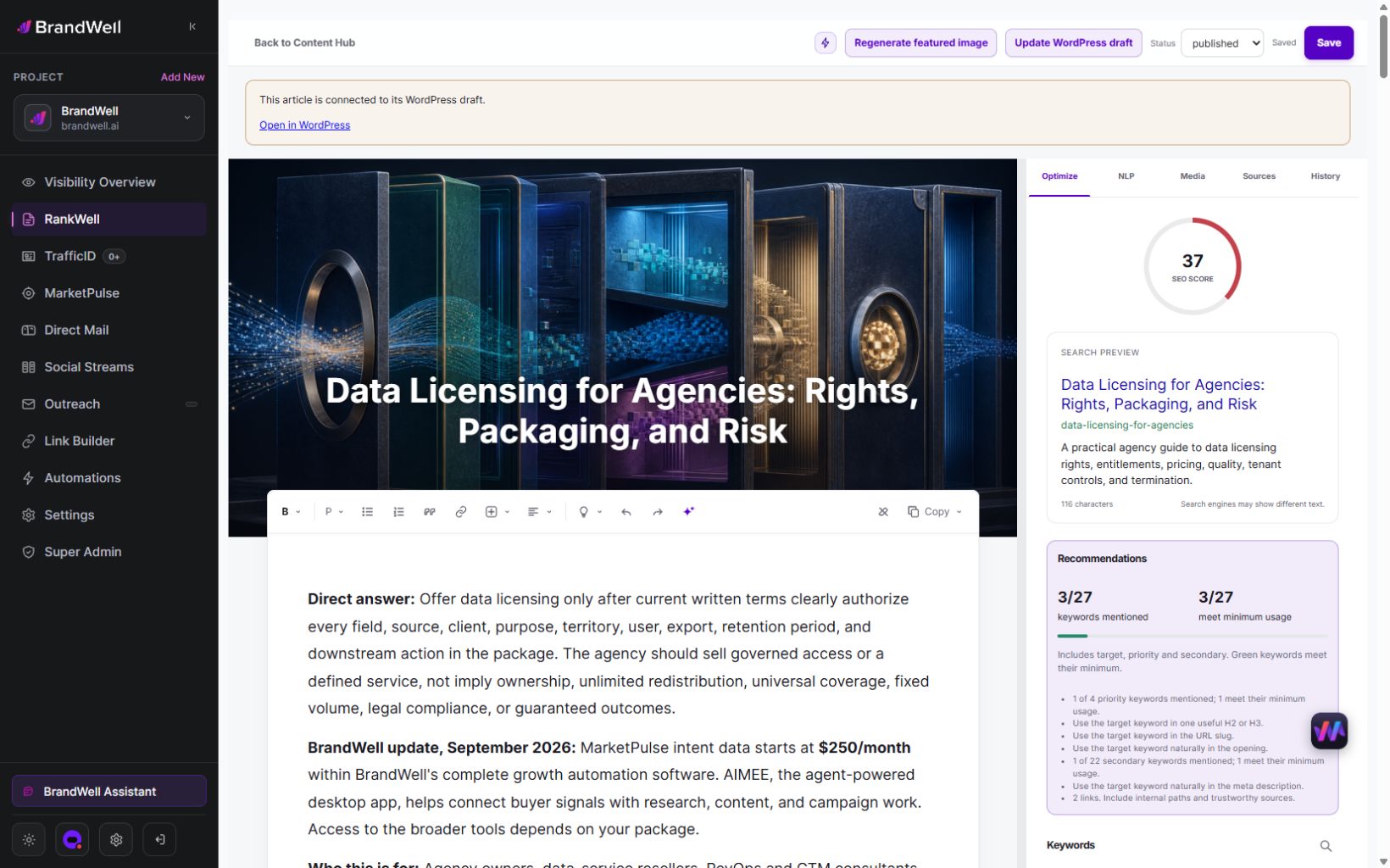
In RankWell, use the content workflow to:
- Define the reader and the question the page should answer.
- Supply approved facts, sources and business details.
- Draft or improve the article with a clear scope.
- Review local claims, technical advice and image rights.
- Check the preview and publish through a configured destination.
- Return to the page when facts or availability change.
Keep outreach specific and truthful
Refer to a real page and explain the reader benefit. Do not claim a relationship you do not have, invent praise or send a generic request to every address you find.
Fictional example: “Your neighborhood maintenance page lists winter preparation resources. We published a checklist reviewed by our plumbing team, including the fixtures it covers and the checks homeowners should leave to a professional. Would it be useful as an additional reference?”
Record the contact source, request, response and next action. Respect a refusal. Keep any commercial arrangement explicit.
Handle sponsorships openly
Sponsoring an event can have a community or advertising purpose. Do not buy a sponsorship on the promise that it will improve rankings.
Google’s outbound-link guidance says paid placements should use rel="sponsored"; nofollow remains acceptable. Ask the publisher how the relationship will be represented.
Manage the work in Link Builder
Link Builder, available with RankWell Growth and Scale, keeps publisher research, target pages, contacts, stages and tasks together. Review the publisher before approving a pitch. After publication, retain verification evidence and recheck the placement.
Configured AIMEE and Outreach connections can support the approved workflow. CSV exports help move records to other tools. A task marked complete is not proof that a publisher accepted the pitch, that the link is live or that search visibility improved.
Measure placements and business outcomes separately
Fictional pilot: a team researches 20 organizations, approves 12 for outreach, contacts eight and verifies three live links. Its contact rate is 8/12, or 66.7% of approved opportunities. Its placement rate is 3/8, or 37.5% of contacted opportunities.
Two inquiries arrive through tracked referral visits. Report those inquiries separately from the three links. Do not assume all search changes came from the campaign, or treat uncontacted opportunities as failed pitches.
Keep the placement URL, target URL, publication date, link attributes, last successful verification and observed referral outcomes. Review time and money spent as well as the number of links.
Frequently asked questions
How many local links do I need?
There is no universal target. Prioritize genuine relevance, accurate information and a useful destination. A large count of irrelevant listings is not a substitute for a sound local marketing plan.
Should I ask for links from every business partner?
Only when a link serves the page’s readers and accurately describes the relationship. Partners can decline, and commercial arrangements need appropriate treatment.
Can local link building guarantee rankings?
No. Verify the work you control and measure observed results. Keep ranking, referral traffic and qualified inquiries as separate outcomes.
Reviewed and updated October 6, 2026.

Written by