


On this page
Outbound lead generation means initiating contact with potential customers rather than waiting for them to contact you. A useful program combines relevant account research, an appropriate channel, a specific offer and a measured next step. A contact record or intent signal is a starting point for qualification.
This guide presents 24 approaches to evaluate, followed by an original workflow for using BrandWell. The approaches are options to test, not universally proven methods or a promised conversion rate.
Start with fit and contact eligibility
Define which organizations you can help, the roles involved, the problem you address and the evidence needed to qualify an opportunity. Record exclusions, existing customers and people who should not receive outreach.
Separate observed behavior from an inference. An identified website visit does not establish budget, purchase readiness, an urgent problem or permission to contact someone. Do not claim to know someone’s private research or motivation.
The FTC’s commercial-email guide covers accurate sender information and subjects, postal address and opt-out requirements. Business-to-business email is not automatically exempt. Channel, recipient and jurisdiction rules also need review.
24 approaches to evaluate
1. Researched calling
Prepare a reason for the conversation based on verified business context. Confirm the number’s source and contact eligibility. Introduce yourself accurately, listen and respect a refusal rather than treating a phone field as an invitation.
2. Focused email outreach
Offer one useful next step with a truthful subject. Explain relevance using facts you can support. Avoid invented previous conversations, customer results or claims that you saw a particular person’s private searches.
3. Professional-network conversations
Use an accurate profile and relevant public context. Read the platform’s current rules before using automation. A connection acceptance is not unlimited permission for repeated sales messages.
4. Useful participation in public discussions
Answer the actual question and disclose relevant business interests. Avoid generic comments, tagging people to force attention or posting the same pitch across groups.
5. Paid campaign testing
Paid acquisition can complement outreach, although it is a different channel from direct prospecting. Match the ad and landing-page promise. Set a budget and measure qualified outcomes rather than assuming clicks are leads.
6. Customer introductions
Ask satisfied customers whether they want to make an introduction. Explain any referral incentive clearly. A referrer should not promise results or share another person’s private details without an appropriate basis.
7. Partner content distribution
Choose a publisher whose audience needs the resource. Agree on attribution, permissions and the destination. Assess reader value instead of buying access solely for a site’s search reputation.
8. Relationship maintenance
Send an update when it is relevant to an existing conversation. Record preferences and commitments. A regular calendar reminder is not a reason to keep contacting someone who declined.
9. Coordinated channels
Use one contact history across approved channels. Prevent overlapping sequences and honor suppression everywhere it applies. Switching from email to another channel should not circumvent a refusal.
10. Public expertise
Publish specific, supported advice within your experience. Use genuine examples with permission. An impressive title or posting frequency does not prove expertise or create a pipeline automatically.
11. Multiple stakeholders
Understand who evaluates, uses and approves a purchase. Coordinate communication with the organization’s process instead of simultaneously sending the same pitch to everyone.
12. Additional channels
Test a new channel only when there is evidence your audience uses it and the format serves the offer. A popular platform does not establish relevance to your market.
13. Account mapping
Record verified roles, current company context and gaps that need confirmation. Keep assumptions visibly separate. A company visit does not reveal its internal purchasing committee.
14. Direct mail or a useful demonstration
Offer something relevant rather than an expensive surprise. Check the address, organizational gift rules and actual costs. Measure the response without assuming the delivery proves personal engagement.
15. Problem-based qualification
Ask what the team wants to accomplish, what constraints exist and who needs to be involved. Let the prospect describe urgency. Do not infer emotional vulnerability or invent fear-based pressure.
16. A bounded follow-up plan
Define the maximum number of contacts, spacing and stop conditions before launch. Adjust from actual responses. Longer is not automatically better, and silence is not evidence of interest.
17. Relevant video
Use video when it demonstrates something more clearly than text. Provide an understandable summary and accessible alternatives. Include one next action and avoid generic mass personalization.
18. Events and demonstrations
State what attendees will learn and the actual agenda. Record registration preferences and distinguish requested event information from a separate marketing program.
19. Topic-intent prioritization
Use available research signals to help select relevant accounts or topics. Confirm identity and fit before action. Research activity does not establish a purchase deadline or contact consent.
20. A useful interactive challenge
Use an assessment only if it helps the participant. Explain any incentive and data collection. Avoid prizes or scoring that disguise a sales pitch or claim a diagnosis the tool cannot support.
21. Honest survey outreach
State why you are asking and how responses will be used. Ask clear questions without steering toward your offer. Keep a research invitation distinguishable from a sales solicitation.
22. Response-aware sequences
Update a sequence from meaningful actions and verified context. Stop or hand off when someone replies, purchases or opts out. Review generated names, links and statements before messages leave the system.
23. Calculators and worksheets
Show assumptions and let readers change inputs. A hypothetical saving is not a measured customer result. Avoid forcing unnecessary personal information to reveal a basic answer.
24. Partner collaboration
Agree on audience, responsibilities, permissions and attribution. Disclose material relationships and use genuine testimonials. A partner’s audience size does not guarantee qualified leads.
Use MarketPulse and TrafficID for different signals
MarketPulse provides topic-based intent data, with plans starting at $500/mo. Intent Scans concern available data from the previous 24 hours; counts and available fields vary with topics and filters, and audiences can overlap. Review current plan limits before building a campaign.
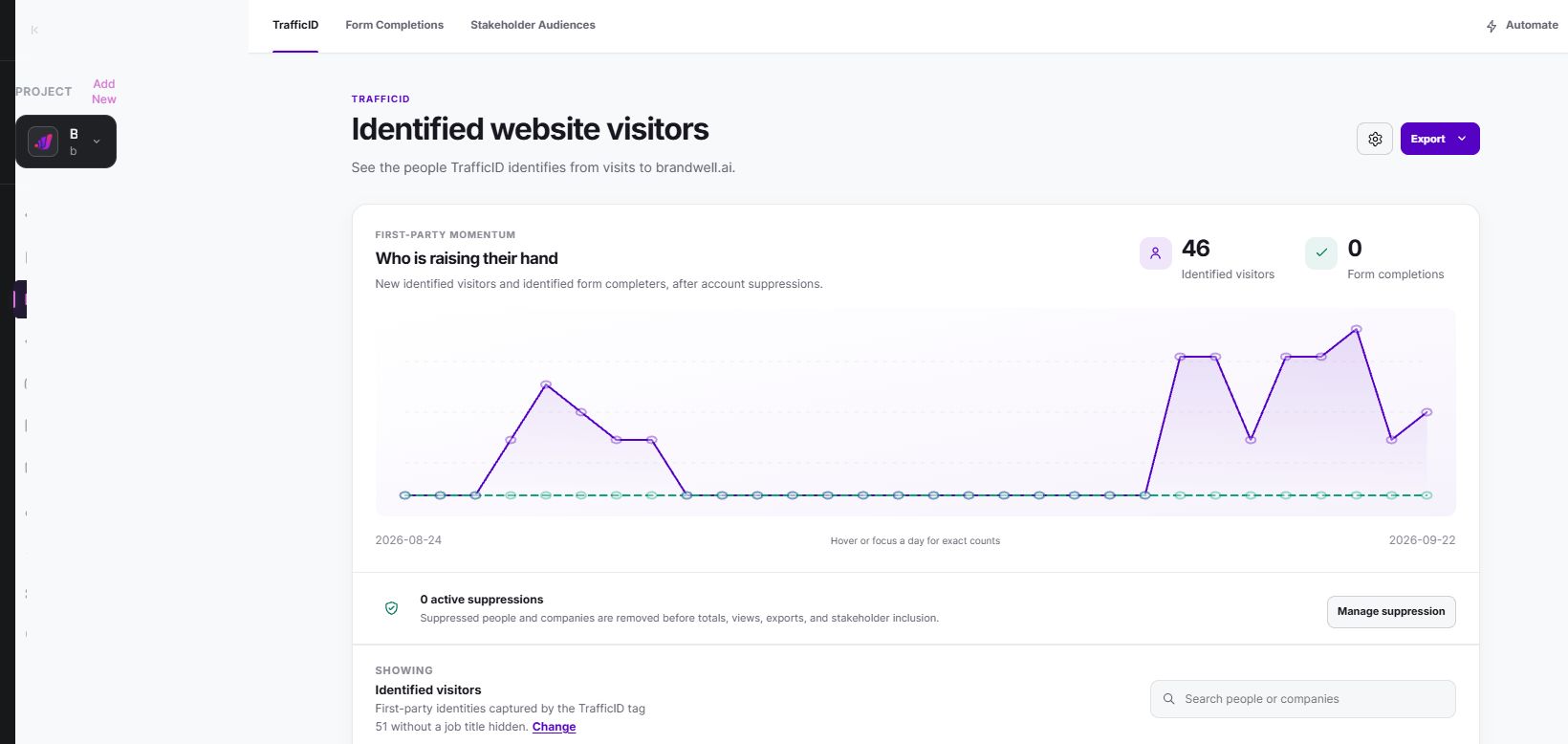
TrafficID surfaces identified visitors and available website activity. Identification and field coverage vary. It does not identify every visitor or make each identified person a qualified, contactable buyer.
Original workflow: an IT service team’s restore checklist
Suppose a service team wants to discuss backup restore testing. It first reviews a relevant research topic, then checks whether available accounts fit its geography and service scope. It removes existing customers, duplicates and suppressed records before considering contact.
The team prepares an original checklist explaining test responsibilities and limitations. In RankWell, it reviews the supporting article, sources, media and destination. It does not claim a business has a failed backup simply because a relevant topic appeared.
A proposed message could say: “We prepared a restore-test planning checklist for small teams. If this is part of your work, would the checklist be useful?” Add the actual sender, context and required commercial information. This is a fictional example, not an observed campaign result.
AIMEE can help prepare approved work through configured tools. Review eligibility, suppression, content and the destination before sending. Tool access and available actions depend on the project’s configuration.
Measure replies and qualified outcomes
Track delivered messages, relevant replies, accepted meetings, qualified opportunities and paid outcomes separately. Record the campaign cost and the attribution window. Do not describe every reply or booked meeting as revenue.
Email opens are an imperfect signal. Apple’s Mail Privacy Protection guidance explains that it prevents senders from seeing whether a protected recipient opened the message. Avoid making opens the sole basis for an urgency claim or follow-up decision.
Compare campaigns with similar audiences, offers and periods. A multi-channel journey can include several contributing touches; attribution does not establish that the final message caused the purchase. Keep a dated baseline and document changes.
Before launch
- Verify account fit and the source of contact information.
- Review channel eligibility and suppression.
- Support every benefit, price and customer claim.
- Test the landing page and mobile experience.
- Confirm stop conditions and response ownership.
- Define the qualified outcome and reporting window.
Reviewed and updated October 2, 2026.

Written by

