


On this page
- 1. Define the listener and show promise
- 2. Verify current distribution routes
- 3. Create a useful episode page
- 4. Choose clear titles and summaries
- 5. Adapt a few useful clips
- 6. Prepare guest-sharing material
- 7. Send useful subscriber updates
- 8. Explore relevant collaborations
- 9. Invite honest feedback
- 10. Test promotion with a defined outcome
- 11. Review the results and maintain the library
- Original example: a practical project episode
- Prepare supporting content in BrandWell
A podcast marketing strategy connects a defined listener need, useful episodes, current distribution channels and measurable next steps. Start with the audience and episode promise, then choose a manageable promotion plan. More posts or more platforms do not automatically produce loyal listeners.
1. Define the listener and show promise
State who the show helps, the subject it covers and what listeners can expect. Choose an honest description rather than a generic claim that every episode will transform someone’s business.
2. Verify current distribution routes
Check the requirements and live availability of the destinations your audience uses. Test the actual show listing, artwork and playback. Do not rely on a historical directory list or assume publishing to one service distributes everywhere.
For YouTube, the official podcast guide explains podcast playlists and episode videos. Keep full episodes distinct from supporting clips and follow the current setup requirements.
3. Create a useful episode page
Give each episode a descriptive title, playable media, relevant notes and a clear next step. Identify the host and guests accurately. Link sources discussed in the episode so listeners can inspect them.
Provide appropriate text alternatives. W3C’s accessible-media guidance explains captions, transcripts and descriptions of meaningful visual information. Check transcription errors in names, figures and technical instructions.
4. Choose clear titles and summaries
Describe the actual question, demonstration or discussion. An episode number can be included, but should not replace the subject. Avoid stuffing unrelated keywords or promising a result the episode does not deliver.
A descriptive page helps readers understand the content. It does not guarantee search discovery, podcast recommendations or a particular chart position.
5. Adapt a few useful clips
Select passages that make sense outside the full conversation. Preserve qualifications and avoid a misleading edit. Add readable captions, verify the quote and link to the appropriate episode.
Use a schedule the team can maintain and review. Do not assume posting many times each day is appropriate for every audience.
6. Prepare guest-sharing material
Offer guests approved titles, artwork, relevant clips and the episode destination. Confirm their names and affiliations. Ask whether they want to share; do not assume their audience or participation guarantees promotion.
7. Send useful subscriber updates
Explain the episode’s practical value and include a relevant listening link. Respect subscription and opt-out context. Keep the subject accurate and avoid unrelated promotions that undermine the reason someone subscribed.
8. Explore relevant collaborations
Consider a joint discussion or guest appearance when there is a genuine subject and audience fit. Describe your actual expertise and proposed contribution. Confirm the arrangement, rights and commercial context before distribution.
9. Invite honest feedback
Ask listeners what was useful and what needs explanation. Where a platform supports ratings and reviews, invite honest feedback without presenting it as a ranking trick.
Apple’s ratings-and-reviews guidance says those signals do not influence its Charts or Search. Reviews can inform potential listeners, but do not assume the same mechanics across platforms.
10. Test promotion with a defined outcome
Before a paid placement, define the audience, cost, destination and success measure. Check advertising disclosure requirements and the accuracy of the message. A fixed number of sponsored episodes does not guarantee listener acquisition.
Keep campaign visits, plays and business inquiries separate. Avoid calling paid exposure “buying listeners” when listening and continued engagement have not been measured.
11. Review the results and maintain the library
Compare episode performance over equivalent observation periods. Track the relevant platforms’ available metrics without assuming a download, view and completed listen mean the same thing. Record promotion dates and other changes that may affect the result.
Check older episode pages for broken playback, outdated product descriptions and missing sources. Update the notes when the underlying facts change.
Original example: a practical project episode
A fictional service business plans an episode about preparing information before a project meeting. It publishes a reviewed checklist, a discussion of common questions and one short clip demonstrating the first step.
Each output links to the current episode page. The team records listener questions and relevant inquiries instead of claiming the clip caused revenue. This is an original planning example.
Prepare supporting content in BrandWell
Use RankWell to review episode notes and supporting articles with reliable sources and actual expertise. Check that the summary matches the recording.
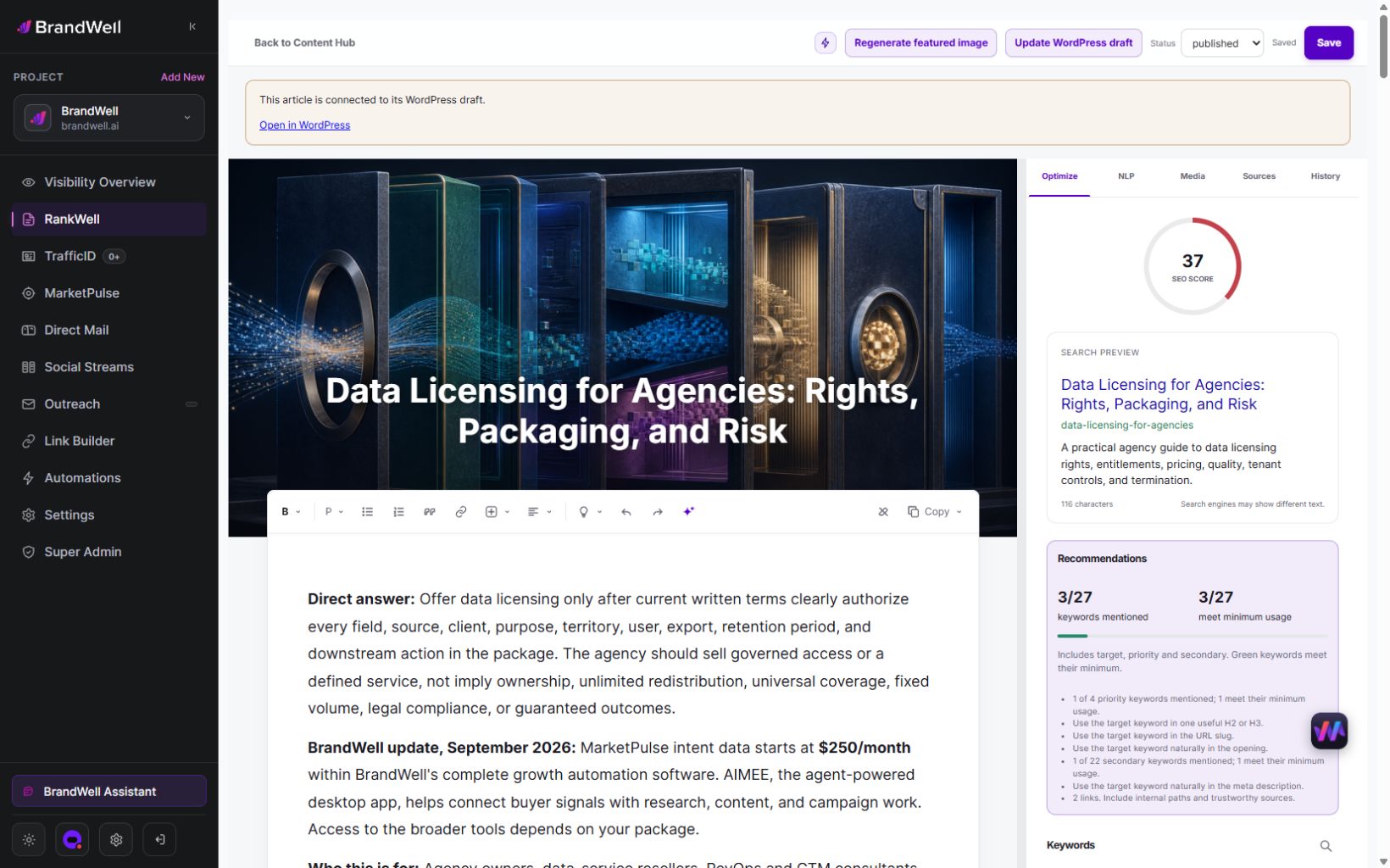
AIMEE can help prepare approved tasks through configured tools. Review clips, quotations, destinations and factual claims before distribution. Available workflows depend on configuration and access.
Reviewed and updated October 2, 2026.

Written by
Justin McGill is the founder of BrandWell, growth automation software for inbound and outbound teams. BrandWell brings together MarketPulse intent data, TrafficID website audiences, RankWell content workflows, Visibility research and AIMEE execution through configured tools.
 Farnaz Kia
1 comments