On this page
Google search queries are not case-sensitive: searching for “SEO tips” and “seo tips” does not create two separate capitalization targets. URL paths are a different matter: Google can treat /Guide and /guide as distinct URLs. Use normal capitalization for readable copy and consistent URL handling for technical SEO.
Google’s search tips explicitly explain that capitalization does not distinguish its example queries. This does not tell us that Google’s internal systems convert every page to lowercase, and there is no need to invent that explanation.
Where capitalization matters
| Location | Recommended approach | Reason |
|---|---|---|
| Search query | Research the audience’s words and task | Changing letter case alone does not create a separate Google query target |
| Title and headings | Use a consistent readable editorial style | Readers need a clear, accurate page description |
| Brand names and acronyms | Follow the approved spelling | Preserve the intended identity and meaning |
| URL path | Use one preferred form and consistent links | Case variants can be distinct URLs |
| Image description | Describe the image’s purpose in context | Capitalization is less important than a useful accessible description |
Swipe the table to see all columns.
Write titles for people
“Payroll migration checklist for small employers” and “Payroll Migration Checklist for Small Employers” are different presentation styles. Choose the one that fits your publication. Do not repeat both versions to target capitalization or claim that title case automatically increases CTR.
The substance matters: the title should identify the page’s task and reflect the content. Google may construct its displayed title using several sources, as its title-link documentation explains. Changing case is not a guarantee that the displayed result will use your preferred wording.
Use the same discipline for headings, descriptions, and links. Write concise, descriptive link text that makes the destination clear. Preserve proper names such as BrandWell, RankWell, and TrafficID. Write IT as an acronym when that is what you mean. A style guide prevents distracting inconsistencies without becoming a ranking formula.
Handle URL case deliberately
Google’s URL guidance says its URL handling is case-sensitive and gives differently capitalized paths as distinct examples. What a visitor receives also depends on your server and application: one variant might load, redirect, or return an error.
For example, inspect /payroll-guide and /Payroll-Guide rather than assuming they behave identically. If both serve the same content, choose the preferred URL and align your technical signals. Lowercase paths are a useful convention for new URLs, but do not change established paths without planning redirects and updating links.
- Choose the preferred address. Record the exact URL that should represent the page.
- Test known variants. Check their response and final destination, including links that already circulate.
- Align internal links. Navigation, related posts, and content links should point to the preferred form.
- Review the sitemap and canonical. Keep the signals consistent rather than listing case variants as separate preferred pages.
- Use appropriate redirects. For a permanent URL change, implement a redirect to the matching destination and test it. Avoid redirect loops or routing every old URL to the homepage.
- Inspect the result. In Search Console, review the indexed URL and Google-selected canonical after the change is processed.
Google’s canonicalization documentation explains the relevant signals. A canonical link helps identify a preferred version; it does not guarantee that Google will select it. Case differences are not automatically a duplicate-content penalty.
Do not confuse capitalization with keyword targeting
Research synonyms, audience language, and the decision behind a query. “Payroll implementation” and “payroll migration” can describe different needs; “PAYROLL” and “payroll” do not become different topics merely because of case.
A useful page answers the task with clear scope, current information, and relevant examples. Avoid keyword-density targets or repeating uppercase variations. Meta keywords are also not a workaround: Google’s supported meta-tag documentation says that meta-keyword tags have no effect on Google indexing and ranking.
A practical BrandWell editing workflow
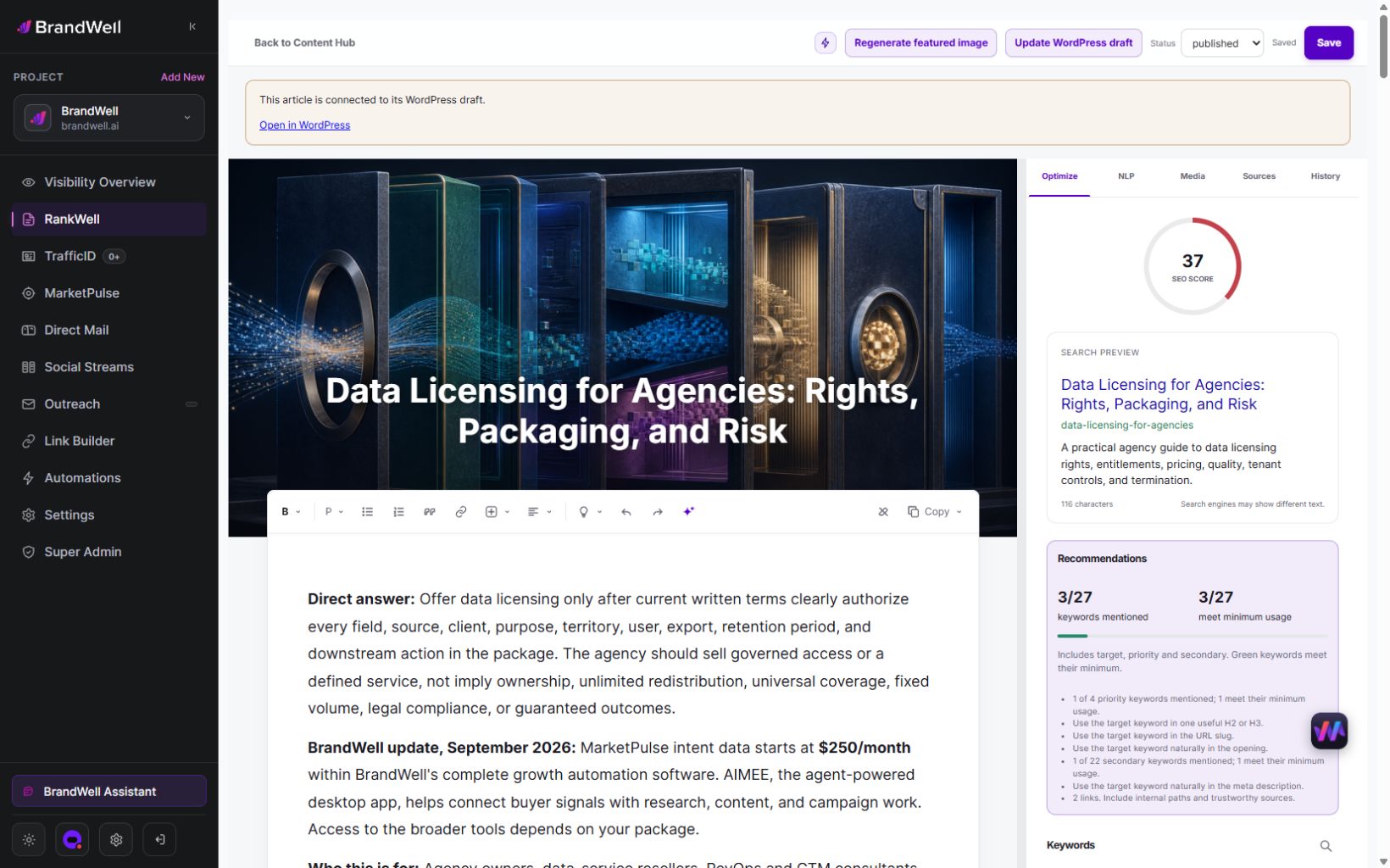
In the current BrandWell portal, organize the audience question and supporting evidence in the RankWell content workflow. Review the title, headings, product names, and link text in the editor. Use one editorial style instead of creating articles for uppercase and lowercase versions of the same term.
Then check the published page in your CMS. An editor cannot establish how your server handles URL case simply from the draft. Verify the final URL, visible content, canonical, and links on the live page. Keep the original URL unless there is a documented reason to change it.
Measure search changes without assuming a cause
Save the old title and the date of a change. Compare the relevant page and queries in Search Console, using comparable periods and device or country filters where helpful. CTR is clicks divided by impressions, but it also depends on result position, query mix, and the surrounding search experience.
If CTR changes after you revise a title, do not conclude that capitalization caused it. An accurate description of the page’s benefit may be more relevant, and other conditions may also have changed. A formatting correction can be worthwhile for readers even when no search effect is demonstrated.
Frequently asked questions
Are Google SEO keywords case-sensitive?
Google’s search tips say capitalization does not distinguish its example queries. Use normal spelling and focus on the audience’s task rather than targeting letter-case variants.
Should I make every title lowercase?
No. Follow a readable editorial style and preserve proper names. There is no capitalization rule here that promises higher rankings.
Are URLs case-sensitive?
Google can treat paths with different capitalization as distinct URLs. Test your server’s behavior and maintain consistent preferred URLs, links, redirects, and canonical signals.
Should I publish separate pages for SEO and seo?
No. Capitalization alone does not create a distinct audience task. Improve one useful page rather than publishing near-duplicate variants.
Reviewed and updated October 2, 2026.

Written by
Julia McCoy has contributed articles to BrandWell on content marketing, writing, and search engine optimization. This archive retains her original bylines; individual articles may be updated by the BrandWell editorial team.