On this page
A ChatGPT-assisted draft needs an editorial review before you rely on it or publish it. Check the claims, source material, and fit for the reader. This guide focuses on that work rather than promoting detector performance or using a detector score as a publishing target.
What should you check first?
Begin with the highest-consequence claims: numbers, product behavior, instructions, and statements about rules or requirements. Ask what would happen if a reader followed the advice. The more consequential the action, the more important it is to verify the underlying evidence and involve an appropriate reviewer.
For a product walkthrough, follow the steps in the actual product. For a statistic, find the original study and note the population and time period. For a quotation, compare the wording with the source and attribute it clearly. If the draft invents a source or the source is inaccessible, replace the claim with something you can substantiate.
Separate originality from authorship
Attribution concerns the source of wording and ideas. The use of AI assistance is a separate disclosure and policy question. Keep your notes and drafting history, use quotation marks when quoting, and follow the publisher’s stated rules. Rewriting a sentence does not remove the need to attribute a borrowed idea.
Google’s generative AI content guidance emphasizes review of the finished content. Use the final article’s evidence and usefulness as the basis for your publication decision.
A practical review workflow in BrandWell
For business content, start with the audience and the job the article needs to do. Record the questions customers actually ask, the product facts you can substantiate, and the primary sources needed to support the answer. A finished article should help a reader make progress, whether or not AI assisted the draft.
- Prepare a brief: define the audience, search question, useful examples, required sources, and review owner.
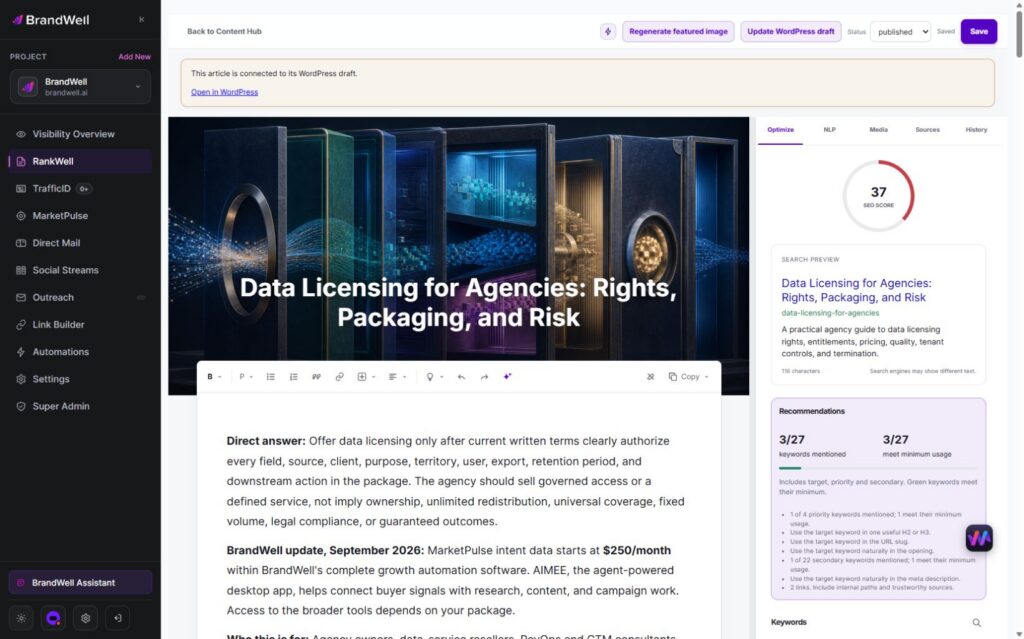
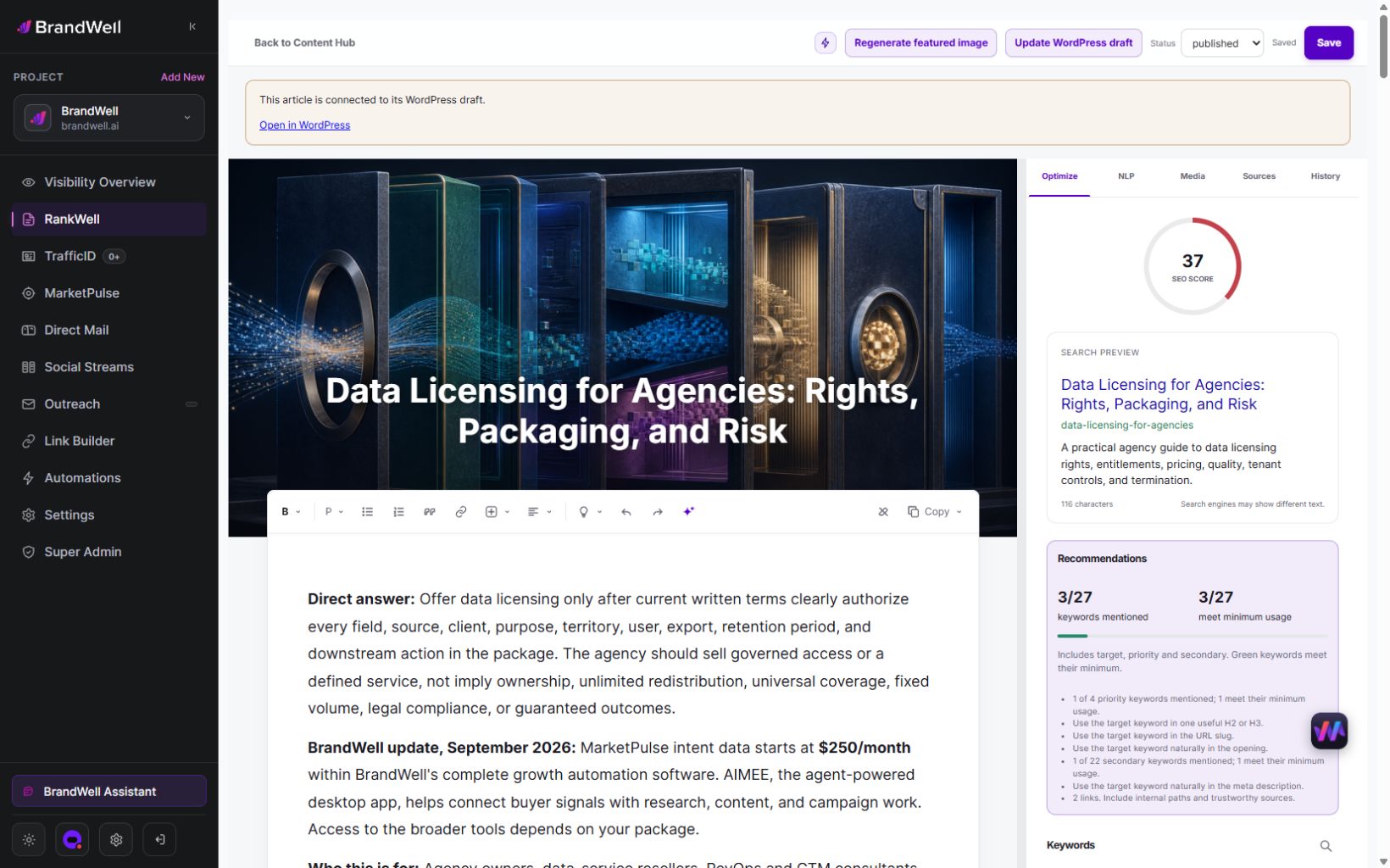
- Draft in RankWell: use your brief and approved materials to guide the content workflow.
- Verify the evidence: open each cited source, check the specific claim, and remove statistics that have no defensible source or date.
- Add business context: replace generic examples with your actual process, documented product behavior, or an explicitly fictional example.
- Review before publishing: check meaning, originality, permissions, links, images, formatting, and whether the article answers its stated question.
- Measure useful outcomes: use search impressions, clicks, relevant visits, and customer actions to identify the next revision.
AIMEE can help organize approved research and prepare work for review. Keep the source and the reviewer attached to each important assertion. Neither a fluent draft nor a software-generated score substitutes for evidence.
What to keep in the editorial record
Save the brief, source URLs, source dates, draft history, corrections, and the person who approved publication. For a product example, record which workspace and feature were used. If a step depends on an account setting or a paid plan, say so rather than presenting it as universal behavior.
A simple review note can contain the claim, its supporting passage, the date checked, and any limitation. For example, a customer outcome belongs to that named case study and time period; it is not a promise about what every customer will achieve. This makes later updates easier and gives a reader a clearer account of how the article was prepared.
Reviewed and updated October 2, 2026.

Written by
Jeff Joyce has been helping brands grow online since the Myspace era, when custom HTML layouts were still a competitive advantage. What started in design quickly evolved into a career spanning social media, content strategy, video, agency ownership, and growth marketing. After building his own agency and testing countless AI tools, Jeff joined BrandWell with a clear focus: helping marketers understand how AI can actually improve the way they create, optimize, and scale content. Today, Jeff brings a CMO-level perspective to BrandWell's marketing strategy, blending brand positioning, content, video, customer education, and growth. His work centers on turning complex AI concepts into clear, practical marketing that helps brands move faster, create better content, and stay competitive without losing their voice.

 Justin McGill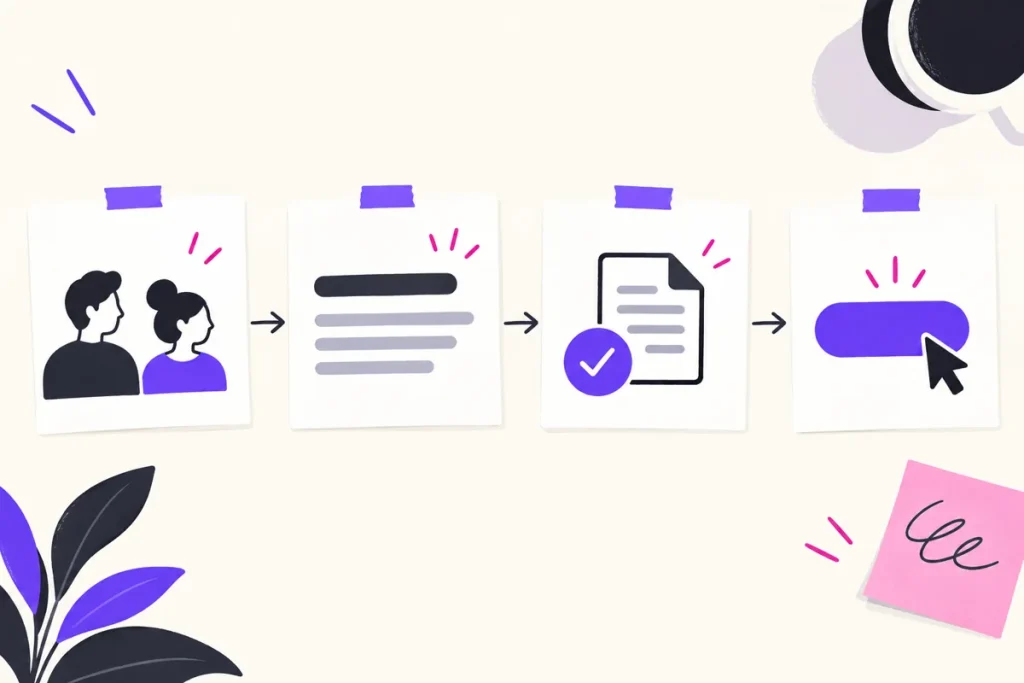
 Farnaz Kia