
On this page
Reviewing AI-assisted content starts with the actual text: what it claims, where its evidence comes from, and whether it helps the intended reader. This article replaces an older detector comparison with a practical editorial process for BrandWell’s current content workflow.
Define the review before choosing a tool
A factual review asks whether a statement is supported. An originality review asks whether wording or ideas require attribution. An editorial review asks whether the article is clear, useful, and appropriate for its audience. Those are separate questions, and a single score should not stand in for all three.
Start with a short checklist tailored to the publication. A payroll article may need a subject-matter reviewer and current official requirements. A product tutorial needs an actual test of the steps. A customer story needs permission and records that support the outcome described.
Review claims, sources, and examples
Highlight numbers, dates, quotations, product capabilities, and causal claims. Open the original source for each one. Check whether the source describes a study, an opinion, an individual example, or current documentation. Remove a claim if the evidence does not support it.
Google’s guidance on generative AI content calls for manual fact-checking and review, including metadata and image descriptions. Apply that check to the title and description as well as the article body.
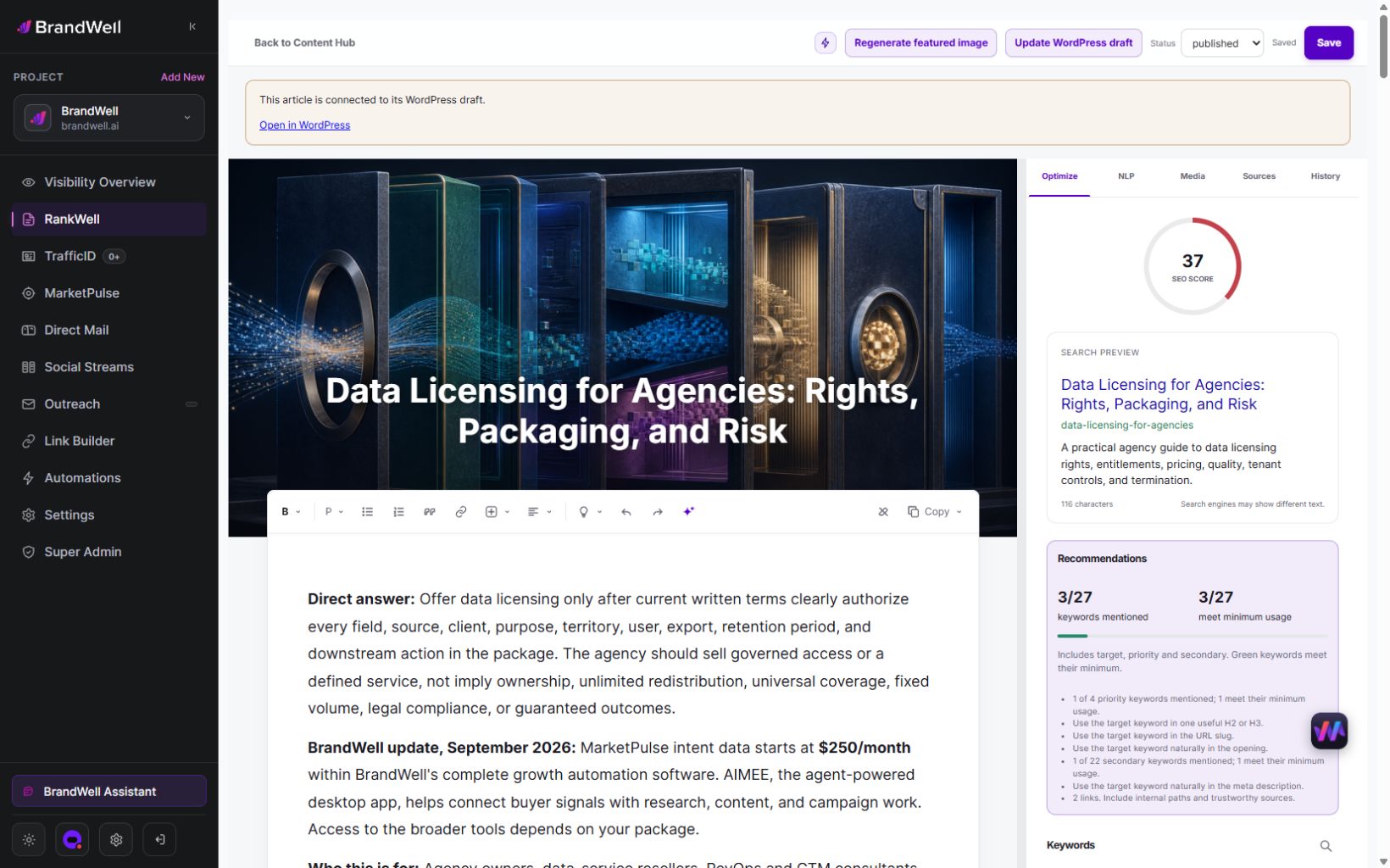
A practical review workflow in BrandWell
For business content, start with the audience and the job the article needs to do. Record the questions customers actually ask, the product facts you can substantiate, and the primary sources needed to support the answer. A finished article should help a reader make progress, whether or not AI assisted the draft.
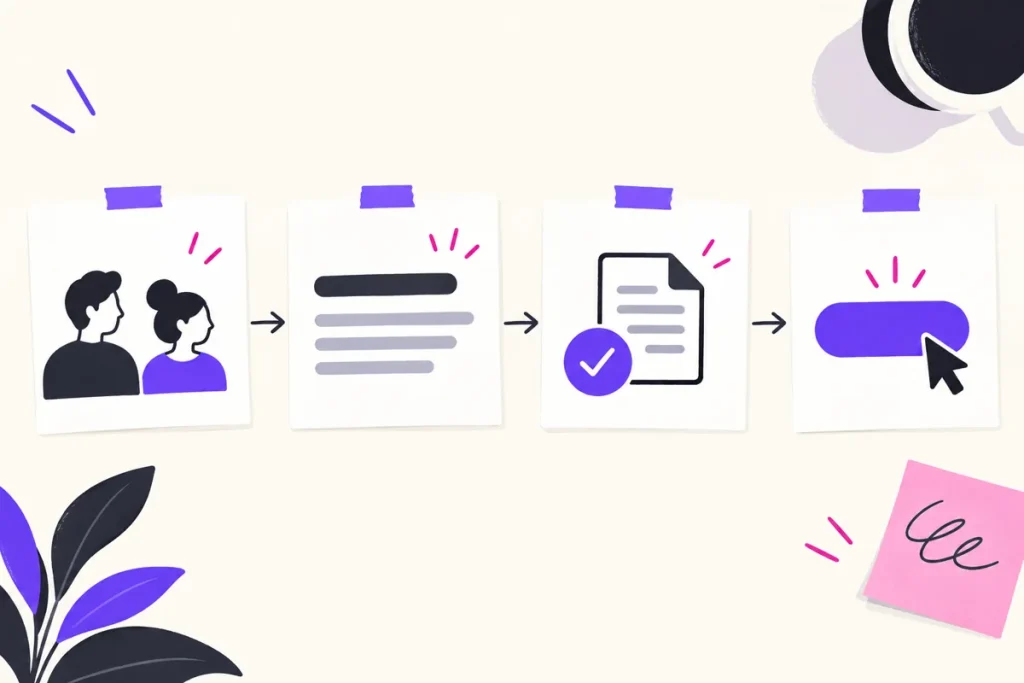
- Prepare a brief: define the audience, search question, useful examples, required sources, and review owner.
- Draft in RankWell: use your brief and approved materials to guide the content workflow.
- Verify the evidence: open each cited source, check the specific claim, and remove statistics that have no defensible source or date.
- Add business context: replace generic examples with your actual process, documented product behavior, or an explicitly fictional example.
- Review before publishing: check meaning, originality, permissions, links, images, formatting, and whether the article answers its stated question.
- Measure useful outcomes: use search impressions, clicks, relevant visits, and customer actions to identify the next revision.
AIMEE can help organize approved research and prepare work for review. Keep the source and the reviewer attached to each important assertion. Neither a fluent draft nor a software-generated score substitutes for evidence.
What to keep in the editorial record
Save the brief, source URLs, source dates, draft history, corrections, and the person who approved publication. For a product example, record which workspace and feature were used. If a step depends on an account setting or a paid plan, say so rather than presenting it as universal behavior.
A simple review note can contain the claim, its supporting passage, the date checked, and any limitation. For example, a customer outcome belongs to that named case study and time period; it is not a promise about what every customer will achieve. This makes later updates easier and gives a reader a clearer account of how the article was prepared.
Reviewed and updated October 2, 2026.

Written by
 Farnaz Kia