



On this page
- Choose questions you can answer credibly
- Make your profile accurate
- Write an answer that stands on its own
- Add a relevant link without withholding the answer
- Avoid promotion tactics that violate the rules
- Original example: answer first, resource second
- Prepare the supporting article in RankWell
- Measure referral visits separately from answer views
Use Quora to answer relevant questions completely, then link to your blog only when the resource adds useful context. Start with expertise and the reader’s question. A helpful answer can introduce people to your work, but it does not guarantee blog visits, search indexing or sales.
Quora is a question-and-answer platform. Treat it as a place to contribute knowledge rather than repeatedly posting a promotional link. Review current platform and community rules before participating.
Choose questions you can answer credibly
Search for the questions your intended readers ask. Review their wording and existing responses. Identify missing explanations you are qualified to provide, such as a practical example or a clearer account of a process.
Question activity can help you notice recurring subjects. It is not a representative market survey, a count of prospective customers or permission to contact every participant. Verify the underlying need with your own customer research.
Make your profile accurate
Describe your actual experience and connection to the subject. Use the appropriate profile type and follow Quora’s requirements for business participation. Do not invent credentials, customer experience or an independent opinion about your own company.
Keep the website you reference current and relevant. A profile should help a reader understand who is answering, not make unsupported claims about authority.
Write an answer that stands on its own
Quora’s helpful-answer guidance emphasizes addressing the actual question with a clear explanation and credible support. Explain the answer before offering a further resource.
Use short paragraphs and useful lists. Cite third-party factual claims and distinguish them from personal experience or an illustrative example. Add media when it clarifies the explanation, not merely to decorate a pitch.
Do not imply you performed a test or worked with a customer if you did not. If a fact is uncertain, verify it or describe the limitation.
Add a relevant link without withholding the answer
Quora’s business-writing guidance says readers should understand an answer without leaving the platform. It also describes restrictions on self-promotion, business profiles and affiliate links. Check the current requirements for your activity.
A supplemental checklist or detailed source can help after the answer explains the essentials. A message that says only “read my article” does not serve the question. Make your relationship to the linked business clear where relevant.
Avoid promotion tactics that violate the rules
Quora’s platform policy prohibits repeated content, irrelevant promotional answers and questions created to promote a business or solicit users. It also prohibits inauthentic engagement such as vote manipulation.
Do not copy the same answer across unrelated questions, coordinate votes or use a discussion as a pretext for unwanted messages. Community-specific requirements can add further limits.
There is no universal hashtag formula, follower ratio or response speed that guarantees distribution. Focus on answering correctly and following the applicable rules.
Original example: answer first, resource second
For the hypothetical question “What should our team record during a backup restore test?”, a qualified responder could explain the test scope, participants, timing, observed outcome and unresolved issues. The answer should note that procedures depend on the system and business requirements.
After that explanation, a relevant sample record may be useful. If it belongs to the responder’s business, disclose that connection. This example is a writing structure, not a claim that such a post generated visits or customers.
Prepare the supporting article in RankWell
Use the question as an input to a source-based brief in RankWell. Define the reader task, verify technical claims and add original evidence. Review the draft and published mobile page before referencing it publicly.
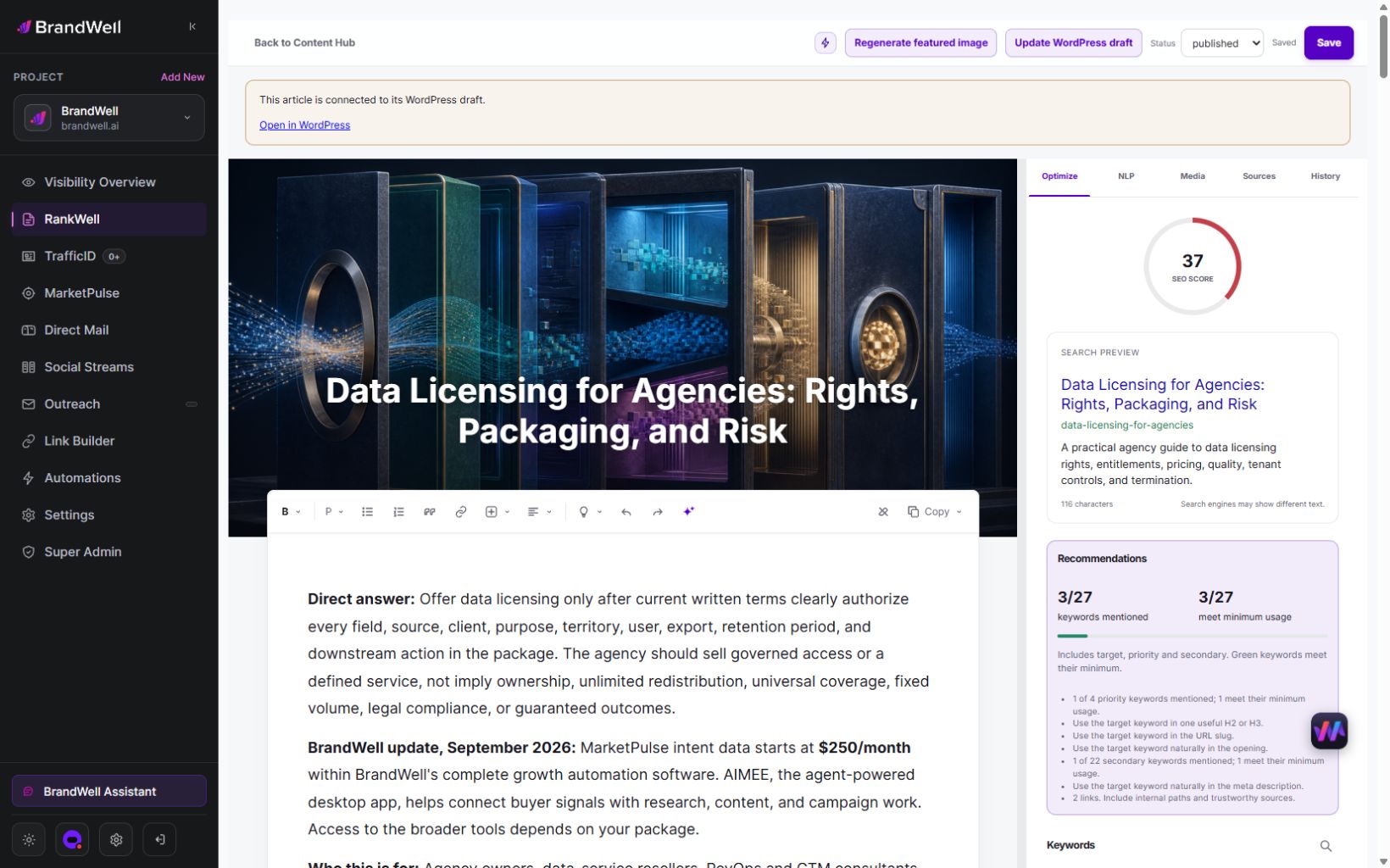
BrandWell can support research and content work. It does not establish that every destination permits automated posting. Review the platform’s current policy and retain an accountable owner for public participation.
Measure referral visits separately from answer views
An answer view is not a blog visit. Where appropriate, use consistent campaign tagging on a permitted link and inspect referral sessions and meaningful outcomes on your site. Google explains campaign URL parameters and their reporting purpose.
Record the answer, date, destination and tracking scope. Do not put personal information in tags. Missing referral information and reporting limits can affect what you observe.
Use results to improve useful participation and the supporting resource. Avoid interpreting a few visits as a proven acquisition strategy or promising another writer the same result.
Reviewed and updated October 2, 2026.

Written by
Julia McCoy has contributed articles to BrandWell on content marketing, writing, and search engine optimization. This archive retains her original bylines; individual articles may be updated by the BrandWell editorial team.

1 comments