On this page
- Start with a task and acceptance criteria
- Inspect every important citation
- Preserve the difference between evidence and inference
- Original example: review a product statement
- Prepare the brief and review in RankWell
- Make the published page useful
- Connect content to the appropriate growth work
- Keep a review record
Evaluate AI-assisted writing by checking whether its sources support the claims and whether the reviewed draft completes the reader’s task. Fluent prose and a list of citations are useful starting points, but neither establishes accuracy on its own. Use a repeatable review before publishing.
This guide focuses on the current BrandWell workflow: research and an approved brief, content review in RankWell, and a controlled handoff to publication or connected work. Choose the capabilities your team needs and define who approves the result.
Start with a task and acceptance criteria
Select a relevant question with sources you can inspect. Specify the intended reader, what they should understand or do, and the limits of the article. A technical buying guide and a general definition need different evidence.
Write the acceptance criteria before generating content. Include factual support, source relevance, useful original examples, product accuracy, attribution and a clear next step. Record setup and review time as well as drafting time.
Inspect every important citation
Open the original source and find the passage behind the claim. Check the author, publication date, method and scope. A link can lead to a real page while failing to support the sentence beside it.
- Existence: can you open and identify the source?
- Support: does it substantiate this specific statement?
- Scope: does the finding apply to this audience, product or period?
- Limitations: what caveats need to remain in the article?
- Attribution: are the source’s findings distinguished from your own interpretation?
The NIST generative AI risk profile discusses confabulation risks. Treat generated citations and confident factual assertions as items to check, not automatic evidence.
Preserve the difference between evidence and inference
A study reporting an association does not necessarily demonstrate a cause. A small, self-selected survey may not represent an entire market. An old statistic may need a date and context rather than a new label.
Remove a claim when you cannot establish its basis. Do not replace missing evidence with an impressive number or invented customer story. Label fictional examples clearly and explain what they illustrate.
Original example: review a product statement
Suppose an AI-assisted draft says that an Intent Scan identifies every buyer in a market. The reviewer should compare that statement with the actual product scope and available data.
A responsible explanation would describe available records, the period covered, filters and overlapping audiences. Research activity is not proof of purchasing authority or permission for every follow-up channel. The corrected sentence should preserve those distinctions.
This is an original editorial example, not a measured performance test. The point is to evaluate the actual statement against its source and product documentation.
Prepare the brief and review in RankWell
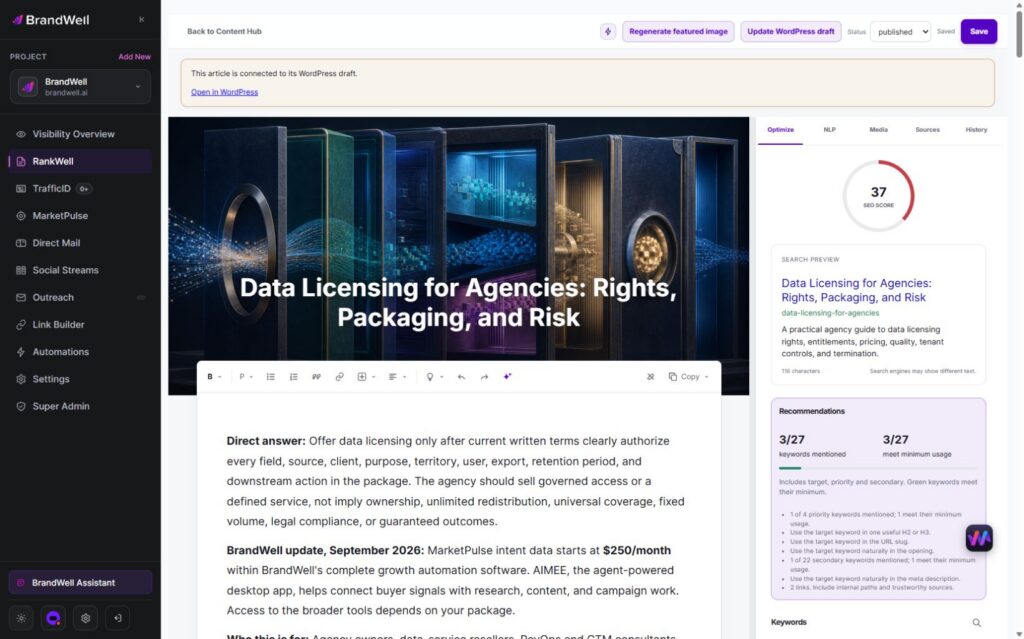
In RankWell, define the article’s purpose and provide reliable sources and original expertise. Use the Content Hub to organize strategy, articles, queue and calendar work. Review the relevant existing page before deciding a new article is necessary.
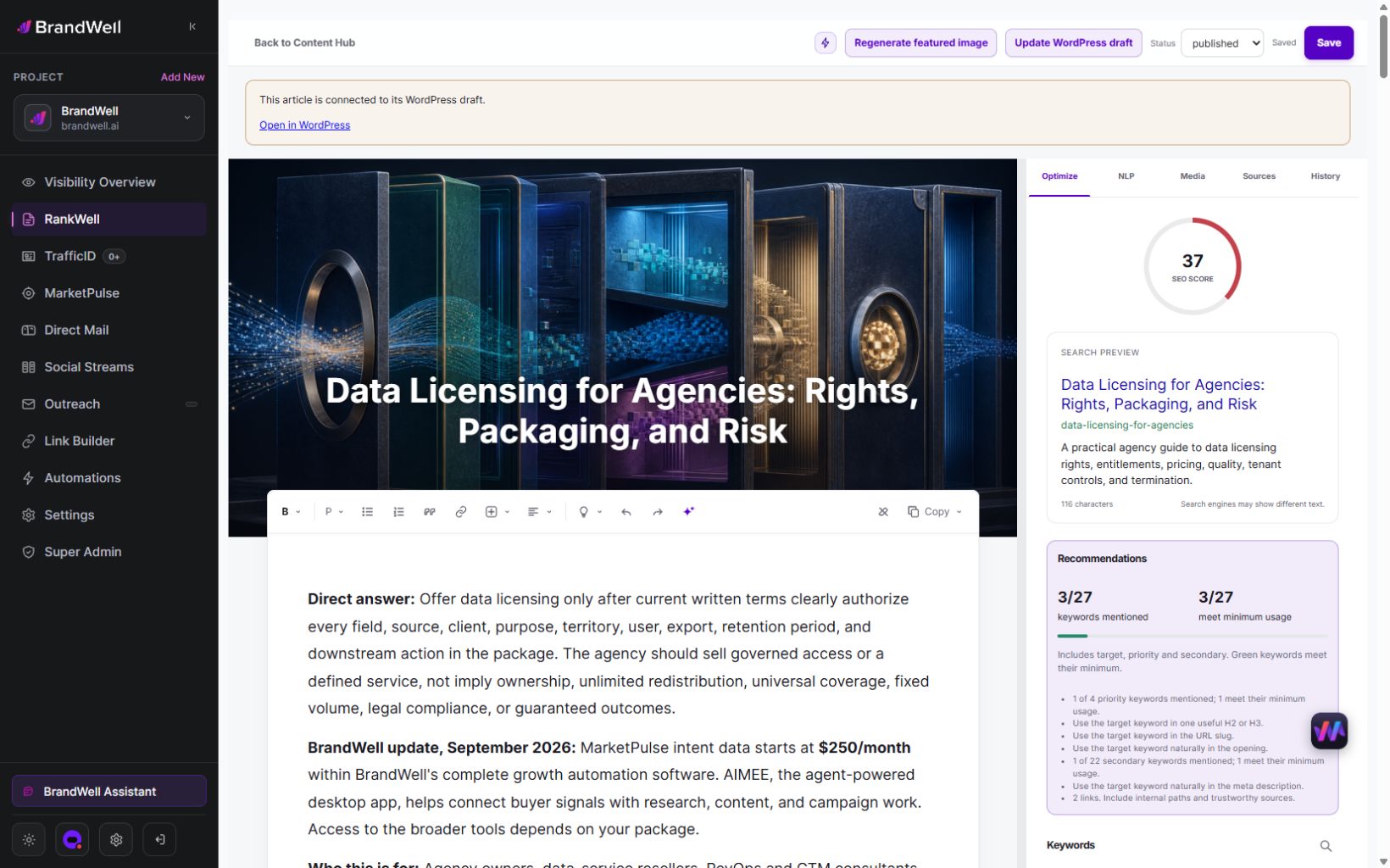
Inspect the article, sources, media, search preview and history. A recommendation or score helps organize review but does not guarantee factual accuracy, search rankings or conversions. Save the approved version and check the configured publishing destination.
Make the published page useful
Answer the question directly, then provide the steps, evidence and limitations needed to act on it. Use headings that describe the subject and images that explain something the reader needs. Test the mobile page and remove distracting repetition.
Google’s guidance on generative AI content stresses accuracy, relevance and added value. Its helpful-content guidance supports evaluating the substance of the answer rather than publishing to hit a word-count target.
Connect content to the appropriate growth work
MarketPulse adds topic intent research, with plans starting at $500/mo. That starting price applies to MarketPulse, not every BrandWell module or content allowance. TrafficID supplies available identified website-visitor information as a separate source.
Use fit, evidence and permitted use to decide which next step is appropriate. AIMEE can help carry approved tasks through configured connected tools. Establish the access, owner and review process before acting.
Keep a review record
Record the task, source links, disputed claims, corrections and approval date. Compare the final page with the brief, then inspect the live title, imagery and layout. This makes later updates easier when the product or source changes.
Measure the outcomes relevant to the assignment with a dated baseline. Separate what your test observed from broader promises about performance. A practical content workflow produces a useful, supportable explanation and a clear next step for the reader.
Reviewed and updated October 2, 2026.

Written by