On this page
Google offers paid AI subscription benefits, but that does not mean every search feature is behind one universal paywall. To understand access, check the specific feature, account, market and plan. An old report about possible pricing is not a current product specification.
For content teams, the distinction matters: a subscription benefit does not prove better factual answers, a guaranteed search placement or a change in how your own website earns traffic.
Check current access rules rather than an old forecast
Google’s current AI-plan page describes subscription benefits. Its AI Mode help page describes availability and usage limits, including that limits can vary with capacity, demand and subscription plan.
Read the conditions for the feature you need. A plan name, model name and search interface are different things. Do not infer that buying one subscription provides unrestricted access to every AI capability or that a benefit available in one country applies everywhere.
Keep pricing and eligibility tied to the current official page. Promotions, plan contents and regional availability can change. This article does not maintain a price table for Google’s subscriptions.
Separate four questions
- Availability: can this account use the feature in this market?
- Limits: how much usage is included, and what affects that allowance?
- Capability: what does the feature actually do?
- Evidence: is the answer correct and suitable for the task?
Payment answers none of these questions by itself. A higher allowance can be useful without establishing that every response is reliable. Evaluate consequential claims against their sources.
Do not confuse subscription access with website visibility
A reader’s AI subscription and a publisher’s search performance are separate subjects. A paid feature is not evidence that a business can buy an organic citation, nor does it guarantee that a particular page will receive more visitors.
For your website, examine the actual search queries, source links and traffic records available to you. Distinguish impressions from clicks and clicks from useful actions. Avoid forecasting a universal traffic loss or gain from a pricing headline.
An original research-review example
Suppose an agency asks an AI search tool for a summary of current advertising requirements. It receives a concise answer with several links. The team should inspect those links, confirm the relevant market and policy dates, and identify which requirements apply to its actual campaign.
If a source is outdated or does not support the conclusion, correct the draft before sharing it. Record the actual references and unresolved questions. The same review applies whether the search feature is accessed through a free allowance, promotion or paid subscription.
Do not let a generated summary make a customer commitment or substitute for an authorized specialist where the decision requires one. Keep research, drafting and execution responsibilities clear.
What content teams can improve now
Publish useful explanations that stand on their own. Answer the central question early, link factual claims to primary sources and add a concrete example or verified product step. Make images readable and identify sample data honestly.
Give a reader a reason to open the page beyond a summary: a checklist, detailed method, current limitations or a worked calculation. Those editorial choices support understanding; they do not promise selection by an AI system.
Remove old market-share figures unless they are relevant and backed by a source with a clear timeframe. A dated market statistic does not establish current access, future pricing or the quality of an answer.
Use the current BrandWell workflow
Visibility supports keyword research and opportunity investigation. Use relevant customer questions and actual search data to choose the article’s purpose.
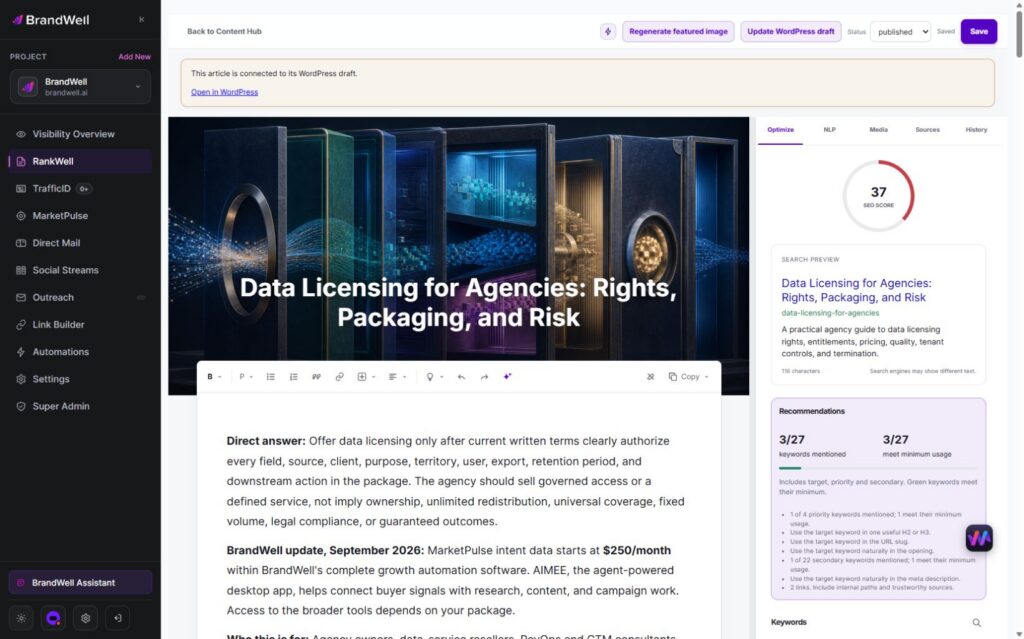
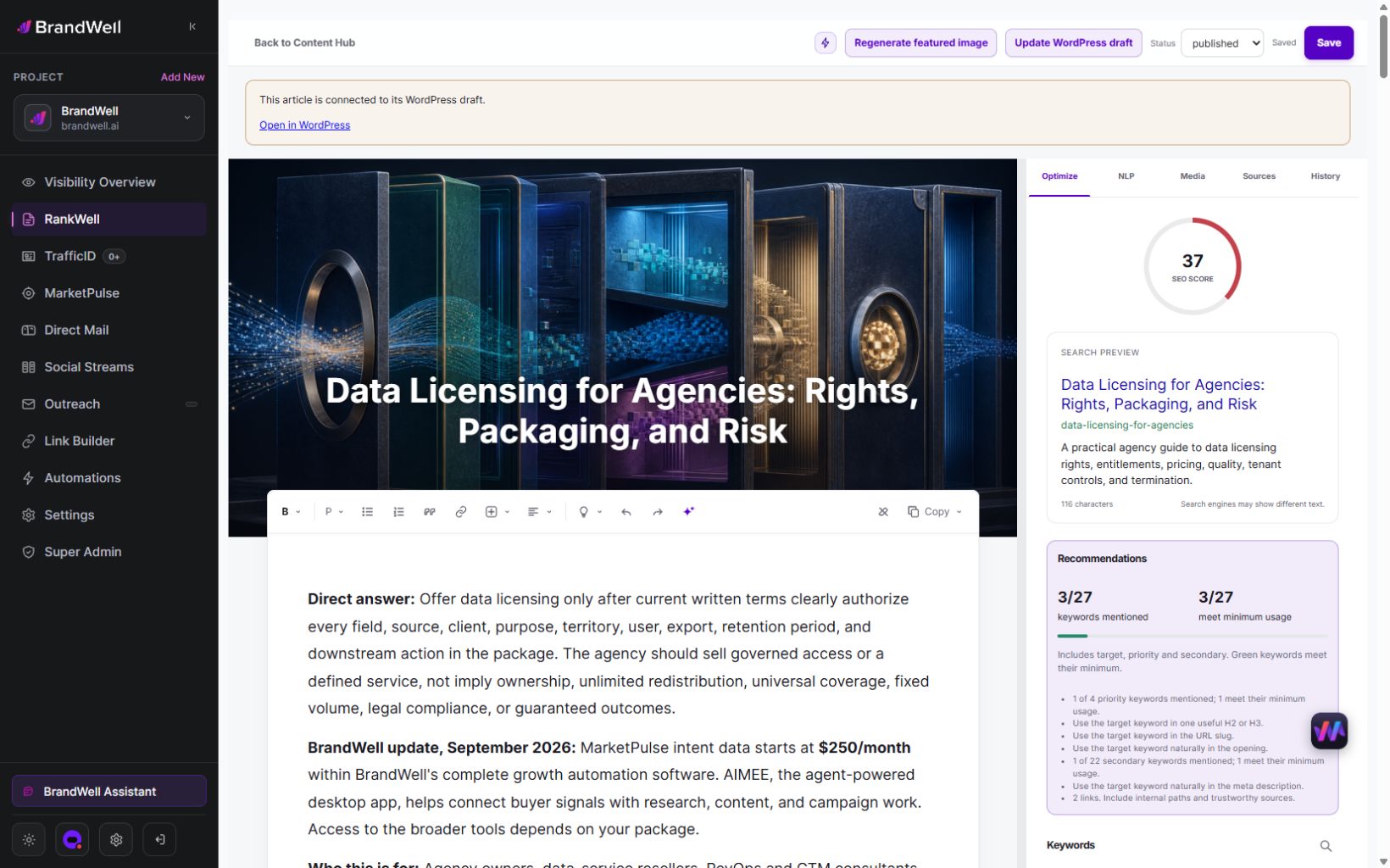
RankWell supports article preparation and review. The current Content Hub organizes articles, strategy, queue and calendar work. In the editor, check the draft, search preview, recommendations, media, sources and history.
Verify the current product facts and supporting links, add the business’s real expertise and approve configured publication. Keep BrandWell’s capabilities distinct from the features or subscriptions offered by a search provider.
Measure your own outcomes
Save the exact URL’s pre-edit impressions, clicks, CTR and average position. Compare later data with consistent periods and filters, then inspect the page’s intended next action.
A title change, query mix, seasonality and other site changes can affect results. Report observed movement without claiming that a subscription announcement or one article edit caused it.
Frequently asked questions
Does paying for AI access guarantee a correct answer?
No. Verify sources, dates and context. A subscription benefit or higher limit is not a factual guarantee.
Can a business buy guaranteed organic AI citations this way?
No such guarantee is established by a user’s AI subscription. Treat organic visibility as an outcome to observe, not a purchased entitlement.
Where should I check current access?
Use the official page for the specific feature and the plan shown for your account and market. Avoid treating an old news forecast as a current access rule.
Explore RankWell to organize sourced content work and review in the current BrandWell portal.
Reviewed and updated October 3, 2026.

Written by
Julia McCoy has contributed articles to BrandWell on content marketing, writing, and search engine optimization. This archive retains her original bylines; individual articles may be updated by the BrandWell editorial team.