On this page
Hawaii Guide’s historical publishing story illustrates a useful division of work: software can help prepare drafts while people contribute destination knowledge, verify details and approve the article. The case does not establish that AI caused a particular traffic increase.
Archive note: this case was recorded in the earlier Content at Scale product period. Its reported output and screenshots describe that period. They are not current RankWell pricing, an independently verified performance study or a guaranteed outcome.
Who the publisher is
Hawaii Guide’s current About page identifies John Derrick as founder and editor-in-chief and Victoria, also called Tori, as president and publisher. It emphasizes firsthand travel, original research and human judgment.
That context matters for travel content. A draft can organize an answer, but a destination publisher still needs to check conditions, descriptions, sources and the practical advice a traveler might act on. Productive drafting is only part of publication.
The historical operating problem
The original case described a small publishing team preparing island guides and related marketing material with limited writing capacity. It reported that John and Victoria used AI-assisted drafting to handle more general material while directing human effort toward specialist work and personal experience.
The transferable lesson is to assign work deliberately. Use a draft to reduce a blank-page task, then reserve editorial attention for what requires judgment or current local knowledge. Do not treat “generated” as the same state as “ready to publish.”
What the reported output does and does not show
The earlier account described moving a weekly publishing goal from three or four new articles to four to seven. Those are ranges, not a consistent doubling of actual output. The underlying production log, time allocation and reviewed-article counts are not supplied here.
A more informative evaluation would count approved articles, research time, draft time, review time, corrections and maintenance. It would also state how many people contributed and whether the content scope changed.
Hypothetical output comparison: four approved articles rising to six is a 50% increase. Four rising to eight is a 100% increase. A range of four to seven cannot by itself establish that output doubled every week.
Why the traffic headline needs qualification
The original article reported a 30% traffic increase and compared historical periods that included different years. It also described a search-result appearance from the earlier Search Generative Experience period. Those observations are historical reports, not evidence of a current search feature or a controlled causal test.
Different travel seasons, demand, site changes, content, search systems and measurement can affect traffic. A before-and-after chart alone cannot isolate the contribution of AI drafting. This updated article therefore does not present the reported increase as an expected RankWell result.
To evaluate a publishing change today, specify the exact metric, dates, article cohort, baseline and other changes. Keep search impressions, search clicks, site sessions and completed business outcomes separate.
Apply the useful workflow in current RankWell
- Choose a specific traveler question. Define the destination, audience and planning decision.
- Collect current evidence. Supply reliable sources, dated conditions and the team’s actual observations.
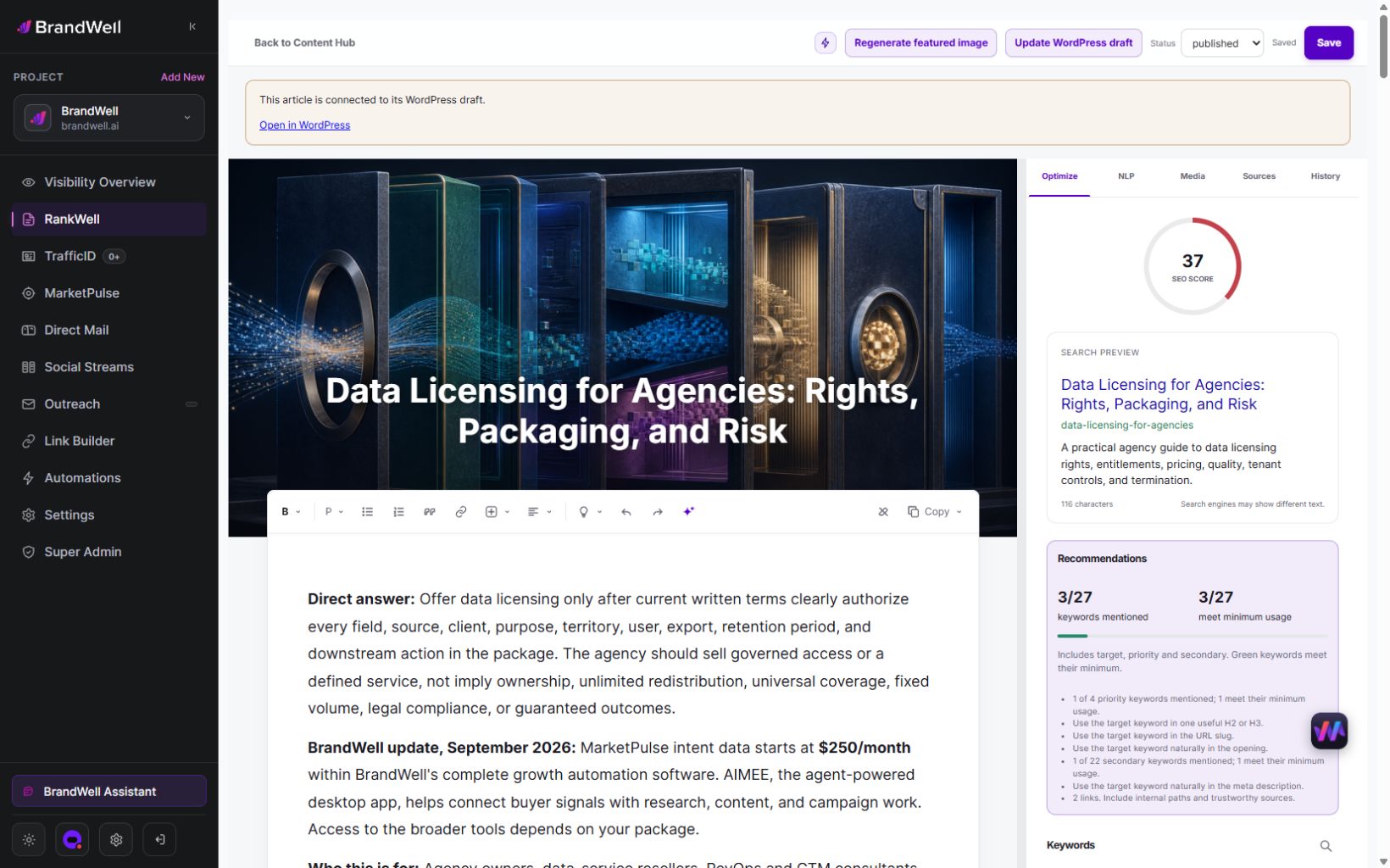
- Prepare a RankWell draft. Give the brief a clear scope and distinguish verified details from proposed examples.
- Add the human contribution. Review practical advice, local context, images and claims that require firsthand knowledge.
- Approve publication. Check sources, dates, links, mobile presentation and the configured publishing destination.
- Assign maintenance. Revisit facts when conditions change and inspect the outcome of the published work.
Confirm the current RankWell package and usage for this workflow. The separate $250/month MarketPulse starting price applies to intent data, not the historical content-generation offer.
Build an inspectable publishing review
- Count reviewed, approved articles rather than drafts alone.
- Record all research and review time, including corrections.
- Keep the original baseline and change dates.
- Explain seasonal and concurrent changes.
- Use current sources for facts a reader may act on.
- Track useful business outcomes alongside traffic.
Hawaii Guide’s case is useful as a publishing-process story. Its lasting lesson is the combination of drafting assistance and accountable expertise. Explore current RankWell to build that workflow and measure your own complete process.
Reviewed and updated October 3, 2026.

Written by
Julia McCoy has contributed articles to BrandWell on content marketing, writing, and search engine optimization. This archive retains her original bylines; individual articles may be updated by the BrandWell editorial team.