


On this page
- What the reported result establishes
- The linked video uses a different result and time window
- What the historical screenshot shows
- What TrafficID does in the current BrandWell portal
- Use visit context without inventing intent
- A practical evaluation workflow
- Report rates using a stated denominator
- Keep the case study and current offer separate
Historical case study, updated for current product context: BrandWell’s original article reported identifying 3,292 leads in one week using TrafficID on its own website. That is the publisher’s historical reported count, not an independently audited result, a count of qualified buyers or a result other websites should expect.
What the reported result establishes
The original account describes installing a visitor-identification tag and reviewing records generated from existing website traffic. It says no additional advertising, SEO campaign or social-media push was used for that reported week. That does not mean the traffic arrived without prior marketing effort, or that installing a tag created demand.
The published article does not supply a complete event export, exact reporting interval, eligible-traffic denominator, deduplication policy, identity-validation sample, conversion cohort or attributed revenue. The figure should therefore remain a reported identification count. It does not establish an identification rate, incremental pipeline, return on investment or a universal outcome.
The linked video uses a different result and time window
The original article links to a BrandWell video titled “How We Got 1,691 Leads in 2 Weeks, By Doing NOTHING.” Its visible title and 2:21 runtime were checked during this update. The video title describes a different count and interval from the article. It is a historical demonstration, not corroboration of the 3,292-in-one-week figure. Its seven-day trial description is also historical; use the current product page for available access and terms.
The video’s identity was verified, but no transcript-based verification of its narration was performed. Do not merge the two claims into a single measured case or infer a trend between them without the underlying dates and records.
What the historical screenshot shows
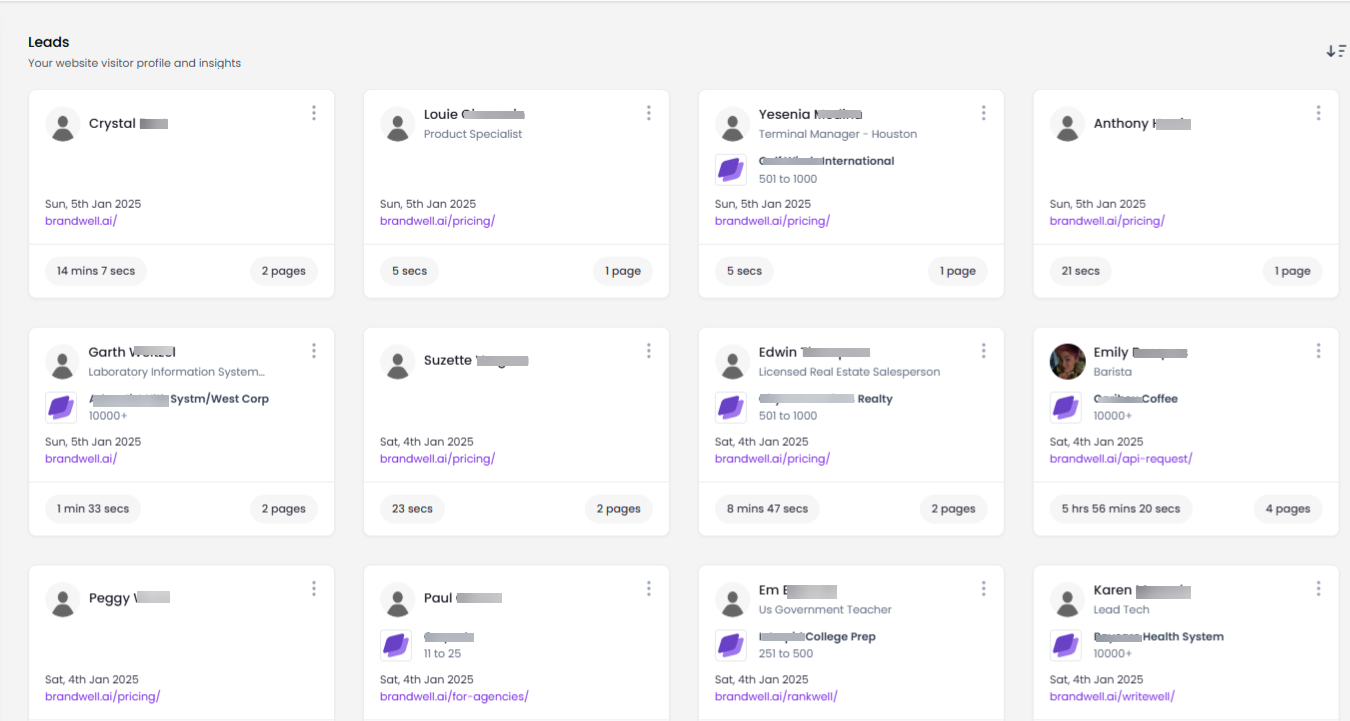
The archived dashboard image contains individual visitor cards with January 4–5, 2025 dates, page references and visible time or page-count fields. It does not display the aggregate 3,292 total or establish the one-week reporting window. The image documents the older interface, not the current portal.
What TrafficID does in the current BrandWell portal
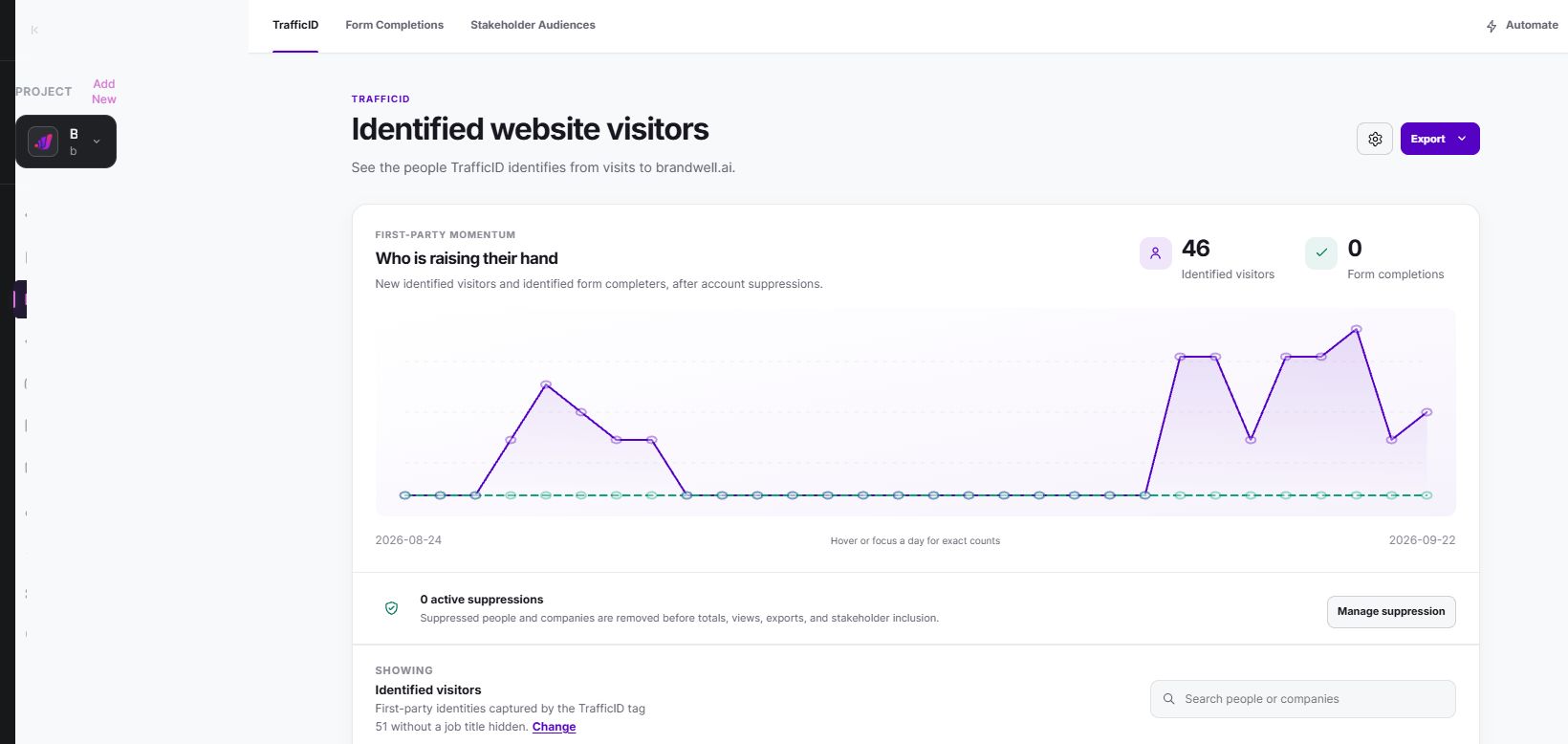
TrafficID connects identifiable website visitors and submitted forms with available company, role and visit context. It supports research into the account around a visitor, reviewed audience exports and configured follow-up workflows. Coverage and available fields vary; it does not identify every person who visits.
Keep observed visitors separate from additional stakeholders at their companies. An added decision maker is not necessarily someone who visited your site. Review the record, source, current role and exclusions before treating it as an appropriate next contact.
Use visit context without inventing intent
- Return visits: a reason to review the account, not proof of a purchase project.
- Pricing-page activity: useful context, not proof of budget authority.
- Time and scroll: engagement observations whose collection method and limitations should be understood; they are not a buying-stage diagnosis.
- Several people at a company: account context, not evidence that an internal buying discussion occurred.
- Role and company information: fields to verify, not a substitute for qualification or channel permission.
The original article treated some of these behaviors as evidence of imminent buying. This update uses them as research inputs. A prospect may be a student, job seeker, partner, customer or someone investigating an unrelated issue.
A practical evaluation workflow
- Define the cohort: select the site, reporting dates, eligible geography and traffic exclusions.
- Check installation: follow the current site-tag instructions and reported connection state in your Company Project.
- Inspect identities: distinguish observed visitors, submitted inquiries, additional stakeholders and unresolved records.
- Apply fit and exclusions: review role, company and relevance; exclude contacts and accounts you should not approach.
- Review a next step: assign a named owner to prepare relevant research or a handoff. A visitor record is not consent to receive marketing.
- Measure outcomes: record unique accounts, accepted contacts, actions, held meetings and qualified opportunities using explicit definitions.
AIMEE can help prepare a bounded research brief through configured tools. Keep references, unknowns and owner review attached. Check actual access, channel requirements and costs before sending an audience to another workflow.
Report rates using a stated denominator
In a fictional test, 1,000 eligible visits produce 200 identified records. Review finds 20 duplicates, leaving 180 distinct records, of which 45 pass the stated fit criteria. The figures describe 200 records per 1,000 visits, 10% duplicate records and 25% fit acceptance among the 180 distinct records. They do not establish a 20% unique-person identification rate because visits and people are different units.
This invented example is not a TrafficID benchmark. A real evaluation also needs the observation method, reporting window, source validation and outcomes. Without a credible comparison design, later conversions are associations rather than proof of incremental lift.
Keep the case study and current offer separate
The useful lesson is to inspect the interest already reaching your site and give appropriate records a reviewed next step. The historical count does not guarantee identification coverage, qualified leads or sales. Watch the current TrafficID demo and review plans.
For external topic research, MarketPulse is a separate product with standard plans starting at $500/mo. Own-site visitor activity and offsite topic research should retain their distinct sources.
Reviewed and updated October 3, 2026.

Written by

