On this page
NextCare’s historical customer interview describes a workflow combining AI-assisted drafts with medical leadership review. The useful lesson is how the team organized production and specialist review, with customer-reported outcomes kept in their original context.
The interview used the earlier Content at Scale product name. The current BrandWell content workflow is RankWell; the application example below is a present-day adaptation of the review approach.
Watch the original customer interview
Richard Keech was introduced as NextCare’s senior digital marketing manager. The original interview is the source for the historical account below.
The production challenge
Richard described an agency workflow followed by internal production with limited marketing capacity. At 5:02, he said output had been about one article a month before reaching two to three pieces a week.
The distinction matters when reporting an output multiplier. Using a four-week comparison, two to three weekly articles would mean eight to twelve monthly articles. The exact multiplier depends on the dates and actual published counts; a headline of 16 times is not established by that description.
What the customer reported
At 6:42, Richard described organic traffic as almost doubling over seven months and the Health Resource blog’s active keywords growing from about 4,000 to 12,000. He also said visit and booking attribution was still being developed.
These are customer-reported historical observations. The interview does not supply a reproducible analytics export establishing that one tool caused the changes. Keyword counts, visits, bookings and revenue are different measures.
Medical review remained in the process
At 8:32, Richard described topic selection, draft production, medical-team feedback and scheduling, with review taking 24 to 48 hours. Later, he discussed developing reviewer attribution.
The useful operational pattern is a prepared draft followed by qualified review. A current implementation should require explicit approval, record corrections and resolve unanswered questions before scheduling publication.
How to adapt the workflow in RankWell today
- Define the reader’s question. Identify the intended audience and what the article should explain.
- Collect approved material. Supply current sources, product facts and subject-expert input.
- Inspect existing content. Decide whether to create, improve or merge rather than automatically adding another page.
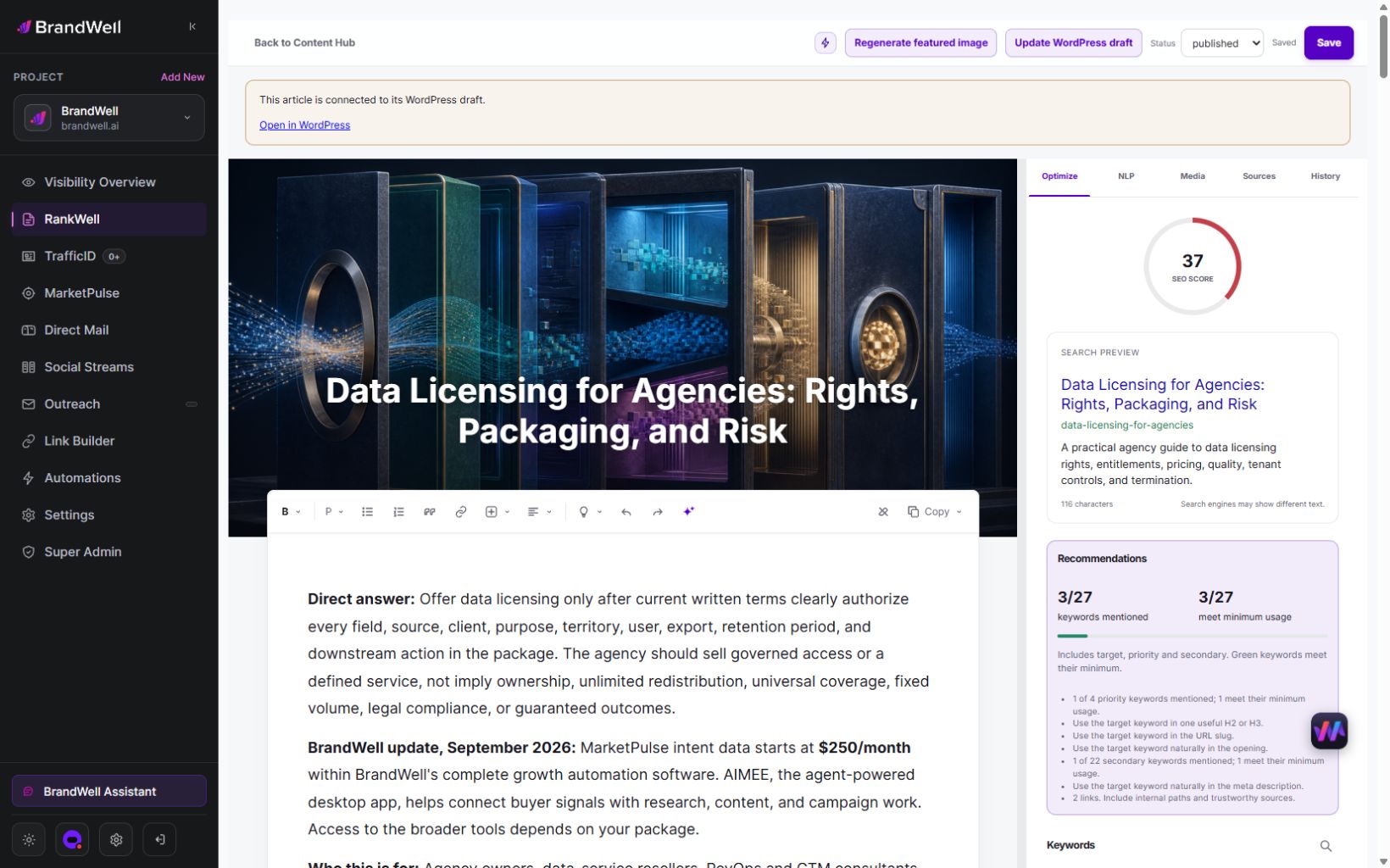
- Prepare and review the draft in RankWell. Check its claims, source links, media and search presentation.
- Obtain specialist approval. Record the reviewer, review date and resolved corrections. Silence should not count as approval.
- Publish through the configured destination. Check the live page and assign a maintenance owner.
Measure the whole process
Keep a record of articles drafted, approved and published, along with time spent briefing, checking sources, editing and obtaining approval. Report rework and rejected drafts as well as completed work.
Fictional example: a team prepares 12 drafts, approves ten and publishes eight during a month. Approval is 83.3% of drafts, while publication is 66.7% of drafts. The other four drafts should remain visible in the workflow rather than being counted as published articles.
For search outcomes, record the analytics source, date range, page group and metric definition. For appointments or inquiries, explain attribution and deduplication. A change in rankings does not automatically establish a change in patient visits.
Frequently asked questions
Does this case study guarantee similar growth?
No. It reports one customer’s historical experience. Establish your own baseline, review capacity and measurement plan.
Did the interview establish a 16-times output increase?
The described monthly and weekly cadence does not establish that exact multiplier. Use actual published counts and comparable periods.
What should another team copy?
Copy the clear separation of topic selection, draft preparation, specialist review and publication. Validate the workflow for your own subject and team.
Reviewed and updated October 6, 2026.

Written by
Julia McCoy has contributed articles to BrandWell on content marketing, writing, and search engine optimization. This archive retains her original bylines; individual articles may be updated by the BrandWell editorial team.