On this page
If you are searching for how to remove AI detection, improve the writing and document its sources instead of chasing a score. A rewrite does not establish authorship, validate a factual claim or resolve plagiarism. The useful goal is accurate, clearly attributed work that follows the rules of the place where it will be published or submitted.
This guide provides a practical review process. It makes no claim about detector accuracy, quality or the ability to make text undetectable.
Start with the publication rules and the writing process
Check whether your school, employer, client or publication permits AI assistance, and what disclosure it requires. Keep the brief, research notes, source links, draft versions and relevant approvals. These records describe the process more directly than a number attached to a passage.
Do not invent revision history, deliberately add mistakes or claim that generated text was written without assistance. If the work is questioned, explain the actual process and provide the records you have.
Review an AI-assisted draft in five steps
1. Return to the reader and task
Write down what the piece should help the reader understand or do. Remove passages that do not serve that purpose. Check that the draft answers the assignment rather than a broader, easier question.
2. Verify each important claim
Open the original sources. Check names, dates, quotations and numbers. Retain the source’s conditions and distinguish evidence from your interpretation. A plausible-looking link is not enough; inspect the page it actually opens.
3. Add original material you can support
Use a real example, method, observation or screenshot when it helps. Explain why it matters to the reader. Label hypothetical examples clearly and avoid fabricated customers, results or personal experience.
4. Edit for clarity
Replace vague wording, remove repetition and improve transitions. Use headings for the reader’s questions and steps for a process. Vary sentence structure where it helps comprehension, rather than to meet a detector threshold.
5. Check attribution and the final page
Credit ideas and wording that came from another source. Check links, images, captions and mobile formatting. Preserve your sources and revision record, and disclose assistance when the applicable rules require it.
Harvard’s source-use guidance distinguishes paraphrase, summary and quotation. Changing words does not erase the source of an idea. Use the appropriate form and attribution.
Original example: preserve the evidence while revising
Suppose a fictional internal pilot involved 10 teams, and six completed a checklist during a four-week trial. This is an invented teaching example, not a BrandWell result.
Unsupported rewrite: “The process improves long-term retention for most companies.” That introduces a different outcome, population and duration.
Meaning-preserving rewrite: “Six of the 10 pilot teams completed the checklist during the four-week trial.” It retains the actual denominator and measurement window.
Then ask what the reader needs next: who participated, how completion was defined and what the trial did not measure. Specificity comes from the evidence, not from adding a personal-sounding phrase.
Use RankWell for content review
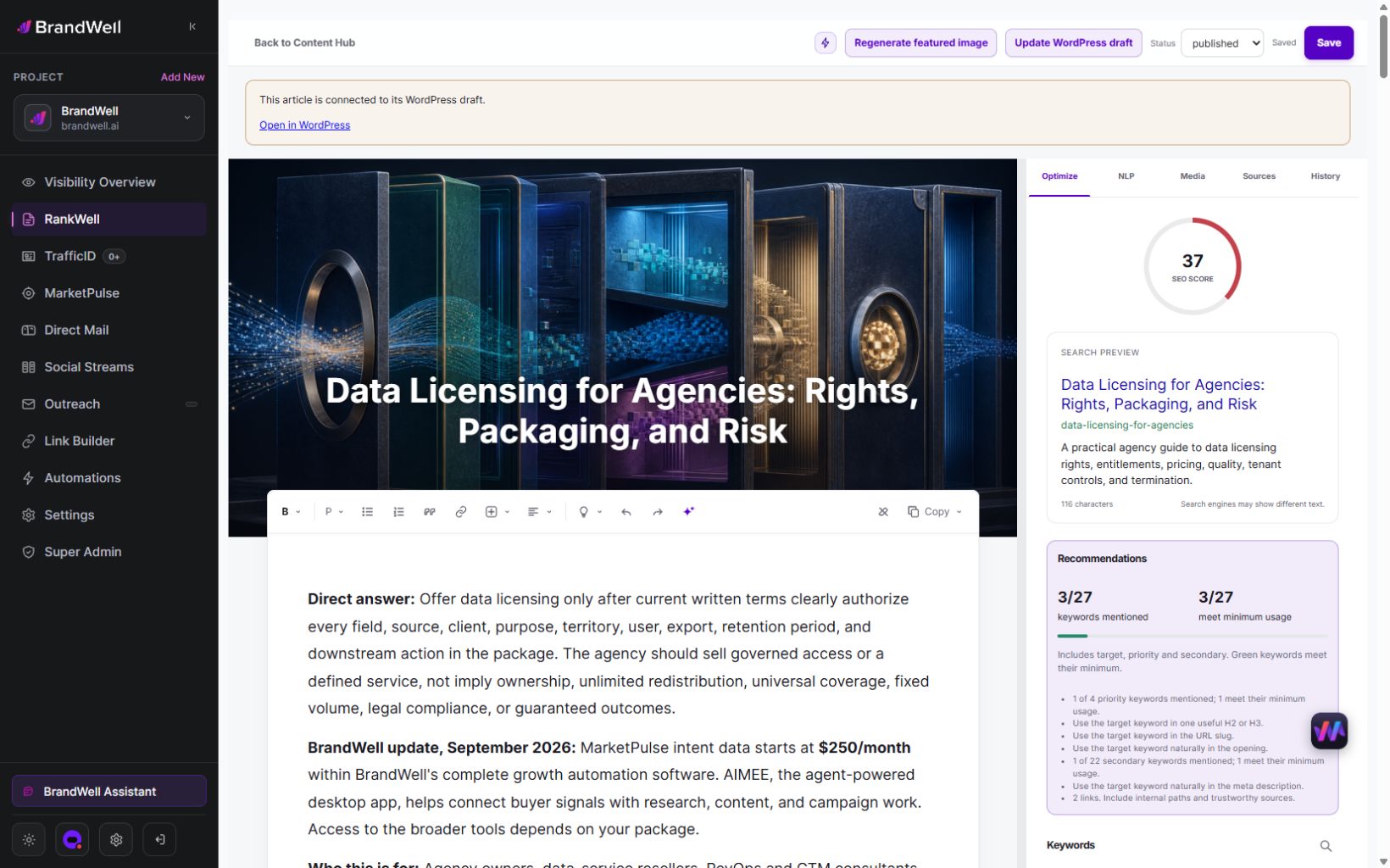
For the current BrandWell content workflow, open the portal and use RankWell to prepare and revise the article. Review the draft alongside its search preview, recommendations, sources and history. Verify the actual statements and product details before publishing through your configured workflow.
Google’s generative-content guidance calls for manual fact-checking and useful content, including accurate titles, descriptions and image text. Build the review around those concrete responsibilities.
Common questions
Does paraphrasing remove plagiarism?
No. You still need to credit the source of someone else’s ideas and clearly identify borrowed wording. Review the source, not just the rewritten sentence.
Should I add errors to make the passage look human?
No. Errors make the work less useful. Improve the evidence, clarity and fit for the reader instead.
What should I keep if authorship is questioned?
Keep the brief, source notes, draft versions, revisions and applicable disclosures. Explain what assistance was used and which work you performed yourself.
Can this workflow guarantee a detector result?
No such guarantee is made. This is a method for reviewing and documenting writing, not for evading publication or assignment rules.
Reviewed and updated October 2, 2026.

Written by
Julia McCoy has contributed articles to BrandWell on content marketing, writing, and search engine optimization. This archive retains her original bylines; individual articles may be updated by the BrandWell editorial team.